


Maya, a 42-year-old designer, noticed that her morning pillow creases remained visible well into her commute. Her skin felt losing its "snap" despite a high daily water intake. She did not want a miracle; she simply wanted her face to stop looking as exhausted as she felt after a long week. When she transitioned from heavy oils to a targeted collagen jelly, the chronic tightness finally vanished.
This guide cuts through the marketing noise to show you exactly how topical formulas restore that missing bounce.
What Happens to Collagen as Skin Ages, and Why Does Skin Start Looking Dull?
As the years pass, the structural integrity of your face shifts naturally. You might notice that your morning pillow creases linger longer or your favorite foundation begins to settle into lines that were not there last year. These visible changes stem from a decline in your skin's internal support systems.
What Does Collagen Do for Your Skin?
Here is a list of all that collagen does for your skin:
- Collagen forms a structural network inside the topmost layer of your skin.
- This network holds skin in place and supports elasticity.
- Elastin helps skin snap back after movement.
- Hyaluronic acid binds water and maintains volume.
- When this system functions well, skin feels springy and looks smooth.
You may notice that the foundation spreads evenly and cheeks feel resilient when pressed.
Why Does Collagen Decline With Age?
The body naturally slows collagen production starting in the mid-20s. By the time most people reach their 40s, the rate of decline becomes more apparent in the way the skin looks and feels. Several factors accelerate this process:
- UV radiation breaks down existing collagen fibers and disrupts the cells responsible for making new ones.
- Repeated facial movements cause repetitive stress on the collagen structure over time.
- Lifestyle factors such as chronic stress, poor sleep, and smoking impair the body's ability to synthesize new collagen.
- Hormonal shifts, particularly around menopause, cause a sharp drop in collagen density in the skin.
Is Your Skin Dull or Aging?
This is where many people conflate two separate issues. Dullness and aging can overlap, but they are not always the same thing:
- Dullness is frequently caused by dehydration, a compromised skin barrier, or buildup of dead skin cells that slow cell turnover, all surface-level issues.
- Aging signs like fine lines, laxity, and loss of volume are deeper structural changes connected to collagen and elastin decline.
What Can a Topical Collagen Cream Do for Your Skin?
Here is the most common scenario: someone reads "collagen cream" on a label, imagines the lost collagen being "refilled," and expects results like those of an injectable treatment. When the cream does not deliver on that, they assume it did not work at all and miss the genuine benefits it did provide.
The reality sits in the middle, and understanding it will change how you shop for and use any collagen face cream.

What Most People Expect From Collagen Cream For Skin
Many believe that applying collagen directly restores lost dermal collagen. That assumption feels logical. However, topical collagen does not function like injectable procedures.
What Collagen Cream Benefits Include
- Forms a conditioning layer that reduces water loss.
- Improves short-term smoothness.
- Enhances plump appearance through hydration.
- Helps makeup sit evenly.
- Improves comfort in dehydrated skin.
These are surface-level improvements. They matter because hydrated skin reflects light better and looks healthier.
A clinical study of a topical micronized collagen formulation reported measurable improvements in hydration and elasticity after 12 weeks of consistent use. Participants showed statistically significant increases in skin moisture and elasticity compared to baseline measurements.
What Topical Collagen Can vs Cannot Do
|
Skin concern |
What a collagen cream can do |
What you may need in addition |
|---|---|---|
|
Dry, tight feeling |
Improve surface hydration |
Barrier repair ingredients |
|
Fine lines from dehydration |
Soften their appearance |
Retinoids for structural change |
|
Uneven texture |
Smooth outer layer |
Exfoliation routine |
|
Loss of firmness |
Improve temporary plump look |
Peptides + daily sunscreen |
|
Deep wrinkles |
Slight surface refinement |
Professional procedures |
How Do Hydrolyzed Collagen and Peptides Support Firmer-Looking Skin?
Understanding the science behind your collagen skin care helps you avoid overpaying for marketing hype. Not all collagen molecules are the same size, and the "teammates" included in the formula often do the heavy lifting for long-term results.
Why Is Hydrolyzed Collagen Used In Collagen Skin Care?
Hydrolyzed collagen is native collagen that has been broken down into much smaller peptide fragments through a process called hydrolysis. These smaller pieces are:
- Hydrolyzed collagen contains smaller fragments.
- These fragments improve formulation stability.
- They enhance conditioning properties.
- They support surface water retention.
Hydrolyzed collagen improves feel and hydration. It does not rebuild dermal fibers overnight.

How Do Peptides Support Firmness?
If hydrolyzed collagen is the hydration anchor, peptides are the strategic partners. Peptides are short chains of amino acids that send signals to skin cells and can support the appearance of firmer, more elastic skin over time.
Different peptides serve different functions:
- Support visible elasticity.
- Improve texture consistency.
- Enhance resilience over time with regular use.
What Is The Difference Between Instant Lift And Long-Term Firmness?
This is a distinction that most brands blur, and it causes real confusion. There are actually two separate categories of "firming" effects to track:
Short-term visible lift (hours):
- Produced by film-forming or tightening technologies in the formula.
- Skin feels tauter and looks more lifted right after application.
- This is a surface effect. It is genuine and pleasant, but not a permanent structural change.
Long-term firmness (weeks):
- Gradual improvement in measured skin elasticity and texture.
- Supported by consistent use of collagen, peptides, and daily SPF.
- This is the result worth evaluating at the 2-4 week mark.
What Protects Collagen Daily?
No collagen cream works in isolation. Three habits protect and enhance whatever your topical products are building:
Daily SPF (minimum SPF 30): UV radiation is the primary accelerator of collagen breakdown. Skipping sunscreen while using a collagen moisturizer is like filling a bucket with a hole in it.
Retinoids (evening use): These are the most research-supported topical ingredient for supporting skin cell renewal and improving collagen synthesis over time.
Gentle cleansing and barrier support: A damaged skin barrier undermines every active ingredient layered above it. Harsh cleansers strip the barrier and reduce how well peptides and collagen can condition the skin.
Routine Order:
- Cleanse
- Treatment serum
- Moisturizer
- SPF in the morning
How To Choose The Best Collagen Cream For Face: Label Checklist
|
Checklist item |
Why it matters |
Example of what to look for |
|---|---|---|
|
Hydrolyzed collagen |
Improves conditioning performance |
Listed in the top half of the ingredient list |
|
Peptide complex |
Supports visible firmness |
Multi-peptide blend |
|
Lightweight base |
Prevents congestion |
Gel or jelly cream texture |
|
Barrier support |
Enhances tolerance |
Glycerin, ceramides |
|
Sun protection pairing |
Prevents further breakdown |
Daily SPF use |
Who Should Use a Collagen Face Cream, and How Do You Track Results?
We found that many people, like Sarah from Chicago, felt frustrated when their expensive creams did not "erase" wrinkles in three days. After she switched to a consistent 4-week tracking method and added daily sun protection, she noticed her skin regained a "springy" feel that had been missing for years.
Which Skin Types And Concerns Benefit Most From Collagen Cream?
A collagen cream for the face is not only for mature skin. It is useful for anyone whose skin shows these specific signs:
- Skin feels tight after washing.
- Makeup emphasizes fine lines.
- Cheeks lack bounce when pressed.
- Early laxity appears near the jawline.
- The surface looks flat under indoor lighting.
Texture matters more than marketing. Oily or acne-prone individuals can use a lightweight collagen gel for the face rather than a heavy cream.
How To Use Collagen Cream Correctly?
- Apply to clean skin morning and night.
- Use after treatment serums.
- Apply sunscreen during the day.
- Introduce slowly if combining with strong retinoids.
- Use consistent amounts each time.
Track These Specific Changes Over 2 To 4 Weeks
The most common reason people abandon a good product is that they measure it against the wrong expectations. Here is a realistic, trackable checklist:
- Hydration lasts through the day.
- Texture feels smoother under fingertips.
- Makeup spreads evenly.
- Cheeks feel springier.
- Fine lines look softened in natural light.
Do not expect:
- Surgical lift effect.
- Deep wrinkle erasure in one week.
- Structural volume restoration.
Most people quit a good product because they measure it against the wrong timeline.
Use this simple 4-week tracker to evaluate real improvements in hydration, bounce, and smoothness.

5 Common Reasons A Collagen Cream Appears "Not To Work"
Many people get the ingredient right and the habits wrong. Here are the most frequent barriers:
- Inconsistent application: Using the cream 3–4 times a week instead of twice daily means the skin never builds sustained conditioning. Fix: keep it on your bathroom counter, not in a drawer.
- No daily sunscreen: UV damage actively breaks down the collagen gains your skin was building. Fix: apply SPF every morning, regardless of whether you are going outside.
- Cleanser that strips the barrier: A harsh foaming cleanser removes the very barrier function the collagen cream is trying to restore. Fix: switch to a low-pH, sulfate-free cleanser.
- Using too little product: A thin swipe across the forehead is not the same as a full application. Fix: use enough to cover the full face and neck in one pass.
- Combining too many strong actives at once: Layering retinoids, acids, and a new collagen product simultaneously can overwhelm sensitized skin. Fix: introduce one new product at a time.
Which is the Best Collagen Jelly Cream for Glowing Skin?
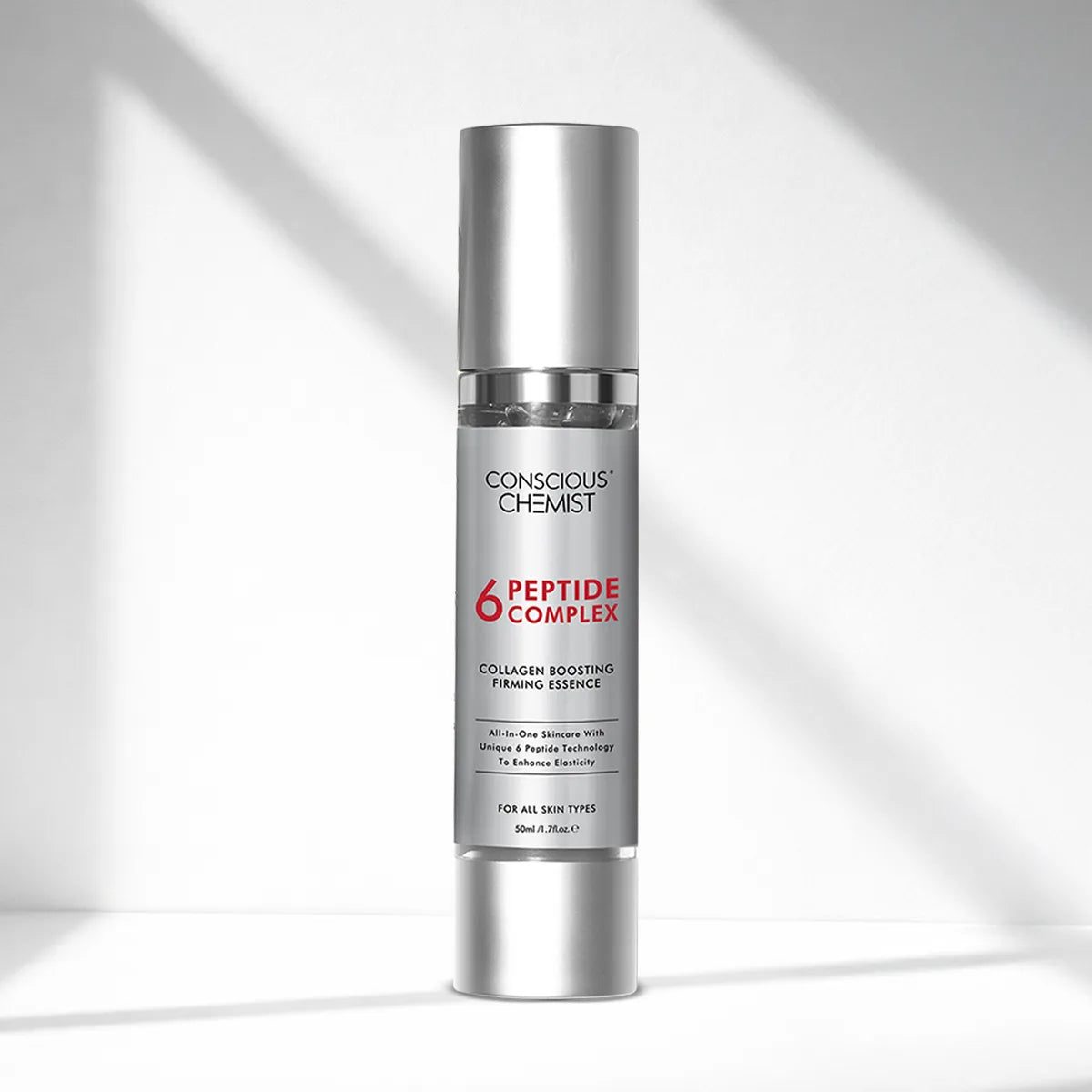
If you want a lightweight, oil-free face cream for glowing skin that combines hydrolyzed collagen with peptides and instant tightening technology, try Conscious Chemist face cream in a collagen jelly format.
This collagen skin cream pairs hydration with a multi-peptide complex and surface-tightening technology. Use it morning and night for 2 to 3 weeks. Track hydration, smoothness, and visible firmness.
FAQs
1. Do collagen creams increase collagen inside the skin?
Topical formulas do not replace lost dermal collagen. They improve hydration and surface smoothness. Long-term firmness relies more on peptides, retinoids, and daily sun protection.
2. What is the difference between collagen and hydrolyzed collagen in skincare?
Hydrolyzed collagen consists of smaller fragments. It improves conditioning and hydration performance in a collagen cream. It does not function like injectable treatments.
3. How long before visible changes appear?
Many users notice immediate hydration. Assess firmness and elasticity after consistent use for 2 to 4 weeks while maintaining daily SPF.
4. Are collagen creams suitable for oily or acne-prone skin?
Yes, if the texture is lightweight. Choose a gel or jelly cream instead of a heavy occlusive formula. Patch testing remains important.
5. Can I combine a collagen moisturizer with retinol or vitamin C?
Yes. Use vitamin C in the morning. Apply retinoid at night. Follow with your collagen cream used as a moisturizing layer. Introduce active treatments gradually.
6. What should I prioritize if firming is my goal?
Look for hydrolyzed collagen, peptides, and barrier-supporting hydration. Use sunscreen daily. Evaluate improvements in bounce rather than expecting structural lifting.
How to Restore Skin Bounce with a 1-Week Hydration Reset?
Best Oil-Free Moisturizer for Oily, Acne-Prone Skin