


If you are looking for a makeup remover that removes everything and still rinses clean, you are not alone. Many people try oil cleansing because it melts sunscreen and waterproof makeup fast, but then worry about a greasy film afterward.
The truth is, residue is not always a sign of a product failure. It usually comes down to two things: formula and technique. When you understand how a deep cleansing oil should emulsify and rinse, you can avoid that coated feeling without switching products constantly.
Rinse-off depends on how the formula behaves with water and how it is used. Choosing the right facial cleansing oil and knowing when double cleansing is needed can prevent residue while keeping the skin comfortable.
What Makes an Oil Cleanser Rinse Clean?
Rinsing clean does not mean tight or squeaky. It means makeup and SPF are removed, but your skin still feels comfortable.
Here is how to think about it:

P.S.: Clean should not mean tight.
Why does oil remove oil and can still leave a film
Oil dissolves oil-based makeup, SPF, and sebum quickly. That is why a good oil makeup remover works so well on long-wear products.
However, oil must emulsify with water to lift off the skin. If it does not turn milky and disperse properly, some of it can redeposit and feel like residue.
An oil cleanser rinses clean when it emulsifies fully with water, turning from oil to a milky rinse that lifts makeup and SPF off the skin instead of leaving a film.
The 3 most common reasons an oil cleanser feels greasy
A greasy after-feel is usually not random. It tends to come from either incomplete emulsification or a formula that does not disperse well with water. Understanding the common causes makes it easier to fix the issue without switching products unnecessarily.
You could be:
- Not emulsifying long enough
- Using too little water during the milky stage
- A formula that does not emulsify effectively
How to Choose an Easy-Rinse Oil Cleanser?
Not all oil cleansers behave the same once water is added. Some emulsify quickly and rinse off smoothly, while others feel heavier or leave a film behind. Knowing what to look for in the formula and texture can help you choose an option that removes makeup effectively without feeling greasy.
If you want a facial cleansing oil that rinses off quickly and leaves a smooth finish, here is what to look for.
Emulsifying capability is the top predictor
Look for signs that the formula is designed to mix with water:
- Turns milky quickly on contact with water
- Rinses without cloudy smears
- Does not require harsh scrubbing to feel clean
If an oil cleanser does not turn milky quickly, it is more likely to leave a film.
Light vs rich oils
The type of oil blend used in a formula affects how it feels during massage and how easily it rinses off. Understanding the difference between lighter and richer oils helps set realistic expectations about finish and comfort.

Non-comedogenic does not mean zero oil
A well-formulated deep cleansing oil can suit oily or acne-prone skin because it is rinse-off and emulsifying. Breakouts are more likely when residue is left behind, not simply because oil was used.
Quick at-home rinse test
Before committing to a product:
- Apply to dry skin. Add wet hands. Does it turn milky quickly?
- Rinse. Does water run clear or stay slick?
- After patting dry, does skin feel soft or waxy?
Individual preference matters, but these tests help predict performance.
Rinses-Clean Scorecard
This scorecard helps you quickly evaluate whether an oil cleanser is likely to rinse clean or leave residue. It breaks down simple signs to look for during application and rinse-off so you can choose with more confidence.
|
What to check |
Green Flag |
Red flag |
|---|---|---|
|
Emulsifying step |
Turns milky fast |
Stays clear and slippery |
|
Rinse stage |
Water runs clear |
Oily sheen remains |
|
After pat dry |
Soft and balanced |
Waxy or coated feel |
|
Makeup removal |
Lifts easily with light massage |
Requires heavy rubbing |
Evidence for SPF removal
Studies comparing cleansing methods have found that cleansing oils can leave lower levels of sunscreen residue than water or foaming cleansers, especially with waterproof formulas.
According to the National Library of Medicine, the Journal of Cosmetic Dermatology reported that residue rates after cleansing oil use were around 5.8 per cent for waterproof sunscreen and 13.4 per cent for non-waterproof formulas.
This supports using oil cleansing when you wear SPF daily.
How to Remove Makeup Fast Without Leaving Residue?
Not all makeup requires the same removal approach. Light base products and daily sunscreen wash off differently than long-wear or waterproof formulas. Adjusting your oil cleansing method to what you are wearing helps remove buildup faster, keeps the skin comfortable, and reduces friction.
For everyday sunscreen and light makeup
Use the 30–60 second method:

For waterproof makeup
You do not need a harsher cleanser. You need smarter placement.
Use the targeted melt method:
- Apply oil directly to the mascara or liner area
- Hold briefly
- Gently roll with fingertips
- Emulsify fully
- Rinse
If needed, repeat oil only on stubborn areas.
For waterproof makeup, the fastest way to avoid residue is to do a targeted melt first, then emulsify thoroughly. Rubbing harder usually makes removal worse.
Signs you are done with Double Cleansing
These simple cues help you know when makeup and sunscreen have been fully removed so you can stop cleansing without overdoing it.
- No grit at lashline
- No foundation transferring
- Skin feels cushioned, not tight
Squeaky is not the goal.
Match Your Cleanse to What You Wore
A tight, squeaky feeling usually means you have over-cleansed. The goal is thorough removal without stripping the skin.
|
You wore |
Do this with your oil cleanser |
Follow with a second cleanse? |
|---|---|---|
|
Light sunscreen |
30 second massage + emulsify |
Optional |
|
Heavy SPF |
Full massage + thorough emulsification |
Yes |
|
Waterproof mascara |
Targeted melt + emulsify |
Yes |
|
Full long-wear base |
Full massage + check hairline |
Yes |
Keynote: For waterproof makeup, start with a focused melt on stubborn areas, then emulsify fully before rinsing. Pressing or rubbing harder usually increases friction instead of improving removal.
When Should You Double Cleanse?
Most residue problems are left during the rinse step. Small changes there can fix the coated feeling, and sometimes a second cleanse helps.
Rinse-off checklist
Before blaming the cleanser, it helps to check how you are rinsing. Small tweaks during this step can prevent that coated feeling.
- Use lukewarm water
- Emulsify for 15 to 30 seconds
- Rinse longer than you think
- Check hairline and jawline
- Repeat oil only if the makeup was heavy
Is residue always bad?
A soft, hydrated feel is normal. A waxy film that blocks absorption is not. If skin feels coated, extend emulsification or follow with a gentle second cleanser.
When to follow with double cleansing?
Do a second cleanse if:
- You wore heavy SPF
- You wore waterproof makeup
- You are acne-prone and feel like you have a film
- You sweat heavily
If skin is dry or sensitive, keep the second cleanser mild.
If your skin feels coated after an oil cleanse, the fix is usually to let it emulsify longer or do a gentle second cleanse, not harsher scrubbing.
As per Alibaba.com, not all cleansing oils contain enough emulsifier concentration for full rinse-off, and some can leave measurable lipid residue on skin models [cite-4]. This highlights the importance of choosing a well-formulated product.
Just Remember: If your skin feels sticky after an oil cleanse, the fix is usually longer emulsification or a gentle second cleanse and not harsher scrubbing.
Conclusion
A makeup remover that rinses clean depends on both formula and technique. The right emulsifying oil and proper oil-to-water steps help remove SPF and makeup without leaving residue or stripping the skin.
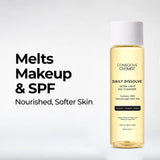
If you want a first-step cleanser that melts sunscreen and waterproof makeup quickly and turns into a true milky rinse, choose an oil cleanser that supports the moisture barrier. Conscious Chemist Daily Dissolve Oil Cleanser works as a deep cleansing oil, facial cleansing oil, and oil makeup remover in one step. It emulsifies well, rinses comfortably, and fits easily into a double cleansing routine when needed.
FAQs
1. Why does my oil cleanser leave a film even after rinsing?
Most often, it is incomplete emulsification. Add more water and massage until fully milky, then rinse.
2. Is it normal for skin to feel soft after oil cleansing?
Yes. Soft is normal. Waxy or coated is not.
3. Do oil cleansers remove waterproof sunscreen better than face wash alone?
Often yes. Oils dissolve oily films, such as SPF, more efficiently than water-based cleansers.
4. Can oily or acne-prone skin use an oil cleanser?
Yes, especially an emulsifying rinse-off formula followed by double cleansing if needed.
5. What water temperature helps an oil cleanser rinse clean fastest?
Lukewarm water works best.
6. Should I double cleanse every day?
Use double cleansing on days you wear SPF or makeup. Keep it gentle on minimal-product days.

Share:
How to Use an Oil Cleanser in Your Skincare Routine Without Residue?
Oil-to-Milky Cleansers Explained: What Emulsifying Means and Why It Rinses Cleaner?