


Many people reach for a bottle of vitamins the moment they notice extra strands in the shower drain. Among these, Biotin is often the first choice. While this vitamin plays a vital role in hair health, it is rarely a standalone miracle. Understanding how it interacts with your scalp and hair biology is the first step toward finding the best solution for hair fall and thinning hair.
What Does Biotin Do for Your Hair?
Before loading up on biotin gummies, it helps to understand what this vitamin actually does and where it falls short. So, here is a realistic, science-backed explanation without exaggerated claims

What Is Biotin and How Does It Support Hair?
Biotin is a water-soluble B vitamin (vitamin B7) that your body uses to convert food into energy. It also plays a supporting role in producing keratin, the structural protein that makes up your hair strand. It does not directly create new follicles or increase hair count.
Why Hair Regrowth Is Not Controlled by One Ingredient?
Visible hair outcomes depend on several factors working together:
-
Follicle cycle health: whether your follicles are cycling through regrowth, rest, and shedding phases normally
-
Scalp environment: oil balance, inflammation, buildup, and scalp conditions like dandruff
-
Strand integrity: breakage from heat, chemicals, mechanical stress, or hard water
-
Systemic health: nutrition, stress levels, hormonal balance, thyroid function, and iron levels
What Is the Difference Between Hair Regrowth vs. Reduced Breakage?
Most people confuse new regrowth with reduced breakage. Biotin often helps by making the existing hair shaft more resilient. This leads to less snapping, which makes the hair look longer and fuller over time, even if the follicle count remains the same.
Is Biotin Good for All Hair or Only for Those with a Deficiency?
The question "does biotin work for hair loss?" does not have one universal answer. It depends on why your hair is falling out in the first place.
Can Biotin Fix Hair Loss Caused by Deficiency?
Yes, if you have a biotin deficiency, supplementation may improve hair quality. Signs that deficiency may be a factor include:
-
You follow a diet that strictly limits eggs, nuts, legumes, and whole grains
-
You have certain gastrointestinal conditions that affect nutrient absorption
-
You have been on long-term antibiotics
-
Your labs confirm low biotin levels
How Does Biotin Impact Hair Loss in Non-Deficient People?
This is where the picture gets less encouraging. When researchers look at biotin supplementation in people whose biotin levels are already adequate:
-
A 2024 PubMed review reported no significant difference in hair regrowth between biotin supplementation and placebo groups in available clinical trials.
-
Results across studies are highly variable and often based on small sample sizes.
-
Many positive reports involve people who had underlying deficiencies, making it difficult to generalize.
What is Telogen Effluvium and Why Biotin Cannot Treat Sudden Hair Shedding?
Telogen effluvium (TE) is one of the most common causes of diffuse hair shedding, especially in women. Here is how it works:
-
A physical or emotional stressor triggers a large number of follicles to enter the resting (telogen) phase simultaneously.
-
Two to three months after the trigger, those follicles shed their hair at once.
-
The shedding can feel dramatic and alarming, even though it is usually temporary.
Since biotin deficiency is not a common cause of TE. Therefore, biotin supplements cannot cure this issue.
Is My Hair Loss Normal? A Quick Checklist for Clinical Testing

Consider speaking with a dermatologist or trichologist if you notice:
-
Shedding has continued for more than 8 to 12 weeks
-
Visible thinning patches or a widening part
-
Heavy, sudden shedding following illness, surgery, or delivery
-
Symptoms of thyroid imbalance (fatigue, weight change, temperature sensitivity)
-
Scalp itching, burning, or visible flaking
-
Signs of iron deficiency (fatigue, pale skin, brittle nails)
-
Recent crash dieting or dramatically restricted eating
Which One is Right for You: Topical Biotin vs. Biotin Supplements?
Choosing between a pill and a serum depends on whether you want to nourish the body or protect the hair strand. Both methods have distinct roles in a science-backed hair regrowth product routine.
What Does Topical Biotin Do for Hair?
Topical biotin, found in shampoos, serums, and leave-in sprays, works at the surface level.
-
It supports hair fiber strength and the overall scalp environment.
-
Works best when combined with ingredient-led hair regrowth routine approaches.
-
Does not directly stimulate new hair regrowth.
How to Use Topical Products Correctly?
Simple rules that prevent the most common application mistakes:
-
Apply to a clean scalp as directed
-
Massage gently without aggressive rubbing
-
Avoid layering heavy oils on oily or dandruff-prone scalp
-
Patch test before regular use
-
Stop use if irritation increases shedding
When Should You Take Biotin Supplements?
A hair regrowth kit with biotin and caffeine or a standalone biotin supplement is most logical when:
-
Your diet is consistently low in biotin-rich foods (eggs, nuts, seeds, legumes, whole grains)
-
A lab test has flagged low biotin levels
-
A clinician has recommended supplementation as part of a broader nutritional plan
Are Biotin Supplements Safe?
High-dose biotin can interfere with critical blood tests, including thyroid and heart health markers. You must disclose your supplement use to your doctor and pause it before any lab work.
How Long Does Biotin Take to Show Results?
Understanding the hair regrowth cycle sets realistic expectations:
-
8 to 12 weeks: Earliest window to notice reduced shedding or improved hair texture.
-
4 to 6 months: More visible changes in density if the root cause is being addressed.
-
12 months+: Meaningful reregrowth from follicle-level treatments.
Topical Biotin vs Supplements: Quick Decision Table
A simple comparison to help you choose between topical care and supplements based on your hair concern and underlying needs:
|
If you… |
Topical biotin makes sense when… |
A supplement makes sense when… |
|
Notice breakage and weak strands |
You want daily strand support |
You suspect nutritional gaps |
|
Have an oily or sensitive scalp |
You need lightweight scalp care |
You have confirmed a deficiency |
|
Want visible texture improvement |
You want smoother, stronger hair feel |
Your doctor recommends supplementation |
|
Experience unexplained shedding |
You need external support while investigating causes |
You are addressing internal deficiencies |
Why Is Your Hair Still Shedding After Using Biotin?
If you have been taking vitamins but still see thinning, you are likely missing the "scalp-to-strand" connection. Addressing hair health requires a modern hair care for hair fall control approach that tackles shedding and breakage simultaneously.
How to Identify Your Hair Fall Type at Home?
These require different solutions, so identifying which one you have is the first step.
Check the fallen strand:
-
White bulb at the root: This is shedding. The hair completed its cycle and was released from the follicle. Focus: scalp health, follicle support, identifying systemic triggers.
-
No bulb, irregular short pieces: This is breakage. The strand snapped mid-shaft. Focus: conditioning, repair, and reducing mechanical and chemical stress.
Why Does Scalp Health Determine Hair Regrowth?

An unhealthy scalp is like compacted soil; even strong seeds struggle to thrive. Common scalp issues that accelerate shedding include:
-
Excess oil production
-
Dandruff or itching
-
Hard water buildup
-
Heavy oil layering
Use a caffeine shampoo for hair regrowth that cleans without stripping. And, maintain a balanced scalp environment for consistent results.
How To Support Your Hair Between Washes?
Most people treat their scalp only on wash day, at most two or three times a week. The rest of the time, the follicle environment receives no active support.
-
Many routines ignore daily scalp care
-
Follicles need continuous support
-
Lightweight leave-on products help maintain:
-
Hydration
-
Comfort
-
Reduced buildup
What Is A Practical 8 to 12 Week Routine for Hair Fall Control?
A complete system that goes beyond biotin
Step 1: Pre-wash nourishment
-
Use a light oil 1 to 2 times weekly
-
Avoid daily oiling if the scalp is oily
Step 2: Gentle cleansing
-
Use a non-stripping, hard-water-friendly shampoo
-
Focus on scalp, not lengths
Step 3: Anti-breakage conditioning
-
Apply conditioner to mid-lengths
-
Reduce combing damage
Step 4: Daily scalp support
-
Use a lightweight spray for hydration
-
Maintain follicle environment
Step 5: Night-time treatment
-
Apply a targeted serum to the scalp
-
Look for redensyl hair regrowth products and peptides
Which Hair Regrowth Kit Covers All Five Steps of a Haircare Routine?
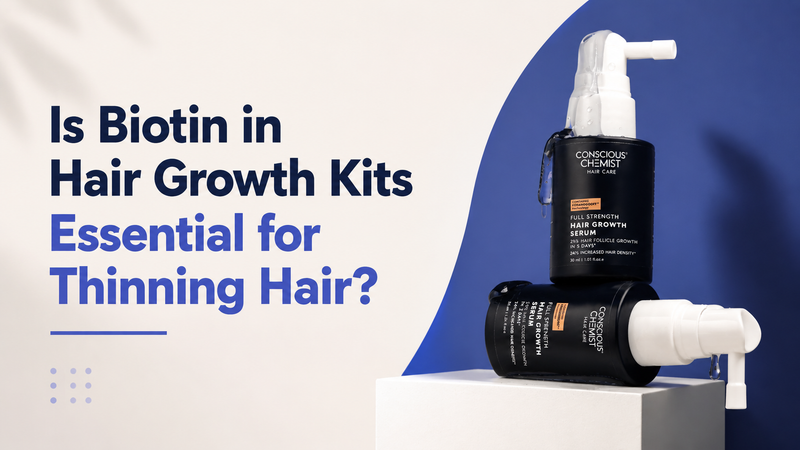
Most kits give you one or two steps and leave the rest to guesswork. The Conscious Chemist Advanced Hair Regrowth Kit is built around a complete, five-step system. Therefore, every part of the routine works together from day one.
The kit includes:
-
Oil: pre-wash nourishment to prep the scalp before cleansing
-
Caffeine Shampoo: gentle, hard-water-safe cleansing with scalp-stimulating actives
-
Leave-In Conditioner: applied before combing to cut breakage on damp hair
-
Daily Scalp Spray: lightweight between-wash follicle support that does not require rinsing
-
Targeted Scalp Serum: overnight treatment with concentrated regrowth actives
Frequently Asked Questions
1. Does biotin actually regrow hair?
Biotin does not usually regrow hair on its own. It helps strengthen hair structure and works best when a deficiency exists. In most cases, visible regrowth depends on fixing scalp issues, breakage, or internal triggers.
2. Is topical biotin better than biotin tablets for hair fall?
They serve different roles. Topical biotin supports the scalp and reduces breakage, while supplements help when there is a nutritional gap or deficiency.
3. How long does biotin take to show results for hair?
Early changes, such as reduced breakage, may appear within 8 to 12 weeks. Visible thickness or density takes longer and depends on overall hair care.
4. Can biotin supplements make lab tests inaccurate?
Yes, high-dose biotin can interfere with certain blood test results. Always inform your doctor before testing.
5. Why am I still shedding even after taking biotin?
Because biotin does not address common causes like stress-related shedding, scalp buildup, or hair damage. A complete routine is required.
6. Can I use hair regrowth products on colored or chemically treated hair?
Yes, if the products are gentle and non-stripping. Focus on routines that support scalp health and prevent breakage.

Share:
5-Step Hair Regrowth Routine for Hair Fall and Thinning (2026)
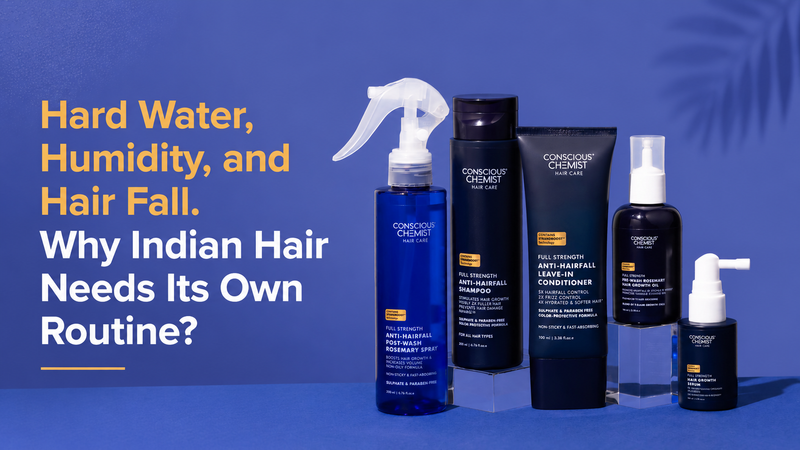
Hard Water, Humidity, and Hair Fall. Why Indian Hair Needs Its Own Routine?