


Got a pimple before an important day? Here’s the dermatologist-approved rescue plan.
It always happens at the wrong time. The day before a meeting, a wedding, or a first date, you notice that tiny red bump forming on your cheek or chin. Panic sets in, and every mirror seems to make it look bigger. You try concealing it, icing it, or hoping it’ll fade overnight. But breakouts have their own timing.
The good news? You can visibly calm and flatten a pimple within hours using the right ingredients in the right order. Dermatologists call this early phase “acute management” — treating inflammation before it matures into a full-blown breakout. When handled quickly and correctly, you can interrupt the cycle, reduce swelling, and prevent dark marks before they appear.
Here’s your 6-Hour Rescue Routine, powered by three clinically backed actives — Sulphur, Salicylic Acid, and Azelaic Acid. Each step is timed, tactical, and targeted to stop a breakout in its tracks.
The 2-Hour Plan: Calm redness and swelling
Why calming inflammation early matters
What you see on the surface — the redness, tenderness, or slight swelling — is just the beginning. Beneath the skin, oil glands are overactive, bacteria are multiplying, and inflammation is rising fast. The earlier you intervene, the less severe the breakout becomes.
Sulphur: The classic antibacterial that works fast
Sulphur has been used in dermatology for decades because it targets multiple triggers at once. It:
-
Kills acne-causing bacteria on the surface
-
Breaks down keratin plugs that clog pores
-
Absorbs excess oil to rebalance the follicle
It’s also gentle. Unlike alcohol-based drying lotions, Sulphur minimizes irritation while calming the skin.
Applying a thin layer directly on the active spot begins the process of reducing inflammation within the first two hours.
Niacinamide: The calming companion
To support the skin barrier, the formula includes Niacinamide (Vitamin B3) — a proven anti-inflammatory and redness-reducing active. It reinforces the skin’s defense while Sulphur works to neutralize bacteria.
Together, they create a fast-acting yet balanced first step that helps flatten redness without over-drying or peeling.
By hour two, the goal is stability: less redness, reduced tenderness, and a visibly calmer surface.
The 4-Hour Plan: Deep pore-unclogging with Salicylic Acid
What’s happening by hour four
Even if the surface looks calmer, the pore underneath may still be blocked with oil and dead cells. This congestion traps bacteria, fueling inflammation and creating that painful, under-the-skin swelling.
Addressing this buildup early prevents the pimple from enlarging or resurfacing later.
Salicylic Acid: The deep-cleaning BHA
Here’s where Salicylic Acid (BHA) does its best work. It’s oil-soluble, which means it can pass through sebum and reach deep into the pore — a property that water-based exfoliants lack. Once inside, it:
-
Loosens and removes compacted debris
-
Exfoliates the inner pore wall
-
Helps normalize oil production
-
Reduces the environment where bacteria thrive
Clinical studies have shown Salicylic Acid to be one of the most effective single ingredients for unclogging pores and reducing inflammatory acne lesions. When combined with calming actives, it clears the blockage without stripping the surrounding skin.
In Conscious Chemist’s Acne Spot Corrector Gel, Salicylic Acid works in synergy with Sulphur and Azelaic Acid, forming a three-phase solution that handles every stage of a breakout — calm, clear, and correct.
How to apply
For this step, precision matters.
-
Start with freshly cleansed, dry skin.
-
Apply a small amount of gel directly on the spot.
-
Avoid spreading it over unaffected areas.
-
Let it absorb completely before layering moisturizer or sunscreen.
-
Use up to three times daily, depending on sensitivity.
-
Skip other acids or retinoids to prevent over-exfoliation.
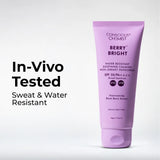
In the morning, always follow with sunscreen such as Berry Bright SPF 50 PA++++. Salicylic Acid increases skin’s sensitivity to UV, so SPF keeps healing consistent and prevents new pigmentation.
The 6-Hour Plan: Heal and prevent post-acne marks with Azelaic Acid
Why healing is essential
After a few hours, the active bump begins to flatten, but the skin underneath is still inflamed. If untreated, that inflammation can lead to dark spots or uneven tone. The goal now is repair — to ensure the blemish fades cleanly without leaving a trace.
Azelaic Acid: The multi-benefit healer
Azelaic Acid (AzA) is one of dermatology’s most versatile actives. It:
-
Reduces bacterial activity inside the pore
-
Balances cell turnover to smooth texture
-
Minimizes pigment production that causes dark spots
Clinical research confirms that Azelaic Acid helps reduce acne lesions while also improving post-inflammatory hyperpigmentation. It’s both corrective and preventive, making it an ideal final step in the 6-hour routine.
Reapply the spot gel to clean, dry skin, targeting the treated area only. Follow with moisturizer and sunscreen in the morning. The lesion continues to flatten, redness fades, and with consistent use, dark marks are less likely to form.

Bonus: The makeup-safe spot routine (AM & PM)
Morning routine
-
Cleanse with a mild, non-stripping cleanser.
-
Apply a thin layer of the spot gel to active areas.
-
Wait two minutes before applying sunscreen.
-
Use lightweight, breathable makeup if needed.
Evening routine
-
Remove makeup and sunscreen completely.
-
Reapply the gel to clean skin.
-
Use a light moisturizer to maintain hydration.
-
Avoid thick creams or occlusive layers.
Precautions
-
Use two to three times daily as needed.
-
Patch test before first use.
-
Avoid layering with other exfoliating acids or retinoids.
-
Always finish with sunscreen during the day.
Fast-Action Timeline for a Breakout
|
Time |
What’s happening under the skin |
What the spot treatment does |
|
0–2 hours |
Redness and inflammation surge |
Sulphur + Niacinamide calm and reduce swelling |
|
2–4 hours |
Pores fill with oil and bacteria |
Salicylic Acid clears clogs and prevents buildup |
|
4–6 hours |
Lesion flattens, tone uneven |
Azelaic Acid heals and helps prevent pigmentation |
With consistent application, visible improvement often starts within a single day.
Meet Conscious Chemist Acne Spot Corrector — The clear gel that works in hours
When a breakout threatens to take over your day, reach for science, not stress. The Conscious Chemist Acne Spot Corrector is a transparent, fast-absorbing gel formulated with Sulphur, Salicylic Acid, and Azelaic Acid — three dermatologist-approved actives proven to act quickly and gently.
The formula dries active zits, clears congested pores, calms redness, and supports healing without residue or flaking.
Use it up to three times daily on clean skin for visible results within hours. With continued use, it helps maintain clarity and prevents future breakouts.
Dermatologist-tested, fragrance-free, and non-comedogenic, it’s the one step your emergency skincare kit shouldn’t be without.
Frequently Asked Questions
Q. Can a pimple really improve in one day?
Yes. You can reduce redness and swelling in hours using targeted actives like Sulphur and Salicylic Acid.
Q. Why does a pimple look worse before it heals?
That’s temporary purging as trapped oil and debris clear from the pore. It settles once the blockage is gone.
Q. Is Sulphur safe for sensitive skin?
Yes. It’s one of the gentlest antibacterial ingredients and dries excess oil without irritation.
Q. How does Salicylic Acid differ from Benzoyl Peroxide?
Salicylic exfoliates inside the pore to remove clogs. Benzoyl Peroxide works on the surface and may cause dryness.
Q. Why include Azelaic Acid?
It treats acne and pigmentation together, preventing post-spot dark marks while supporting recovery.
Q. Can I wear makeup after applying the gel?
Yes. The formula dries clear and layers well under makeup or sunscreen.
Q. Does it prevent future breakouts?
Regular use helps regulate oil flow and keeps pores clean, lowering the risk of new pimples.
Q. How many times a day can I use it?
Apply up to three times daily on clean skin, spacing applications a few hours apart.
Q. Will it help fade acne scars?
Yes. Azelaic Acid reduces post-acne pigmentation and promotes more even tone with consistent use.
Q. Should I use sunscreen with it?
Absolutely. Always follow spot treatments with SPF to protect healing skin and prevent dark spots.

Share:
The Silent Killer: Why Winter Sun Hurts Your Skin More
Overnight Acne Fixes That Actually Work: Science, Not Myths