


If every sunscreen you try breaks you out… you are not alone, and it’s not your fault.
We know the cycle: you try to protect your skin, but instead you get greasiness, clogged pores, and new bumps that feel like a betrayal. Sunscreen shouldn’t make you dread your skincare routine. It should defend your confidence, not damage it.
There’s a common fear that “SPF causes acne” but this is not accurate. Most breakouts related to sunscreen come from heavy, suffocating textures, not from UV filters themselves. Sunscreen remains essential to prevent pigmentation, premature ageing and post-acne marks…. the very things many of us are trying to fix.
If SPF has ever made your skin feel greasy, sweaty, itchy, or more textured, this guide will help you choose smarter.
We’ll break down why some sunscreens clog pores, how to read labels the right way, and what lightweight gel protection can do for oily and acne-prone skin in Indian weather.
Why Some Sunscreens Trigger Acne
If sunscreen breaks you out, you are usually reacting to how the product is built, not the UV filters protecting you. The vehicle (texture, film, base) determines whether your skin can breathe… or gets suffocated.
How Occlusive Vehicles Trap Sweat, Sebum & Heat
Many sunscreens — especially thick creams — are formulated with occlusive ingredients that create a film on top of skin. This kind of barrier is great for dry skin but problematic for oily and acne-prone skin because the surface layer becomes a sealed trap.
Common occlusives in heavy SPFs:
-
Butter-type emollients (like shea)
-
Thick waxes
-
Petrolatum-based oils
-
Rich cream emulsions
Under hot and humid conditions (like most parts of India), this occlusive layer:
-
Traps sweat → stickiness, irritation
-
Traps sebum → faster pore blockage
-
Traps bacteria → inflammatory acne
-
Traps heat → boosts oil production even more
This means even if a sunscreen protects well under the sun, it works against your skin’s biology, leading to tiny bumps by the evening or next morning.
Meanwhile, gel sunscreens:
-
Spread thinly and evenly
-
Allow heat and sweat to escape naturally
-
Don’t mix with excess oil
-
Feel like almost nothing on the skin
Because the film stays lightweight and breathable, your face does not feel like it is “boiling under sunscreen.”
Comedogenicity: What It Actually Tells You
“Comedogenic” = the likelihood to clog pores.
But this term is not absolute, and the industry has misused it for years.
Limitations of older testing:
-
Tested single ingredients not full formulas
-
Done on rabbit ears, overly sensitive compared to humans
-
Did not account for heat + sweat + humidity
-
Didn’t measure how long SPF sits on skin (8+ hours!)
So even a product labelled “non-comedogenic” can still cause breakouts if:
-
The film is too occlusive
-
You live in a hot climate
-
Sweat collects under the SPF
-
You apply more during reapplication
In the real world: texture = truth
Your skin can tell instantly what the label cannot.
To simplify this:
|
Vehicle Type |
Occlusivity |
Feel on Skin |
Breakout Risk |
|
Heavy Creams |
High |
Greasy |
High |
|
Wax based oils |
High |
Sticky |
High |
|
Gel hybrids |
Low |
Lightweight |
Low |
What Non-Comedogenic Actually Means
The term “non-comedogenic” sounds reassuring but unfortunately, it is not a strictly regulated standard. Two different products can carry the label while behaving very differently on oily skin.
In reality, what matters is not just what ingredients are used but how they are arranged in the formula.
Labeling Reality
Dermatologists (AAD) note that it’s safer to look for cues like oil-free, fragrance-free, or gel-based formulas rather than relying on the label alone.
How to Read Ingredient Lists
If the first 5–7 ingredients in a sunscreen include heavy emollients or waxes, the film formed will likely be too thick for acne-prone skin, causing pores to choke under sweat and sebum.
Ingredients oily skin should avoid at the top of the list:
-
Coconut oil
-
Shea butter
-
Beeswax or microcrystalline wax
-
Petrolatum / mineral-oil-rich bases
These are excellent for dry skin but can trigger congestion for oily skin, especially in hot climates.
Instead, look for:
-
Water (Aqua) as Ingredient No. 1
-
Oil-free or low-oil systems
-
Silicone-based breathable films like dimethicone
-
Hybrid UV filters that support thin film formation
It’s less about eliminating oils completely… and more about choosing textures that work with your skin’s biology instead of overpowering it.
Quick Rule: If your sunscreen feels like a moisturizer, it may be too much for acne-prone skin.
If it feels whisper-light, your pores can breathe easier.
The Double-Gel Advantage for Oily Skin
Most gel sunscreens today are not just watery gels, they use advanced networks specifically engineered for humid climates.
What Is a Dual-Gel Network?
A modern gel SPF uses:
-
A filter-holding gel for even SPF coverage
-
A flexible breathable film that adapts to skin movement
This structure ensures:
-
Filters don’t clump or separate (no patchy protection)
-
Sweating doesn’t disturb the SPF film
-
Makeup sits better without pilling
-
Skin doesn’t feel overheated
It gives matte comfort without drying the skin, the perfect middle ground for oily but dehydrated skin.
Why Gels Perform Better in Indian Weather
India has months of sweating weather, not just summer.
SPF should be designed for this reality.
|
Type |
Feel |
Breathability |
Humidity Wear |
Acne Safety |
|
Cream SPF |
Heavy |
Low |
Poor (melts fast) |
Higher risk |
|
Double-gel SPF |
Light |
High |
Strong (stays intact) |
Best choice |
Thinner films = Less buildup = Fewer breakouts.
Ingredients That Calm Acne-Prone Skin
Sunscreen can support acne recovery if it includes soothing actives.
|
Active |
Mechanism |
Ideal Benefit |
|
Niacinamide |
Reduces sebum + redness |
Clearer complexion |
|
Ceramides |
Repairs barrier strength |
Less irritation |
Niacinamide is especially beneficial during heat-induced redness, it helps keep skin looking even and controlled through the day.
Ceramides are tiny lipids naturally found in skin. When acne treatments weaken the barrier, ceramides ensure SPF doesn’t sting, irritate, or cause that “burning in the sun” feeling.
Other supporting ingredients that help oily skin:
-
Panthenol → comfort + moisture balance
-
Centella → calming inflamed breakout-prone areas
-
Green tea → reduces oxidative stress from UV rays
A good sunscreen can be acne defense + sun defense rolled into one.
Dermatologist-Backed Application Tips
A great formula still needs great usage habits.
-
Use the two-finger rule for face + neck
-
Apply 15 min before stepping outdoors
-
If SPF already feels hydrating → skip moisturiser
-
Reapply every 2–3 hours outdoors
-
Reapply by dabbing, don’t rub and disturb base makeup
-
Cleanse thoroughly, SPF needs double cleansing at night
People often misjudge sunscreen because they apply too little or remove it poorly. When SPF sits on skin overnight, that is when breakouts increase the most.
Key areas often forgotten but prone to pigmentation:
-
Hairline and sides of the forehead
-
Nose creases (where oil collects most)
-
Jawline and chin (helmet & mask friction)
-
Upper neck where acne marks darken quickly
Great sunscreen habits = faster acne mark fading.
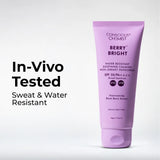
Meet Berry Bright - Lightweight Hybrid Gel Sunscreen
A sunscreen designed for oily, acne-prone and easily irritated skin….especially in hot climates.
Key Features
-
Double-network hybrid gel technology
-
Zero white cast on all skin tones
-
Niacinamide + ceramides for barrier comfort
-
Mattifying yet non-drying finish
-
Oil-free breathable film
-
Makeup-friendly and sweat-resistant
User Results
-
92% saw less greasiness after 8 hours
-
89% reported no new breakouts in 4 weeks
-
95% said it felt comfortable in humidity
You don’t have to choose between:
✔ Sun protection
✔ Comfort
✔ Clear skin
Berry Bright makes all three happen, every single day.
Takeaway
Your skin deserves protection that doesn’t punish you for having acne-prone skin.
With the right formula, you can stay safe from sun damage without the fear of new breakouts. And if you want to fine-tune how your sunscreen looks on your skin, our guide “Glowy, Dewy, or Matte? How to Pick a Sunscreen Finish That Fits Your Routine” will help you choose a finish that matches your everyday vibe.
FAQ
Q. Do sunscreens cause acne?
Not the UV filters, heavy, occlusive bases usually cause congestion.
Q. Can I skip SPF because I break out?
No — without sunscreen, acne marks darken and stay longer.
Q. Is “non-comedogenic” always safe?
Not always — textures behave differently in humid climates.
Q. How do I reapply sunscreen over makeup?
Dab instead of rubbing….use a sponge or SPF stick.
Q. Does sunscreen help fade acne marks?
Yes. Consistent protection prevents darkening of post-acne spots.
Q. Can I wear SPF indoors?
Yes — UVA from windows still triggers pigmentation.
Q. Can gel sunscreen replace moisturizer?
If your skin is oily and the gel has hydrating actives, absolutely.
Share:
Skincare Guide for Teens
Glowy, Dewy, or Matte? How to Pick a Sunscreen Finish That Fits Your Routine