


If your SPF has ever made your makeup melt off by noon or left you shining like a disco ball, the problem isn’t you. It is the finish of the sunscreen you are using. Your SPF should not ruin your makeup.
Finishes matter. They influence how foundation grips your skin, how long blush stays in place, and whether your T-zone stays calm through the day. Before worrying about whether a sunscreen is mineral or hybrid or chemical, you should ask how it looks and behaves once applied.
This guide will help you understand why makeup separates over greasy SPFs, how to match sunscreen finishes to skin types, and what modern gel-hybrid textures do differently so your makeup does not move.
Why Makeup Slips Over Greasy SPFs
Makeup is a film that sits on top of your sunscreen. If the sunscreen below is unstable or too oily, everything placed on top will break apart faster.
Most PPE studies show that the SPF film is responsible for holding makeup in place. If the film is not strong or moves easily when you sweat, makeup goes with it.
How Too-Oily Vehicles Break Down Makeup Film
Creamy sunscreens often contain rich oils, petrolatum, waxes, and butter-type emollients. These create an occlusive layer, which can be comfortable for dry skin but problematic if you wear makeup.
Oils migrate. They move with heat, humidity, and facial expression. When that happens under foundation, the structure of the makeup breaks apart.
Film-forming studies such as Kakuda (2023) show that a sunscreen with high oil content weakens the mechanical strength of the top film under temperature changes.
Poor Film Formation Causes Sliding and Patchiness
If a sunscreen does not form a cohesive film on drying, you get patchiness. Instead of a smooth surface, the foundation grabs on differently in different areas.
Signs of poor film formation:
• Foundation pills or rolls during blending
• Face looks patchy in certain zones
• Makeup breaks around the nose, mouth, chin
• Product feels tacky longer than usual
Film-forming polymers are what prevent this. They help the sunscreen dry uniformly so makeup grips better. Without them, makeup creases and separates by midday.
Best Texture for Layering Makeup
Texture determines how sunscreen interacts with sebum, sweat, humidity, and foundation. The three textures most commonly seen in India are gels, creams, and modern gel-hybrids.
Gel Sunscreens
These are water-light. They absorb quickly and feel like nothing on skin. They are great under makeup because the finish is often fresher and less occlusive.
Strengths:
• Very little movement under heat
• Best for oily and humid climates
• Helps makeup last longer
Limitations:
• Can feel tight on drier skin types
• Sometimes not moisturizing enough alone
Cream or Lotion Sunscreens
Comforting for dry or mature skin because they offer cushioning moisture. But they can feel greasy on oily or combination skin.
Strengths:
• Nourishing for dry patches
• Natural dewy finish for a soft-glow look
Limitations:
• Can cause the makeup film to slide
• Not friendly in high humidity
Hybrid Gel-Cream Sunscreens
These combine the spread of a cream with the breathability of a gel. They are more modern and designed for makeup users.
Strengths:
• Flexible film that moves with skin
• Maintains hydration without heaviness
• Best balance for normal to combination skin
Limitations:
• Availability still limited compared to creams
Texture vs Finish vs Best For
|
Texture |
Dry-Down Feel |
Finish Look |
Best Skin Type |
Makeup Compatibility |
|
Gel |
Quick dry, weightless |
Fresh and natural |
Oily, combination, humid weather |
Excellent |
|
Cream |
Slower dry, cushioned |
Dewy and moisturized |
Dry or mature skin |
Risk of slipping |
|
Hybrid gel-cream |
Flexible and breathable |
Soft matte or modern satin |
Normal to combo |
Best of both |
Dewy vs Matte Finishes: How to Pick One
Finish is the visual effect sunscreen leaves behind once it settles.
Choosing the wrong finish is the easiest way to ruin your makeup day.
Which Finish for Oily, Combo, or Dry Skin?
• Oily skin: Matte or hybrid finish to control shine buildup
• Combination skin: Hybrid finish that keeps T-zone calm but doesn’t dry cheeks
• Dry skin: Dewy finish to avoid tightness
• Normal skin: Any finish but match with the makeup vibe
Match Finish to Your Makeup Vibe
Think about your daily look.
• Want fresh-skin look: soft matte hybrid
• Dewy glass-skin: moisturizing dewy finish
• Matte long-wear base: matte finish SPF as the perfect primer substitute
Pick Your Finish
|
Skin Type |
Typical Concern |
Recommended Finish |
Why It Works |
|
Oily |
Shine by afternoon |
Matte or hybrid |
Controls sebum movement |
|
Combo |
Shiny T-zone, dry cheeks |
Hybrid |
Balances both zones |
|
Dry |
Makeup looks flaky |
Dewy |
Adds hydration and flexibility |
|
Normal |
Seasonal changes |
Any finish |
Adapt with makeup goal |
How Double-Gel Networks and Ceramides Maintain Hydration Without Shine
Modern sunscreens like double-network gels are engineered to be makeup friendly. They use advanced polymers that hold UV filters in a stable structure while allowing skin vapor to escape.
This means:
• No sticky residue
• Sweat escapes without disturbing makeup
• Film adapts to movement and expression
Ceramides add another advantage. They reinforce the barrier so skin stays hydrated underneath the matte finish.
Cao et al., 2024 confirmed that ceramide-containing sunscreens improve barrier strength by restoring lipid structures. This helps reduce irritation commonly seen in acne-prone users.
What you get is a finish that feels comfortable, controls glow, and pairs beautifully with foundation.
Pro Tips for Makeup Days
• Apply sunscreen as the final skincare step before makeup
• Let sunscreen dry completely before foundation
• Use a mattifying primer only where needed
• Choose a foundation formula that complements your SPF finish
If your sunscreen leaves a modern mattified base, you can often skip extra priming.
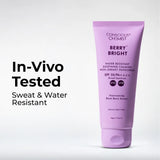
For many users, Berry Bright Gel-Hybrid Sunscreen becomes the perfect makeup base. It stays soft matte but never flat. It grips foundation instead of dissolving it. And maintains hydration throughout the day thanks to ceramides and a breathable gel-network structure.
Takeaway
The right sunscreen finish can make or break your makeup day. Choose a texture that matches both your skin type and the look you want.
If you need something stronger for sweat-heavy days, check out “Water-Resistant Sunscreens for Gym, Beach, and Outdoor Workouts” to upgrade your routine for outdoor or active wear.
FAQs
Q. Does the finish of a sunscreen really affect makeup?
Yes. Sunscreen acts as your makeup base. A greasy finish causes sliding while a stable film finish helps makeup grip better.
Q. Is gel texture always better under makeup?
Not always. Gels are ideal for oily and humid environments. Dry skin may prefer dewy or hybrid finishes that offer surface comfort.
Q. Should oily skin skip moisturizer and use sunscreen only?
If the sunscreen is hydrating enough with niacinamide or ceramides, you can skip moisturizer. Always test comfort for full-day wear.
Q. Can dry skin use a matte sunscreen but keep the glow?
Yes. Pair matte sunscreen with a hydrating primer on dry zones. This maintains smoothness while controlling shine.
Q. What is a hybrid texture sunscreen?
A sunscreen designed to provide the grip and quick dry of gels with the comfort of creams. Ideal for makeup days.
Q. How do ceramides improve finish and makeup compatibility?
They strengthen the barrier so the film stays intact. This prevents makeup from catching on dry patches or separating over time.
Q. Can my finish choice change seasonally?
Yes. Dewy or hybrid in winter. Hybrid or matte in summer. Sunscreen should adapt to weather shifts.
Q. What is the correct layering order under makeup?
Skincare. Sunscreen. Let it dry. Primer if needed. Then foundation. Never mix sunscreen into makeup.
Share:
Lightweight Sunscreens That Don’t Clog Pores or Cause Breakouts
Affordable Sunscreens That Actually Deliver in India: Top Picks Under ₹ 500 – ₹ 700