


You wear SPF to avoid tanning, yet your dark spots keep appearing or getting worse. What’s missing?
You apply sunscreen every morning, choose shade when outdoors, and spend most of your time indoors. But despite all this discipline, uneven tone still shows up in photos and acne marks take forever to fade.
It is not that sunscreen is failing. It is that regular sunscreen usually focuses on preventing sunburn. Pigmentation, dullness and marks need deeper protection and daily support from brightening ingredients too.
The good news is that the right sunscreen can do both. It can protect from UV damage while helping prevent and fade the dark spots you already have.
In this guide, we’ll show you how to pick an SPF that protects and brightens, so your skin tone can finally look as even as you want it to.
Tanning and Pigmentation Are Different Skin Responses
Pigmentation concerns are easier to manage when you understand the two main ways skin darkens. Both involve melanin but are triggered by different pathways, and they respond differently to sun exposure.
What Is UV Tanning (Melanin Up-Regulation)
UVB rays stimulate pigment cells to produce more melanin near the upper layers of skin.
This is your body’s natural defense system. More melanin equals a darker surface tone, which helps absorb and deflect UV radiation.
Key points:
• Triggered mostly by UVB
• Results in an overall tan
• Fades faster if future exposure is limited
Tanning is a uniform darkening response. If you stop exposure, the skin can often return closer to baseline.
What Is Post-Inflammatory Hyperpigmentation (PIH) and Dark Spots
PIH happens when inflammation causes overactive melanin production deeper in the skin.
This occurs after:
• Breakouts
• Skin picking
• Rashes or irritation
UVA exposure pushes pigment further into deeper layers, where fading is slower.
Visible and blue light can further stimulate these deeper melanocytes.
Key points:
• Triggered by inflammation + UVA + visible light
• Shows up as sharp, localized dark patches or spots
• Can last months without targeted protection
This is why acne marks and sun spots seem to return again and again.
Why Indian and Deeper Skin Tones Are More Vulnerable
Melanin-rich skin has more active melanocytes.
This means:
• Faster tanning from UVB
• Stronger pigmentation response to heat, irritation and light
• Dark spots become darker and last longer
Even brief, indirect exposure like sitting near a window can reactivate pigment cells.
Repeated triggers create a cycle: deeper marks form while older marks fade slowly.
Tanning vs PIH
|
Trigger |
Depth in Skin |
Appearance |
Response Time |
|
Mainly UVB |
Outer layers |
Overall tan |
Moderate |
|
Inflammation + UVA |
Deeper layers |
Localized dark marks |
Slow to fade |
Why Niacinamide and Antioxidants Are Helpful in Sunscreen
A sunscreen designed for pigmentation should not only protect skin from external triggers but also help reduce pigment formation internally. Niacinamide and antioxidants are well-studied for their role in evening tone and strengthening skin’s resilience.
Niacinamide for Visible Spot Reduction
Niacinamide targets pigmentation by reducing the transfer of melanin from melanocytes to skin surface cells.
In controlled studies, this mechanism lowered melanosome transfer by 35 to 68 percent, helping dark marks fade more efficiently with consistent use.
It also improves barrier function by increasing ceramide levels, reducing inflammation, and minimizing transepidermal water loss.
Antioxidants for Indoor and Outdoor Exposure
Antioxidants help defend the skin from reactive oxygen species generated by sunlight, pollution and heat.
Visible light, particularly blue light, has been shown to intensify pigmentation in deeper skin tones by activating melanogenesis pathways similar to UVA exposure.
Harvard Health and multiple dermatological studies confirm that visible-light-induced pigmentation is more stubborn and long-lasting in melanin-rich skin.
Why Adding These Into SPF is Efficient
Treating and protecting in the same step improves consistency. When sunscreen already contains brightening support, you reduce the chances of forgetting an additional product.
UVA Defense and Visible Light Protection for Long Term Results
To prevent dark spots and premature aging, sunscreen needs to protect deeper layers of skin. UVA is the main driver of long-term structural changes like fine lines, loss of firmness, and stubborn pigmentation.
UVA Protection
UVB mainly affects the outer skin and causes sunburn.
UVA penetrates much deeper. It breaks down collagen and elastin while overstimulating melanocytes. That is why fine lines and pigmentation often appear together.
Understanding PA++++
PA++++ offers the highest measured UVA protection used in Indian sunscreens. It reduces the worsening of marks caused by daily exposure.
According to dermatological reviews, PA++++ is the level recommended for pigmentation-prone and aging-prone skin because it reduces deep sun-triggered changes before they become visible.
Why Visible Light Also Matters
Blue and visible light can trigger pigment in melanin-rich skin.
Tinted sunscreens or those with specific light-filtering ingredients can support this additional defense.
A sunscreen for pigmentation should ideally protect against:
• UVB
• UVA
• Visible light
This gives broader coverage for both burning and darkening concerns.
What You Can Expect With Consistent Use

8 weeks of daily use vs control
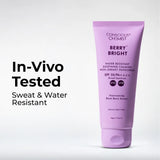
Meet Berry Bright: Your protection + brightening SPF
For skin that tans quickly or develops dark spots after every breakout, sunscreen must go beyond basic UVB protection.
Berry Bright is formulated to protect deeper layers of skin where pigmentation and early aging begin, while also supporting gradual clarity with every use.
What sets it apart:
• Broad-spectrum SPF 50 shields from UVB tanning
• PA++++ helps defend against UVA-driven pigmentation and fine lines
• Lightweight gel-hybrid base stays comfortable in heat and humidity
In internal evaluations:
• 85 percent of users saw reduced visibility of dark spots after 12 weeks
• 92 percent felt their skin looked more even and less dull
• 89 percent reported fewer new marks darkening with sun exposure
Berry Bright is designed for the realities of Indian weather and melanin-rich skin. It helps protect clarity while allowing skin tone to stay more consistent throughout the year.
If you are working toward a clearer, more even complexion, this is the kind of sunscreen that moves you forward daily.

Takeaway
Protecting pigmentation concerns requires more than just SPF.
You need a sunscreen that supports fading these marks every day. Look for formulas that combine protection with ingredients that help even tone.
If you would like to understand how UVA, PA ratings and blue light impact pigmentation, read Understanding SPF, PA++++, and Blue Light: The Complete Guide to Modern Sun Protection for a simple explanation of what your sunscreen should defend against.
FAQs
Q. Can sunscreen help fade pigmentation on its own?
It prevents marks from getting darker and allows natural fading to continue. When sunscreen also has brightening ingredients, it offers additional support.
Q. Why is PA++++ recommended for pigmentation concerns?
It indicates strong UVA defense. UVA increases the depth and stubbornness of pigmentation.
Q. How long until I see visible improvements?
Most people notice gradual results in 8 to 12 weeks with consistent daily use.
Q. Do I need both brightening serum and brightening sunscreen?
A serum may speed results but a brightening sunscreen is essential whether you use a serum or not.
Q. Can sunscreen protect from pigmentation indoors?
Yes. UVA can enter through windows and visible light from screens can contribute to pigmentation.
Q. Is niacinamide suitable for sensitive skin?
Yes. It is generally well tolerated and supports the barrier while helping with uneven tone.
Q. Will tinted sunscreen improve pigmentation protection?
It can add visible light protection which may help those prone to melasma and deeper discoloration.
Q. Should I apply sunscreen even on cloudy days?
Yes. UVA is present regardless of weather and continues affecting pigmentation.
Share:
Affordable Sunscreens That Actually Deliver in India: Top Picks Under ₹ 500 – ₹ 700
Understanding SPF, PA++++, and Blue Light: The Complete Guide to Modern Sun Protection