


You wash your hair, and for a few minutes, it feels soft and manageable.
But as it dries, something changes. The roots look flat, the lengths feel slightly heavy, and by the end of the day, your hair starts looking greasy again.
This is when most people assume they are using the wrong product and start searching for the best conditioner for fine hair or even switch to a hair growth kit for thinning hair.
The real issue is rarely the conditioner itself.
It is how fine hair reacts to weight, placement, and buildup.
Why Does Fine Hair Get Flat and Oily After Conditioning So Easily?
Fine hair refers to the thickness of each strand, not how much hair you have.
You can have dense hair that still feels flat because each strand is thin. Thin strands cannot hold heavy products well, which is why they collapse quickly.
This is also why flat oily hair after conditioning is more common with fine hair.

What Causes Flat and Oily Lengths After Conditioning?
The problem usually comes down to a few patterns.
Using too much product creates a coating. Applying conditioner too close to the roots adds weight where it is not needed. Heavy formulas sit on the hair rather than blend into it. Layering multiple products builds residue over time.
Research-backed recommendations for fine hair emphasize lightweight hydration and controlled application to avoid buildup.
Why Does Friction Make Fine Hair Look Worse Over Time?
Fine hair tangles more easily.
When you detangle aggressively, strands snap. This breakage makes hair look thinner and frizzier, which leads people to use more conditioner. That adds weight again.
This cycle continues unless friction is controlled.
|
Key Takeaway Fine hair becomes flat and greasy more because of product placement and quantity than because of conditioning itself. Using less product and keeping it away from the roots makes the biggest difference. |
How Should You Choose Between Leave-In and Rinse-Out Conditioner for Fine Hair?
Before choosing a product, it helps to understand which format gives you better control.
This table simplifies the process of choosing based on your main concern.
|
Your main problem |
Better pick |
Why it helps |
Common mistakes to avoid |
|
Frizz and tangling |
Leave-in |
Reduces daily friction |
Applying too much |
|
Flat roots |
Rinse-out |
Easier to rinse fully |
Applying near the scalp |
|
Breakage |
Leave-in |
Protects during styling |
Skipping application |
|
Buildup |
Rinse-out |
Clears residue faster |
Not rinsing properly |
Why Is a Rinse-Out Conditioner Easier to Control for Fine Hair?
Rinse-out conditioners work quickly and wash away excess.
This makes them easier to manage if your main concern is flat oily hair after conditioning. However, incorrect rinsing or overuse can still leave residue behind.
How Does Leave-In Conditioner Help Reduce Breakage Without Weighing Hair Down?
A leave-in conditioner for hair fall control works differently.
It stays on for the length and reduces friction throughout the day. This helps reduce breakage, especially during combing and styling.
Studies highlight that lightweight leave-in formulas improve hydration and manageability without adding excess weight when used correctly.
What Ingredients Should You Look for in the Best Conditioner for Fine Hair?
Focus on lightweight support.
Ingredients like humectants (glycerin), proteins, and amino acids help strengthen hair without weighing it down. Avoid overly rich butters if your hair tends to collapse easily.
|
Key Takeaway For fine hair, the best conditioner is one you can control easily, with a lightweight texture, proper placement, and minimal residue. |
How Should You Apply Conditioner on Fine Hair Without Causing Greasy Roots?
The conditioner should never be applied to the scalp.
Apply it only to mid-lengths and ends. This prevents roots from becoming flat while still protecting the parts of hair that need it most.

How Much Conditioner Should You Use for Fine Hair?
Using less is more effective.
This quick guide helps you understand the right amount based on your hair length.
|
Hair length |
Rinse-out conditioner amount |
Leave-in amount |
Where to apply |
|
Short hair |
Pea-sized |
Very small amount |
Ends only |
|
Medium hair |
Coin-sized |
Pea-sized |
Mid-lengths to ends |
|
Long hair |
Two small coin-sized amounts |
1 pump |
Ends first, then mid-lengths |
Why Does Conditioner Application Technique Matter So Much?
Technique controls weight.
Apply conditioner to damp hair, spread it evenly in your hands, and glide it over the lengths. Start from the ends, then move upward slightly.
Avoid applying the product to a single spot.
How Should You Detangle Fine Hair Without Causing Breakage?
Detangle when hair is damp and conditioned.
Start from the ends and work upward slowly. Hold the section above the knot to reduce tension. This reduces breakage that looks like hair fall.
|
Key Takeaway Applying conditioner to the ends first and using the smallest effective amount helps prevent greasy roots and reduce breakage. |
How Can You Reset Buildup Without Making Fine Hair Dry and Frizzy?
Buildup feels different from dryness.
Hair feels waxy, looks flat right after drying, and does not hold shape. Even after washing, it may still feel coated.
How Should You Reset Hair Without Over-Stripping It?
Resetting does not mean harsh cleansing.
Use a gentle clarifying wash occasionally, rinse thoroughly, and follow with a small amount of lightweight leave-in on the ends. This restores balance without dryness.
Research highlights that balancing cleansing and conditioning improves manageability without damaging hair structure.
What Does a Simple Routine Look Like for Fine Hair?
Consistency works better than complexity.
A routine that combines gentle cleansing and lightweight protection reduces both buildup and breakage over time.
How Does a Structured Shampoo and Conditioner Duo Help Maintain Balance?
Instead of layering multiple products, a structured routine works better.
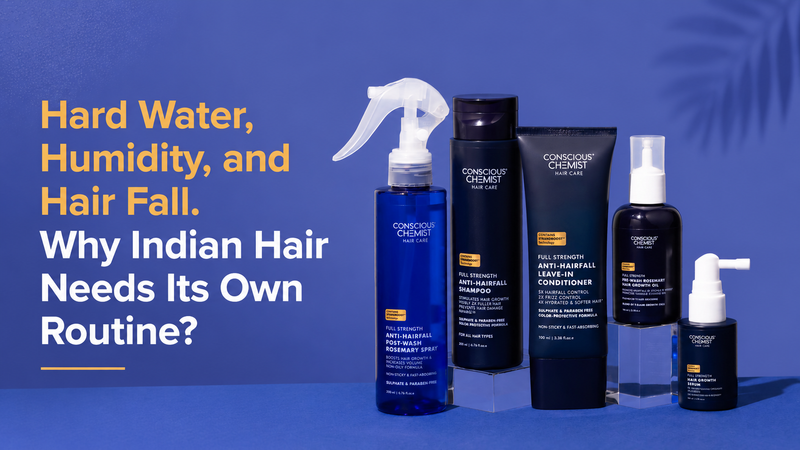
The Conscious Chemist Anti-Hairfall Shampoo and Conditioner work as a complete hair care kit for hair fall by combining:
-
Gentle cleansing for regular use
-
Lightweight leave-in conditioning for lengths
-
StrandBoost™ with yeast extract and rosemary for scalp and fibre support
This supports a science-backed hair growth product approach designed for fine, frizz-prone hair.
|
Key Takeaway Fine hair looks smoother and healthier when you reduce buildup, improve application technique, and follow a consistent lightweight routine. |

How Should You Maintain Volume and Smoothness in Fine Hair Long-Term?
Maintaining fine hair is about balance. Using the best conditioner for fine hair does not mean using more product; it means using the right amount in the right place.
If you are using a hair growth kit for thinning hair or exploring science-backed hair growth products, results improve when you reduce buildup and control friction.
Over time, consistent care helps maintain volume, reduce breakage, and improve overall manageability.
How Can You Maintain Smooth Hair Without Flat Roots Every Day?
If your hair feels flat after conditioning, focus on using less product, applying it correctly, and maintaining consistency instead of switching products frequently.
The Conscious Chemist Anti-Hairfall Shampoo and Conditioner help create a routine that reduces buildup, improves detangling, and supports smoother hair without heaviness.
Order now and follow a consistent routine to manage flat oily hair after conditioning and improve hair strength over time.
Frequently Asked Questions
1. Should I avoid conditioner if I have fine hair and oily roots?
No, fine hair still needs conditioning. Use a small amount and apply only on mid-lengths and ends to avoid flat roots.
2. Can I use leave-in conditioner every day on fine hair?
Yes, if it is lightweight and used sparingly. Avoid applying to the scalp to prevent buildup.
3. Why does my hair feel greasy right after conditioning?
This usually happens due to excess product, incorrect placement, or a heavy formula. Reducing the amount solves most cases.
4. Can conditioner cause hair fall?
Conditioner does not cause root-level hair fall. It actually reduces breakage when used correctly.
5. How can I detangle fine hair without breaking it?
Detangle damp hair with a slip, starting at the ends and moving upward gently to avoid tension.
6. How do I know if my hair has buildup or damage?
Buildup feels waxy and heavy, while damage feels rough and tangled. Both can occur together and need balanced care.
Share:
How Aloe Vera Helps Hair Growth and Reduces Frizz Naturally?
How to Build a Hair Care Routine for Indian Hair That Fights Hair Fall and Frizz?