


Aloe vera is one of those ingredients that often stays in the background.
It is a common ingredient in shampoos, conditioners, and home remedies and is generally considered helpful, calming, and safe. Over time, it becomes part of a routine, without much thought about what it actually does for the hair.
When concerns like hair fall and frizz arise, aloe vera is often used, sometimes daily, and sometimes combined with oils or serums.
However, aloe vera is not a complete solution for every hair concern.
It works best when you understand its role: supporting scalp comfort and helping hair feel more manageable during everyday care.
How Does Aloe Vera Improve Scalp Comfort and Reduce Irritation?
Aloe vera for hair growth primarily serves as a scalp support ingredient.
It helps calm mild irritation, reduce dryness after washing, and ease the tightness that sometimes appears after using strong cleansers. This is especially relevant for routines that involve frequent washing, exposure to hard water, or heat styling.
Research highlights aloe vera’s soothing and anti-inflammatory properties, which help maintain a healthier scalp environment and improve comfort levels over time.
A comfortable scalp does not automatically mean faster hair growth, but it creates better conditions for consistent hair care.

How Does Aloe Vera Improve Hair Smoothness and Reduce Frizz?
Hair that feels rough tends to tangle more easily.
Aloe vera helps create a slightly smoother hair surface, improving slip between strands. This reduces resistance during combing and styling, which directly impacts frizz and reduces breakage.
Over time, reduced friction means fewer snapped strands. This is important because breakage is often mistaken for hair fall, especially in routines dealing with hair fall and frizz control.
What Does Aloe Vera Not Do for Hair Growth or Hair Fall?
Aloe vera is not a direct treatment for hair growth.
It does not stimulate hair follicles as effectively as medical treatments. Research suggests that aloe supports scalp health and conditioning, but it is not a substitute for treatments required for conditions such as hormonal hair loss or nutrient deficiencies. This underscores the importance of setting realistic expectations.
|
Key Takeaway Aloe vera works best as a scalp comfort and conditioning ingredient. It improves how hair feels and behaves, but does not directly regrow hair or stop hair fall instantly. |
How Does Aloe Vera Help a Sensitive Scalp Without Causing Irritation?
Aloe tends to feel most helpful when the scalp is slightly uncomfortable rather than severely irritated.
This includes mild itchiness after washing, dryness from frequent cleansing, and discomfort from heat and pollution. In such cases, aloe helps maintain a calmer scalp environment and supports daily comfort.
This is why aloe is commonly included in products designed for regular use rather than occasional treatments.
Why Can Aloe-Based Products Still Cause Irritation Sometimes?
Irritation is not always caused by aloe itself.
Hair products contain multiple ingredients, and the overall formula determines how the scalp reacts. Fragrance, essential oils, harsh surfactants, or alcohol content can trigger discomfort, especially when the scalp barrier is already sensitive.
Even ingredients considered gentle can feel uncomfortable on compromised skin.
How Should Aloe-Based Products Be Introduced Safely into a Routine?
A simple patch test reduces the risk of reaction.
Applying a small amount behind the ear or on the inner arm, then waiting 24 hours, helps identify potential reactions. If the skin remains calm, the product can be used on the scalp in small amounts.
If irritation appears, simplifying the routine is more effective than adding more products.
|
Key Takeaway Scalp sensitivity depends on the entire product formula, not just aloe vera, which is why patch testing helps prevent unexpected reactions. |
How Should You Choose Between Aloe in Shampoo vs Leave-In Conditioner?
Aloe can be used in different formats, but its effectiveness depends on how long it stays on the hair.
This comparison helps understand where aloe works better.
|
If your main goal is |
Aloe in Shampoo (rinse-off) |
Aloe in Leave-in (stays on hair) |
|
Scalp comfort |
Supports gentle cleansing |
Limited effect |
|
Frizz control |
Minimal impact |
Improves smoothness |
|
Breakage reduction |
Indirect support |
Reduces friction |
|
Lightweight feel |
Easy to rinse |
Needs controlled use |

Why Does Aloe in Shampoo Support a Comfortable Wash?
Shampoo stays on the scalp only for a short time.
Aloe vera helps reduce the overly stripped or dry feeling that can occur after washing. This is especially helpful for people who wash their hair frequently or are exposed to hard water, which can make hair feel rough or dry.
However, because the contact time is brief, aloe’s benefits are mostly limited to improving comfort during the wash itself.
Why Does Aloe Work Better in Leave-In for Frizz and Breakage?
Leave-in products stay on the hair throughout the day.
This allows aloe-based formulations to improve slip, reduce tangling, and protect hair from friction during combing, tying, and styling. This continuous protection plays a bigger role in managing hair fall and frizz control.
How Can Aloe Products Be Used Without Causing Stickiness or Buildup?
Using the right amount matters more than the product itself.
Applying too much or layering multiple products can create buildup, especially in humid or hard-water conditions. Lightweight application on mid-lengths and ends maintains balance.
|
Key Takeaway Aloe in shampoo supports scalp comfort during washing, while aloe in leave-in helps manage frizz and breakage throughout the day. |
How Can You Build a Simple Aloe-Based Routine for Hair Fall and Frizz Control?
Hair routines become complicated quickly.
Using multiple products without structure can create buildup, inconsistent results, and confusion. A simple two-step approach, gentle cleansing, and leave-in protection keep the routine balanced.
This approach reduces friction, improves manageability, and supports long-term consistency.
What Does a Weekly Aloe-Based Routine Look Like in Indian Conditions?
Indian conditions require adaptability.
Frequent washing, humidity, and hard water exposure mean that hair needs regular care without being overloaded. Washing 2–4 times a week with a gentle shampoo and using a lightweight leave-in after each wash helps maintain balance.
On non-wash days, applying a small amount only on the ends helps control frizz without buildup.
How Can Aloe Be Used Without Making Hair Sticky or Heavy?
Before applying, this quick guide helps maintain the right balance.
|
Hair/scalp type |
Leave-in amount |
Where to apply |
Adjustment if heavy |
|
Fine hair |
Very small amount |
Ends only |
Reduce quantity |
|
Medium hair |
Pea-sized |
Mid-lengths |
Apply to damp hair |
|
Dry hair |
Slightly more |
Lengths |
Avoid layering |
Why Does This Routine Reduce Breakage Over Time?
Breakage is often caused by friction.
By improving slip and reducing tangling, aloe-based routines help lower the stress on hair during detangling and styling. Over time, this reduces the amount of hair that snaps, improving overall appearance.
How Does a Structured Product System Support This Routine?
A consistent system simplifies results.
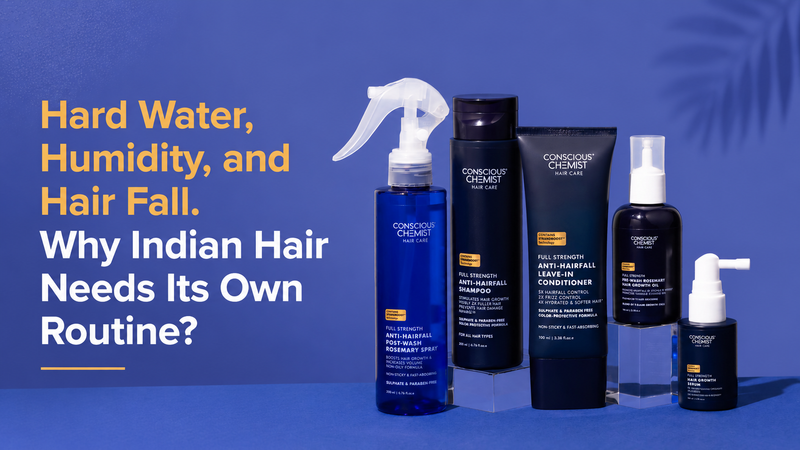
The Conscious Chemist Anti-Hairfall Shampoo and Conditioner work as a complete hair care kit for hair fall by combining:
-
Gentle cleansing for scalp balance
-
Lightweight leave-in protection
-
StrandBoost™ with yeast extract and rosemary
This supports a science-backed hair growth product approach designed for hair fall and frizz control in Indian conditions.
|
Key Takeaway A consistent routine with gentle cleansing and lightweight conditioning improves hair smoothness and reduces breakage more effectively than layering multiple products. |

How Should Aloe Vera Be Used in a Long-Term Hair Care Routine?
Using aloe vera for hair growth works best when it is part of a balanced routine rather than a standalone solution.
While aloe supports scalp comfort and improves manageability, consistent cleansing and protection are essential for reducing breakage and improving hair health.
Over time, combining lightweight conditioning with regular care helps improve hair strength, reduce frizz, and support overall hair appearance.
How Can You Maintain Smooth Hair Without Overloading Your Routine?
When hair feels rough, tangled, or breaks during detangling, the focus shifts to reducing friction rather than increasing product quantity.
The Conscious Chemist Anti-Hairfall Shampoo and Conditioner help maintain a balanced routine that improves slip, reduces breakage, and supports smoother hair over time.
Order now and follow a consistent routine to improve hair fall and frizz control without buildup.
Frequently Asked Questions
1. Does aloe vera reduce hair fall directly?
Aloe helps reduce breakage-related hair fall by improving conditioning and reducing friction. It does not treat root-level hair loss caused by medical conditions.
2. Can aloe vera irritate the scalp?
Yes, reactions can occur due to the overall product formula. Patch testing helps identify sensitivity before regular use.
3. Is aloe better in shampoo or leave-in conditioner?
Aloe in shampoo supports scalp comfort, while leave-in products help improve smoothness, detangle, and help control breakage.
4. Can an aloe-based leave-in conditioner cause buildup?
Lightweight leave-ins do not cause buildup when used correctly. Overuse or layering multiple products can lead to heaviness.
5. How should aloe products be used without stickiness?
Using small amounts on damp hair and avoiding the scalp helps prevent stickiness and buildup.
6. Is aloe safe for colored or treated hair?
Yes, aloe-based products can improve manageability and reduce dryness in treated hair when used in gentle formulations.
Share:
Why Does Chemically Treated Hair Break More, Even When It Looks Smooth?
What Is The Right Way to Condition Fine Hair Without Flat or Oily Roots?