


You finally found a hair growth serum for coloured hair that looks promising with good actives, a clean formula and decent reviews. But then you hesitate. Will it irritate your scalp after your last colour appointment? Will it dry out your already fragile lengths? These are fair concerns, and they deserve a straight answer.
Coloured and chemically treated hair behaves differently from untreated hair. The scalp is more sensitive, the strands are more porous, and anything you apply needs to work with that and not against it. A sulfate-free anti-hairfall shampoo and a compatible serum together form the foundation of a safe post-colour routine.

What Colouring and Chemical Treatments Do to Your Hair?
Understanding what happens during a chemical service makes it much easier to choose the right products afterward. Most people think about the hair shaft when they think about colour damage, but the scalp is just as affected.
-
What Changes After Chemical Treatment on Hair?
Your scalp is living skin. It can get irritated, sensitized, and inflamed. Your hair shaft is a dead fiber and cannot heal itself, but it can become more porous, rougher, and more prone to snapping after chemical processing. A serum primarily targets the scalp but can run down the lengths, so both surfaces matter when you are choosing a formula.
-
How Chemical Treatments Affect Your Hair?
Colour, bleach, keratin treatments, and relaxers all alter the hair shaft's structure. The most common outcomes are increased porosity, dryness, roughness, and a higher risk of breakage.
The scalp can also become temporarily sensitized right after a service, which means even a well-formulated active can feel uncomfortable on compromised skin.
-
Is Your Hair Shedding or Just Breaking After Chemical Treatment?
Most people notice more hair coming out in the weeks after colouring or straightening. Some of that is root-level shedding linked to the service's stress. But a lot of it is breakage, i.e. shorter, snapped pieces from strands that have become brittle and fragile.
A keratin repair shampoo handles the wash-day side of this, but a hair regrowth serum that only focuses on growth without supporting strand strength misses half the problem for chemically treated hair.
|
Keynote: If your hair is coloured or chemically treated, the safest growth routine supports the scalp while strengthening fragile strands, because hair fall is usually a mix of breakage and shedding. |
How to Choose a Hair Growth Serum for Coloured or Chemically Treated Hair?
This is the section to bookmark. Whether you are evaluating a formula for the first time or switching products, these are the checkpoints that matter most for coloured or chemically treated hair.
|
Checkpoint |
Why It Matters for Coloured or Treated Hair |
What to Choose or Avoid |
|
Texture and finish |
Residue causes buildup, itching, and greasiness on sensitive scalps |
Choose lightweight, quick-absorbing formulas |
|
Fragrance and essential oils |
Can irritate sensitized scalps after chemical services |
Choose low-fragrance or fragrance-free formulas |
|
Strengthening ingredients |
Treated hair needs strand support alongside growth actives |
Look for hydrolyzed keratin, biotin, proteins |
|
Growth support actives |
Support follicle function and density with consistent use |
Redensyl, Anagain, and Procapil are well-documented |
|
Alcohol content |
High-alcohol formulas can dry out already porous strands |
Avoid harsh astringent formulas |
|
Daily use suitability |
Consistency is what drives results |
Choose formulas built for daily leave-on use |
-
What kind of Hair Serum Is Best for Chemically Treated Scalp?
A lightweight, quick-absorbing formula is not just a comfort preference but a safety factor for treated hair. Heavy or oily serums sit on the scalp longer, increase the risk of irritation, and make the scalp feel dirtier more quickly.
In India's humid climate, this becomes a real compliance issue. A clean performance hair growth serum that absorbs cleanly, keeps the routine sustainable and comfortable.
-
Why Strengthening Ingredients Are Important in Hair Serums for Coloured Hair?
For chemically treated hair, a serum that only focuses on stimulation is not enough. Research in cosmetic science by PubMed shows that protein and polysaccharide-based treatments help prevent damage in chemically treated hair.
Look for formulas that pair growth-support actives with strengthening ingredients like hydrolyzed keratin and biotin hair growth serum bases, which support the fiber alongside the follicle.
-
What to Avoid on the Scalp After Hair Colour?
Some ingredients that are fine for healthy skin can feel harsh on a scalp that has just undergone a chemical service. Strong fragrance, high essential oil concentrations, and certain preservatives are the most common triggers for irritation.
A safety review by MDPI notes that some hair cosmetic ingredients carry irritant or allergenic potential, particularly with repeated exposure. This is exactly why patch testing matters before committing to a hair fall routine on treated hair.
How to Know if the Hair Serum Works for You?
Most people quit a new serum in week one because something feels unfamiliar and they cannot tell if it is normal or a warning sign. Here is how to start safely and what to watch for.

-
How to Patch Test a Hair Serum?
-
Start with two steps before applying across your full scalp.
-
Apply a small amount behind your ear or on your inner arm
-
Wait 24 hours and check for redness, swelling, or burning
-
If there is no reaction, apply to a small area near your hairline
-
Use it there for two to three applications before using it on the full scalp
-
When to Continue or Stop Using a Hair Serum?
Not every reaction means you should stop using a serum. Some changes are normal in the first week, while others signal irritation. This section helps you decide when to continue, adjust how you use it, or stop.
|
What You Notice |
Likely Meaning |
What to Do |
|
Light warmth or tingle that fades quickly |
Normal adjustment with some actives |
Continue, monitor over the next few days |
|
Mild dryness on the lengths |
Serum running onto porous strands |
Apply only to the scalp, use leave-in on lengths |
|
Persistent burning or stinging |
Scalp sensitivity or ingredient reaction |
Stop immediately, consult a dermatologist |
|
Flaking that gets worse |
Possible irritation or buildup |
Stop, clarify scalp gently, reassess formula |
|
Sudden unusual shedding |
Possible reaction or stress response |
Stop and speak with a dermatologist |
|
Keynote: A good anti-hair fall serum routine should not cause discomfort. A mild tingle that fades quickly is fine, but ongoing burning or redness means you should stop. |
How Does Hair Serum Affect Texture, Colour, and Routine?
Hair serum can raise questions about texture, colour safety, and how it fits into your routine. Understanding how to use it correctly helps you avoid buildup, protect colour, and get better results.
-
Can a Hair Serum Change Hair Texture?
A scalp serum will not permanently change your curl pattern or hair texture. What people often describe as a texture change is either product residue or post-chemical dryness, which can make hair feel rougher than usual. Both are fixable.
Apply the serum to the scalp only, then treat your mid-lengths and ends separately with a mask or a non-stripping daily shampoo formula, followed by a leave-in conditioner.
-
How to Layer Hair Serum With Post-Colour Care?
Keep the routine simple and separated.
-
Apply serum to the scalp on damp or dry hair
-
Wait a few minutes
-
Apply a lightweight leave-in to mid-lengths and ends
-
Use a weekly deep conditioning mask
-
Keeps scalp targeted without weighing down lengths
-
When to Use Hair Serum After Coloring or Straightening?
If your scalp feels tender or sensitive right after a service, pause the serum for 24 to 48 hours and restart once things feel calm. If your scalp tolerates the service well, you can continue your routine as normal.
Always patch-test again before switching to a new serum after a service.
How to Check if a Hair Serum Suits Colored or Treated Hair?
Before starting any new serum, run it through this four-point check:

If the formula passes all four, you are in a good position to start.
-
When to Stop Using a Hair Serum?
Stop use and consult a dermatologist if you experience persistent burning, scalp wounds, sudden patchy shedding, or worsening flaking after starting a new serum. These are not adjustment symptoms; they need professional attention.
How Conscious Chemist Hair Growth Serum Supports Coloured Hair Care?
If your hair feels weaker, breaks easily, or struggles to grow after colouring, your routine may be missing consistent scalp support along with strand-strengthening care.
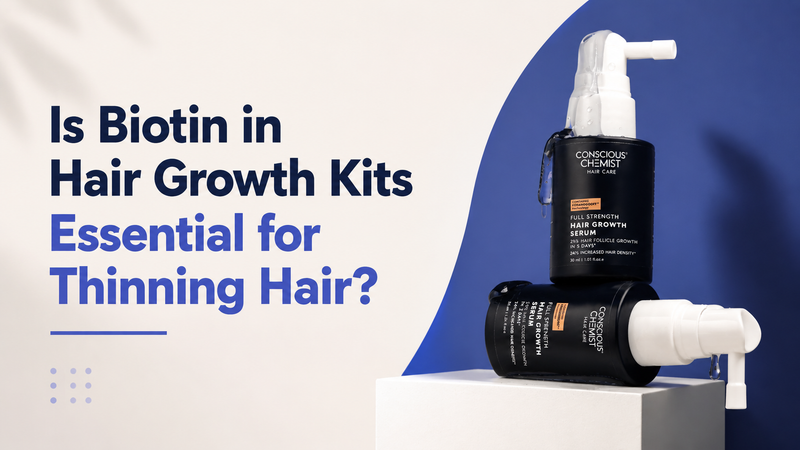
In that case, a plant-based option like the Conscious Chemist Hair Growth Serum (30 ml) can fit in well. It combines Redensyl, Anagain, and Procapil with hydrolyzed keratin, biotin, caffeine, and saw palmetto to support growth while reinforcing fragile strands.
The StrandBoost™ complex helps activate follicles while improving hair strength, so new growth is less likely to break. The lightweight texture also makes it suitable for daily use without leaving residue, which matters for coloured hair routines.
Start with a 7-day patch-tested routine and build consistency. Most visible changes show with regular use over 12 to 16 weeks.
Frequently Asked Questions
1. Can I use a hair growth serum right after colouring or straightening?
Wait 24 to 48 hours if your scalp feels tender after the service. Restart once the scalp feels calm, and patch-test if you are switching to a new formula.
2. Will a scalp serum fade my hair color?
A scalp serum is far less likely to fade color than a harsh shampoo. Apply to the scalp only and keep your mid-lengths moisturized to prevent dullness from dryness.
3. Can a growth serum permanently change my hair texture?
No. What most people notice is product residue or post-chemical dryness, not a real texture change. Correct application to the scalp only and regular conditioning on the lengths fixes this.
4. Is it normal to see more hair fall when starting a serum?
A well-formulated daily leave-on product should not cause sudden, excessive shedding. If you notice unusual hair fall or scalp irritation after starting, stop and reassess before continuing.
5. What ingredients help chemically treated hair beyond growth actives?
Hydrolyzed proteins and keratin are well-supported for reducing breakage in chemically treated hair. Look for formulas that pair these with growth actives for a more complete approach.
6. Can I use a growth serum daily if I have an oily scalp?
Yes, as long as the formula is lightweight and quick-absorbing. Apply a small amount directly to the scalp, avoiding the lengths to prevent greasiness.
Share:
How to Apply Hair Growth Serum Without Causing Greasiness?
A Guide to Redensyl, Anagain, and Procapil for Hair Growth