


You have tried the oils. You have switched shampoos. You are still finding more hair on your pillow than you would like. The problem is usually not what you are washing with, but what you are using afterward. A hair growth serum applied directly to the scalp stays in contact with your follicles for hours, which is something no shampoo can do.
Most shampoos spend two minutes on your scalp before rinsing away. That is not enough time for actives to do anything meaningful. A leave-on anti-hair fall serum changes that by delivering ingredients where they matter and keeping them there through the day.
India adds its own layer to this. Hard water, pollution, heat, and stress all slowly wear down scalp health. A targeted scalp treatment serum, designed for daily use, is one of the most practical ways to address this without disrupting your entire routine.

Picking the wrong product for the wrong problem is why most people give up on serums too early. Hair fall, thinning, and breakage feel similar, but they come from different places.
-
Hair fall from the root: Strands shed with a white bulb attached. Linked to the follicle cycle. Responds to growth-support actives.
-
Gradual thinning: Overall density reduces slowly. Usually driven by hormones, nutrition, or long-term stress.
-
Breakage: Shorter, snapped pieces from chemical processing, heat, or rough detangling. A strand-strength problem more than a scalp one.
A hair regrowth serum for thinning hair works on the first two. If most of your loss is breakage, your routine and conditioning need attention, along with a serum.
-
What Are the Uses of a Hair Growth Serum?
Topical serums support the scalp environment and help weakened follicles return to an active cycle. They cannot regrow hair in follicles that have been inactive for years.
For sudden patchy loss, postpartum shedding, or concerns related to thyroid or iron levels, a dermatologist's input is needed before any product.
-
How Does Leave-On Serum Make a Difference in Hair Growth?
A shampoo rinses off too fast for actives to do much. A leave-on serum sits on your scalp for hours, which is the contact time that actives like Redensyl, Anagain, and Procapil actually need
|
Keynote: A lightweight formula you enjoy using daily will always beat a heavy one you keep skipping. |
What Do Redensyl, Anagain, and Procapil Do for Hair Growth?
These three actives are often found together in quality hair growth serums because hair thinning is rarely caused by a single factor. Each active targets a different part of the problem, and combining them gives broader coverage than any one ingredient alone.

-
How Redensyl Supports Hair Growth and Improves Density?
Redensyl is one of the more studied actives in modern scalp care. It works as a growth-support complex that helps push follicles back into a healthier active phase. It absorbs quickly without greasy residue, making it practical for daily use in India's humid climate.
According to a study by Wimpole Clinic, using Redensyl for 3 months increased hair growth by 9% and reduced hair fall by 17%.
-
What Does Anagain Do for Hair Fall and Early Thinning?
Anagain is a plant-based hair growth active in a serum that is derived from organic pea sprouts. It supports growth signals in the scalp environment and works best alongside Redensyl, targeting the hair cycle from a complementary angle. Most well-formulated serums include both for this reason.
-
Does Procapil Work for Root Anchoring and Reduced Shedding?
Procapil is commonly used in routines targeting androgenetic thinning, in which the hairline recedes, or the crown gradually loses density. It works to strengthen follicles and support reduced hair fall with consistent use.
According to a study by Tressless Research, a 16-week trial with 110 participants showed that a serum containing Procapil, Redensyl, and Anagain improved hair growth, thickness, and density, with no reported side effects.
|
Keynote: Redensyl, Anagain, and Procapil are often combined because each supports a different aspect of hair density, including the growth cycle, scalp signaling, and root strength, to reduce hair fall. |
How to Evaluate a Hair Growth Serum?
Most people pick a serum based on packaging claims and end up disappointed. Evaluating it properly takes five minutes and saves months of wasted effort.
|
What to Check |
Green Flag |
Yellow Flag |
What to Do |
|
Actives listed |
Redensyl, Anagain, Procapil on INCI |
Vague "botanical complex" |
Check the INCI list directly |
|
Texture |
Lightweight, absorbs quickly |
Heavy, sticky, or oily |
Try a travel size first |
|
Scalp tolerance |
No itch or flaking after week one |
Tingling or redness |
Patch test, start once daily |
|
Treated hair |
Labeled safe for colored hair |
No mention of treated hair |
Contact the brand before buying |
|
Supporting ingredients |
Biotin, caffeine, and keratin are present |
Fragrance-heavy formula |
Check for known irritants |
-
Why Consistency Matters as Much as Hair Serum Formula?
The best anti-hair fall serum is one you can use every single day. Ingredients and formula do matter, but results depend on how consistently you use them over time.
If a serum feels heavy, greasy, or uncomfortable on your scalp, you are less likely to stick with it. In India’s climate, scalp comfort plays a key role in maintaining a routine long enough to see visible results.
-
What are the Tips for Oily or Sensitive Scalps?
Always patch-test before applying to your full scalp. Start with once daily and watch for itching or irritation in the first week. A few things worth keeping in mind:
-
Tingling does not mean the serum is working harder
-
For fragrance sensitivity, look for a clean performance hair growth serum with a short, targeted ingredient list
-
Apply to the scalp only, not the lengths, to avoid buildup at the roots
Hair Growth Serums: Results Timeline and Who Should Use Them
Most people give up on serums because they expect results in two weeks. The hair growth cycle doesn't work that quickly, and aligning with the right milestones makes the process far less frustrating.
-
What to Expect from Hair Growth Over Time?
Hair growth takes time. Results show in stages, not all at once. In the first few weeks, you may notice less shedding. Over time, hair feels stronger and looks fuller. This breakdown shows what to expect at each stage.

-
Who Benefits Most from These Actives in Hair Growth Serums?
These actives work best for early thinning, stress-related or seasonal shedding, diffuse hair fall, and colored or chemically treated hair where both thinning and breakage are occurring.
They suit anyone wanting a non-minoxidil daily leave-on that fits into a normal routine. For advanced or patchy loss, a dermatologist's assessment should come first.
|
Keynote: For most people, judge a growth serum at 12 to 16 weeks using consistent photos and shedding notes, not day-to-day mirror checks. |
Why Choose Conscious Chemist Hair Growth Serum for Hair Fall Control?
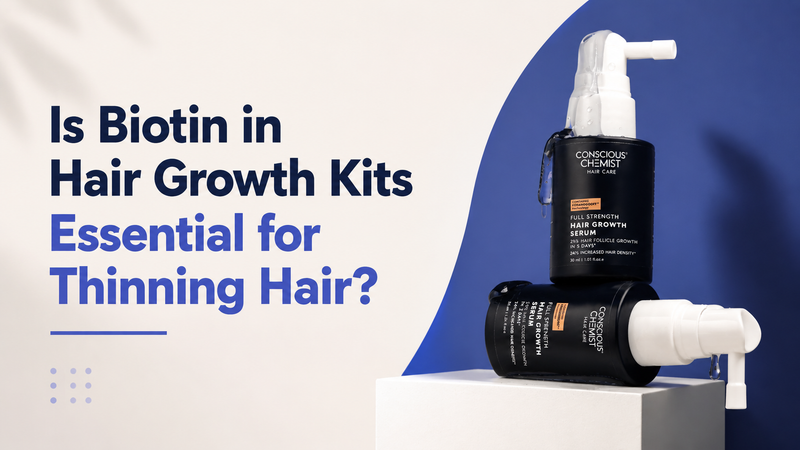
Most people focus entirely on their shampoo and leave the scalp unattended between washes. That gap is where a daily leave-on makes the real difference. If you want a biotin hair growth serum that covers growth actives and strand strengthening in one lightweight formula, the Conscious Chemist Hair Growth Serum is worth considering.
It brings together Redensyl, Anagain, and Procapil alongside hydrolyzed keratin, biotin, caffeine, saw palmetto, and rosemary oil. The StrandBoost™ complex with yeast extract supports follicle activation and builds up fragile strands, so new growth does not snap before it can establish itself.
Commit to 12 to 16 weeks of daily use and track progress with monthly photos. That is the window where this kind of formula shows the best results.
Frequently Asked Questions
1. Can Redensyl, Anagain, and Procapil be used together in one serum?
Yes, most quality formulas combine them because they each support a different part of hair density. Daily consistency matters more than any single active ingredient.
2. How long does a hair growth serum take to show results?
Most people need 8 to 12 weeks for early changes and 12 to 16 weeks for visible density improvements. Monthly photos are the most honest way to track progress.
3. Can I use a hair growth serum on an oily scalp?
Yes, as long as the formula is lightweight and applied directly to the scalp. A heavy serum reduces daily consistency, which is the most important factor for results.
4. Is it safe to use a growth serum on colored or chemically treated hair?
Generally, yes, especially with formulas built for daily leave-on use. Prioritize serums that support strand strength alongside growth actives if your hair is both thinning and breakage-prone.
5. Do these actives cause an initial shedding phase like minoxidil?
These actives are not typically linked to a mandatory shedding phase. If you notice sudden heavy shedding or scalp irritation, pause use and speak with a dermatologist.
6. Should I apply the serum to my scalp or hair strands?
Always apply to the scalp, where it can work at the follicle level. Massage gently for 30 to 60 seconds and leave it on without rinsing.

Share:
What to Know Before Using a Hair Growth Serum on Coloured or Treated Hair?
How Using Sunscreen Every Day Can Prevent Hyperpigmentation?