


Fine hair and heavy products don't mix. You pick up a hair growth serum hoping for thicker, fuller hair, only to end up with flat, greasy roots that need washing the next morning. Usually, the problem isn’t the actives in the formula. It is the base, the dose, and where you are applying it.
Getting growth support on fine hair is absolutely possible, but it requires a lighter approach than most product labels suggest.
A water-based, quick-absorbing hair growth serum works with fine hair rather than against it. The goal is daily consistency, and that only happens when the product does not ruin your blowout.

Why Fine Hair Gets Greasy Faster Than Other Hair Types?
Before choosing any product, it helps to understand what makes fine hair behave the way it does. Fine and thin are not the same thing, and the difference matters when you buy.
-
What Fine Hair Means and How to Identify It?
Fine hair refers to the diameter of each strand. Thin hair means fewer strands overall. You can have fine but dense hair that still goes flat and greasy quickly.
Common signs of fine hair include a ponytail that feels small relative to hair length, strands that feel silky but fragile, and roots that collapse within a day of washing.
-
What Makes Fine Hair Greasy?
Fine strands have less surface area to absorb sebum before it becomes visible. Any added oil or heavy silicone coats the roots quickly, causing scalp volume to collapse. This is not a hygiene issue. It is a weight-and-texture issue that gets worse with every heavy product you layer on.
-
Why Do Heavy Oils Weigh Down Fine Hair?
The common advice to oil your scalp for hair fall can actually work against fine hair. Heavy oils flatten roots, make hair look worse, and push people toward washing more often.
More washing means more friction, more breakage, and less consistent use of serum. A targeted scalp treatment serum only delivers results when you use it every day, and that simply does not happen when the product makes your hair look dirty.
What Does Lightweight Mean in a Hair Growth Serum Formula?
Not all serums marketed as lightweight actually are. Understanding what is in the base helps you make a faster, smarter decision at the shelf or while scrolling online.
|
Checklist Item |
Why It Matters for Fine Hair |
What to Choose |
|
Water-based formula |
Absorbs fast, no oily residue |
Look for water or aqua as the first ingredient |
|
Humectants present |
Hydrates the scalp without heaviness |
Glycerin, betaine, propylene glycol |
|
Growth support actives |
Supports follicle function |
Redensyl, Anagain, Procapil, caffeine |
|
Strengthening ingredients |
Reduces breakage so new growth survives |
Hydrolyzed keratin, biotin |
|
No heavy silicones or oils in base |
Prevents root coating and buildup |
Avoid dimethicone-heavy or oil-first formulas |
|
Easy applicator |
Allows precise scalp placement |
Spray nozzle or dropper preferred |
-
Why Water-Based Serums Work Better for Fine Hair?
Many non-greasy serums use water and light solvents, such as propylene glycol and glycerin, to deliver actives directly to the scalp. These bases absorb quickly and leave no film on the hair shaft. A hair growth serum for hair fall with a water-based formula is far more practical for fine hair than anything oil-heavy, even if the actives are identical.
-
Do Fast Absorbing Lightweight Hair Serums Cause Scalp Irritation?
Lightweight does not mean drying. Humectants like glycerin and betaine feel light on the scalp while maintaining enough moisture to keep the skin comfortable. A good formula should feel like nothing is there after a few minutes.
If your scalp feels tight, flaky, or irritated after application, the formula is either too astringent or not right for your scalp type.
-
Should You Focus on Growth or Strength for Fine Hair?
Fine hair breaks easily, which means new growth that snaps before it can grow out is still lost hair. Look for a biotin hair growth serum that pairs follicle-supporting actives with strengthening ingredients like hydrolyzed keratin and biotin.
A controlled 16-week study published in PubMed Central reported reduced hair loss and improved quality of life among women who consistently used a topical hair serum. Supporting both growth and strand strength gives fine hair the best chance of actually looking fuller over time.
How to Apply a Hair Growth Serum on Fine Hair Without Greasy Roots?
The right product applied the wrong way still leads to flat, greasy roots. Fine hair needs a more precise application than thicker hair types.
|
Situation |
How to Apply Serum |
What to Avoid |
|
Oily scalp, wash every 2 to 3 days |
Dry scalp application in micro-partings, small dose |
Applying too many styling products or dry shampoo residue |
|
Normal scalp, wash every 3 to 4 days |
Damp scalp after wash, slightly more extensive coverage |
Applying to hair lengths instead of scalp skin |
|
Tight or dry scalp after washing |
Damp scalp post-wash, fingertip massage |
Using too much in one go to compensate |
|
Between wash days |
Tiny amount on dry scalp, press and leave |
Layering over oils or heavy leave-ins at the roots |
-
What is The Micro-Parting Application Method for Fine Hair?
Standard application across the top of your head leaves most of the product sitting on your hair rather than reaching your scalp. Instead, make four to six small partings and apply tiny amounts directly along each parting onto the scalp skin.

-
How Much Serum Should You Apply?
Fine hair is unforgiving when it comes to product quantity. Begin with the smallest amount that covers your scalp and increase only if you are missing areas or your scalp feels uncomfortable.

-
How to Massage Serum Without Tangling Fine Strands?
Thirty to sixty seconds of gentle fingertip massage is enough to spread the product and support absorption. Avoid aggressive rubbing, which can cause fine strands to tangle and snap. Use the pads of your fingertips, not your nails, and work in small circular motions without disturbing the partings.
What to do on Day 2 of Serum Application Routine?
Most people with fine hair abandon serums because of what happens the next day. Flat roots and a heavy scalp feel like proof that the product isn't working, but it is actually a dose-and-layering issue.
-
How to Avoid Flat Roots on Day Two of Serum Application?
Keep these habits in place to protect volume between washes:
-
Apply serum only to the scalp, never the lengths
-
Avoid layering conditioner or leave-in at the roots
-
Use a lightweight conditioner on mid-lengths and ends only
-
Reduce heavy oiling habits at the scalp entirely
-
Switch to a clean pillowcase regularly to reduce residue transfer
-
What is the Difference Between Buildup vs Dandruff?
These two feel similar but need different solutions. Buildup feels waxy or filmy, clumps roots together, and produces larger, greasy-looking flakes. It responds to a clarifying wash and reduces product quantity.
Dandruff is itchier, tends to return after washing, and often causes redness or a persistent, flaky scalp. It may need an anti-dandruff shampoo or a visit to a dermatologist if it is severe.
Research in PubMed on young women with oily scalps highlights the need for lightweight, non-greasy products that help reduce scalp oiliness while addressing hair concerns.
-
What Should be a Weekly Routine for Fine Hair?

Visible improvement from a hair regrowth serum for thinning hair takes weeks of consistent use, not days. Stick with the routine and track monthly rather than daily.
How Conscious Chemist Hair Growth Serum Works for Fine Hair?
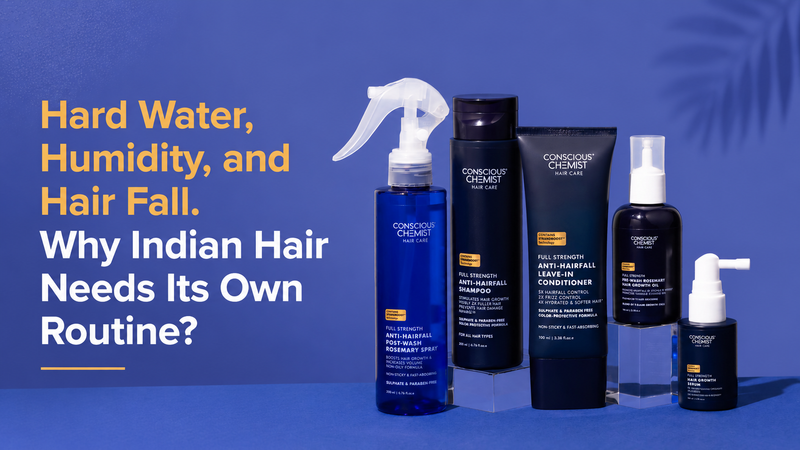
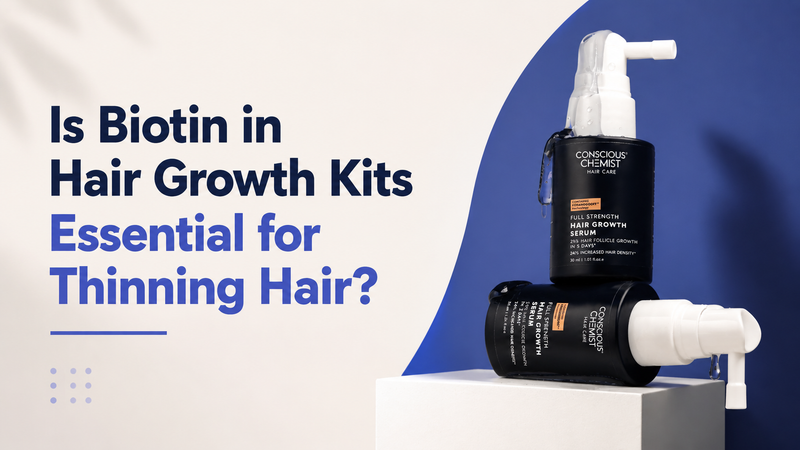
If you want a plant-based hair growth serum that fits the lightweight checklist above, the Conscious Chemist Hair Growth Serum is worth considering. It is water-based, quick-absorbing, and leaves no oily residue, making daily use practical even for fine and oily scalp types.
It combines Redensyl, Anagain, and Procapil with hydrolyzed keratin, biotin, caffeine, and saw palmetto in a formula designed for long-term use. The StrandBoost™ complex supports follicle activation while strengthening fragile strands, so new growth does not snap before it can establish itself.
Apply to the scalp, massage gently, and leave on. Track progress with monthly photos for at least 12 weeks.
Frequently Asked Questions
1. Will a hair growth serum make my fine hair look greasy?
Not if it is water-based and applied to the scalp in small amounts. Greasiness comes from heavy bases and from applying product to the hair lengths rather than directly to the scalp.
2. Can I use a leave-on growth serum on an oily scalp?
Yes. A lightweight, fast-absorbing formula is actually easier to use consistently on an oily scalp than a heavy one.
3. What is the difference between scalp buildup and dandruff?
Buildup feels waxy and makes roots clump together. It responds to a clarifying wash and reduces product quantity.
4. How long does it take to see results from a hair growth serum?
Most people need consistent daily use for several weeks before noticing reduced shedding. Visible density changes take longer because hair grows in cycles.
5. Can I use a growth serum on colored or chemically treated fine hair?
Usually yes. Apply to the scalp rather than the lengths and prioritize formulas that also support strand strength to reduce breakage alongside growth support.
6. How do I know if I am using too much serum?
If your roots look wet or heavy ten minutes after applying, reduce the dose. For fine hair, less product applied precisely to the scalp always works better than more product applied loosely.

Share:
How to Choose a Sunscreen that Does Not Clog Pores: A Texture and Ingredient Guide
How to Choose a Leave-On Hair Growth Serum for Thinning Hair?