


Oily, dry or combination skin; almost everyone focuses on these concerns. But what about sensitive skin? They keep wondering which is the best sunscreen for sensitive skin.

And this usually leads to two situations:
-
They use sunscreen that can cause breakouts, irritation or redness.
-
Or they don't use sunscreen at all, which can lead to further sun damage and long-term sensitivity.
Neither of these outcomes is ideal. You need to understand the differences between sunscreen types to find a formula that works for your skin.
This guide explains how chemical, mineral, and hybrid sunscreens affect sensitive skin. You will also learn how to identify your specific triggers. Read on to find the best sunscreen for sensitive skin and build a routine that does not cause flare-ups.
Understanding Your Skin Sensitivity and Reactivity
Many people say sunscreen burns their skin. But the real issue is often unclear. It could be true sensitivity, a reaction to sunlight, or a weakened skin barrier.
Understanding this difference helps you choose the right sunscreen and avoid unnecessary irritation.
What is Your Skin Type?
Before assuming that a specific sunscreen is not suiting you, let’s first understand your skin type:
-
Sensitive Skin: This skin type reacts to many external products. It often feels tight, itchy, or red when you use new lotions or soaps.
-
Sun-Sensitive or Reactive Skin: This skin reacts specifically to sunlight. UV exposure triggers immediate redness, heat, or rashes.
-
Sensitized Skin: This is a temporary state. It usually happens because of over-exfoliation, strong retinoids, or harsh weather. Your skin barrier is weak and needs time to heal.
You can experience more than one of these conditions at the same time.
Common Signs of Skin Irritation, Allergy, and Acne
You should monitor how your skin behaves after you apply a product. Use this checklist to identify your reaction:
-
Irritation: You feel stinging or burning almost immediately after application.
-
Allergy or Contact Dermatitis: You develop an itchy rash. This rash can spread and might last for several days.
-
Acne Flare: You notice bumps or clogged pores within one to three days.
A tingle is not always a normal sign that a product is working. It often indicates that an ingredient is bothering your skin.
Why Does Your Skin React More When the Barrier Is Weak?

Your skin barrier controls how your skin responds to both products and sun exposure.
When it is compromised:
-
Even gentle sunscreens can sting
-
Sun exposure can trigger redness faster
-
Skin feels more reactive overall
Common triggers include:
-
Over-exfoliation
-
Retinoids
-
Harsh cleansers
-
Hot water
-
Weather changes
|
Please Note: If sunscreen stings, it is often a sign of a stressed skin barrier. It is not proof that all sunscreens are bad for sensitive skin. |
Comparing Chemical, Mineral, and Hybrid Sunscreens for Sensitive Skin
The way a sunscreen interacts with your skin depends on its active filters. Each type offers different benefits for texture and protection levels. Your goal is to find a formula you can wear every day without discomfort.
How Different Sunscreen Types Work?
Here’s a simple breakdown of different sunscreen types and how each one of them protects you:
-
Chemical Sunscreens: These contain organic filters. They absorb UV rays and convert them into a small amount of heat.
-
Mineral Sunscreens: These use zinc oxide or titanium dioxide. They sit on the surface to reflect and scatter UV rays. They also absorb some UV energy.
-
Hybrid Sunscreens: These combine both mineral and chemical filters. They aim to provide a balance of comfort and high protection.
Which Sunscreen Type Does Sensitive Skin Prefer?
Sensitive skin does not respond the same way for everyone, but some patterns are common:
-
Many users with sensitive skin prefer mineral filters because they are less likely to cause an allergic reaction. However, mineral formulas can feel heavy or leave a white cast.
-
Chemical sunscreens feel much lighter on the skin. The downside is that they may cause stinging if your skin barrier is currently damaged.
-
Hybrid sunscreens offer a middle path. They often feel better than pure mineral formulas and may sting less than pure chemical ones.
According to research, contact sensitization to chemical filters occurs in approximately 1% to 3% of sensitive individuals. In contrast, mineral sunscreens show sensitization rates below 0.5%.
|
Key Insight: Mineral filters are often easier to tolerate, while hybrid formulas can feel more comfortable for daily use without compromising protection. |
Why Texture and Finish of a Sunscreen is Important?
If a sunscreen feels greasy or looks white, you will not use it often. Hence, how the sunscreen feels after application will be an important decision factor of your purchase.
-
Mineral: Can feel dry or leave a visible white film on deeper skin tones.
-
Chemical: Can feel greasy or cause pilling when you apply makeup.
-
Hybrid: Often looks invisible and feels weightless on the skin.
Why is Broad Spectrum Protection Essential for Sensitive Skin?
Not all sun damage looks the same.
-
UVA rays cause pigmentation and long-term skin damage
-
UVB rays cause sunburn
Sensitive skin reacts to both. This can show up as redness, irritation, or uneven tone.
Always choose a sunscreen labeled broad spectrum to ensure full protection.
Which Sunscreen is Best for Sensitive Skin?
Use this quick guide to compare chemical, mineral, and hybrid sunscreens and choose the right option for sensitive, acne-prone, or easily irritated skin.
|
Type |
Often Best For |
Common Downsides |
Label Keywords |
|
Chemical Sunscreen |
Oily or acne-prone skin, people who prefer a lightweight finish |
May sting on sensitive skin, can irritate eyes |
Fragrance-free, alcohol-free, suitable for sensitive skin |
|
Mineral Sunscreen |
Very sensitive or barrier-damaged skin |
Can feel heavy, may leave a white cast, may pill |
Zinc oxide or titanium dioxide, non-comedogenic |
|
Hybrid Sunscreen |
Sensitive plus oily or combination skin, daily wear users |
Depends on formulation, may still irritate if barrier is weak |
Lightweight, oil-free, broad spectrum, barrier-support ingredients |
Why Does Sunscreen Irritate Your Skin and How Can You Avoid It?
Many people assume sunscreen type is the reason for skin irritation. In reality, irritation often comes from small, fixable triggers.
Let’s break it down clearly.
Reason 1: Your Skin Reacts to Certain Ingredients in the Formula
Irritation is not always about UV filters alone.
Your skin may react to:
-
Fragrance or essential oils
-
Drying alcohols
-
Certain UV filters
-
A weakened skin barrier
-
Eye stinging can also happen due to product movement with sweat or oil.
What you can do:
-
Choose fragrance-free and alcohol-free formulas
-
Avoid applying too close to the eyes
-
Focus on barrier repair if your skin feels compromised
Reason 2: You Are Applying Sunscreen Too Aggressively
Application technique plays a bigger role than most people think.
Common issues:
-
Rubbing too hard
-
Layering too many products
-
Applying on damp or unabsorbed skincare
This can lead to redness, pilling, and irritation.
What you can do:
-
Apply in two thin layers
-
Gently spread or press into the skin
-
Let your moisturizer absorb before sunscreen
Reason 3: Your Routine Is Making Your Skin More Reactive
Your skin becomes more sensitive depending on what you use and when you use it.
Triggers include:
-
Exfoliating acids
-
Retinoids
-
Shaving
-
Sun exposure
-
Skin flare-ups
What you can do:
-
Keep your routine simple on reactive days
-
Avoid strong actives temporarily
-
Focus on hydration and barrier repair
How Should You Manage Acne-Prone Sensitive Skin?
Breakouts are often confused with irritation.
-
Clogging: Heavy formulas block pores
-
Inflammation: Skin reacts and forms bumps
What you can do:
-
Choose oil-free, lightweight sunscreens
-
Look for non-comedogenic labels
-
Cleanse gently but thoroughly at night
How to Patch Test and Switch Sunscreen Without Irritating Your Skin?
Choosing the right sunscreen for sensitive skin in India is only half the work. How you introduce it into your routine decides whether your skin accepts it or reacts.

A simple, structured approach helps you avoid confusion and reduces the risk of flare-ups.
Step 1: How to Patch Test Sunscreen Correctly
Start with a proper patch test before applying sunscreen to your face.
-
Apply a small amount on your inner forearm or behind the ear
-
Make sure the skin is clean and dry
-
Leave it on and do not wash it off immediately
-
Check your skin at 30 minutes, 24 hours, and ideally 48 hours
Since sunscreen is a leave-on product, longer observation gives better clarity.
What to watch for:
-
Mild itching that fades may be acceptable
-
Burning or stinging means your skin is reacting
-
Redness or rash indicates you should stop using it
Step 2: How to Understand Your Skin Reaction?
Not all reactions mean the same thing.
-
Immediate burning or stinging that settles can be irritation
-
Delayed itching, swelling, or rash may indicate an allergic response
If you notice strong or persistent symptoms, stop using the product and seek medical advice.
Step 3: How to Switch Sunscreen Without Causing Flare-Ups?
When introducing a new sunscreen, keep your routine minimal for one to two weeks.
-
Use a gentle cleanser
-
Use a basic moisturizer
-
Use only one sunscreen
Avoid starting new actives like exfoliating acids or retinoids during this time.
Introduce one product at a time so you can identify triggers easily.
Step 4: When Should You See a Dermatologist?
Some reactions need professional attention.
Watch for:
-
Blistering
-
Hives
-
Facial swelling
-
Difficulty breathing
-
Rash spreading beyond the application area
-
Severe eczema flare
-
Persistent irritation even after stopping the product
-
Pigmentation after inflammation
-
Sun rashes despite using sunscreen
What to Look for in a Sunscreen for Sensitive, Oily, or Combination Skin?
Before choosing your sunscreen, use this checklist:
-
Broad spectrum protection
-
Lightweight texture that feels comfortable daily
-
Minimal or no white cast
-
Oil-free and non-comedogenic formula
-
Barrier-support ingredients like ceramides
-
Hydrating ingredients like hyaluronic acid
-
Antioxidants for environmental support
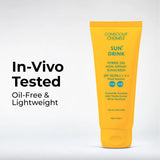
If you want a sunscreen that fits these needs, you can try the Conscious Chemist Sun Drink Oil Free Sunscreen SPF 50. It is a hybrid, oil-free formula designed for sensitive, oily, and combination skin, with ceramides, hyaluronic acid, and milk thistle antioxidants.
Patch Test and Switch Plan for Sensitive Skin
Follow this simple two-week plan to introduce a new sunscreen safely:
|
Day Range |
Action |
Checking For |
Response to Reaction |
|
Day 1–2 |
Patch test on arm or behind ear |
Burning, redness, itching |
Stop immediately |
|
Day 3–5 |
Apply on face once daily |
Mild irritation or discomfort |
Reduce use or stop |
|
Day 6–10 |
Apply daily |
Breakouts or sensitivity |
Simplify routine |
|
Day 11–14 |
Continue regular use |
Overall tolerance |
Continue or switch |
|
Key Takeaway: Patch test every new sunscreen for at least 24 hours. Then introduce it during a calm routine week so you can spot triggers without confusing your skin. |
If you want a lightweight sunscreen that suits oily or combination skin while still being gentle on a stressed barrier, Conscious Chemist Sun Drink Oil Free Sunscreen SPF 50 is a practical option to start with.
Frequently Asked Questions
-
Which sunscreen is best for sensitive skin?
Mineral sunscreens are often easier to tolerate, especially if your skin barrier is weak. However, they can feel heavy or leave a white cast. If you prefer a lighter texture, a well-formulated hybrid sunscreen can be a more comfortable option. The key is to choose a formula your skin can handle daily.
-
Why does sunscreen burn or sting my face?
Stinging usually happens when your skin barrier is compromised or the formula contains triggers like fragrance or alcohol. It can also happen if sunscreen moves into the eye area with sweat or oil. This does not always mean the sunscreen is bad. It often means your skin needs repair.
-
Can sunscreen cause pimples even if it is non-comedogenic?
Yes. Breakouts can happen due to clogged pores, but also due to irritation and inflammation. If your skin is sensitive, even lightweight formulas can trigger a reaction. Choose oil-free textures, avoid layering too many products, and cleanse properly at night.
-
What is a hybrid sunscreen and is it better?
Hybrid sunscreens combine chemical and mineral filters. They aim to balance comfort and protection. For many people with sensitive and combination skin, hybrids feel lighter than mineral sunscreens and less irritating than some chemical formulas. Whether it is better depends on how your skin responds.
-
How much sunscreen should I apply on my face?
Use enough to fully cover your face and neck. A common guideline is the two or three finger method. Applying too little reduces the level of protection, even if you are using a high SPF.
-
How do I know if my skin is reacting or purging?
Sunscreen does not cause purging. If you see breakouts, it is either clogging or irritating. Irritation usually comes with redness or discomfort, while clogging feels like small bumps over time. If your skin feels uncomfortable, stop using the product.
-
When should I see a dermatologist for sunscreen reactions?
Seek medical advice if you notice swelling, hives, blistering, or difficulty breathing. Also consult a dermatologist if the rash spreads beyond the application area or if irritation continues even after stopping the product.
Share:
Things to Consider Before Buying a High SPF Sunscreen on a Budget
Broad-Spectrum SPF Guide: How to Choose the Right Sunscreen?