


Buying sunscreen in India? Well, that sounds easy! Until you scroll through multiple brands on Nykaa and find nothing in your budget.

Everyone wants a budget-friendly SPF 50 sunscreen in India. But prices vary, options feel endless, and marketing claims make everything look essential. The result is confusion or worse, buying a sunscreen that does not suit your skin type.
Here’s the thing. Sunscreen provides sun protection and visible results only if you apply it consistently. That means your decision is not about finding the most advanced formula.
It is about choosing one sunscreen that you can afford, that suits your skin requirements, that you enjoy using, and that you trust for daily protection.
This guide breaks down exactly what to prioritize when you can only buy one sunscreen. You will learn what is non-negotiable, what you can compromise on, and how to get the best value without reducing protection.
3 Must-Haves in 1 Sunscreen
If you can only buy one sunscreen, you must focus on how well it protects your skin and how much you enjoy wearing it. You should not get distracted by fancy packaging or expensive brand names.
Instead, look for these 3 non-negotiable features to ensure your skin stays safe and healthy:
Non-Negotiable 1: Broad Spectrum Protection
You must choose a broad-spectrum product. This term means the formula protects you from both UVA and UVB rays.
-
UVB rays cause immediate sunburn on the skin's surface.
-
UVA rays penetrate deeper, leading to premature aging and dark spots.
You need protection from both, even if you spend most of your time indoors near windows.
Non-Negotiable 2: A Reliable SPF Level
SPF 30 is the baseline for daily protection, but SPF 50 is a stronger choice for an everyday product.
Research shows that higher SPF levels provide a better safety net in real-world conditions. A randomized clinical trial found that SPF 100+ prevented more sunburn than SPF 50+ over five days of sun exposure.
Choosing a higher SPF helps compensate if you accidentally apply a little less than the recommended amount.
Non-Negotiable 3: A Comfortable Finish
If your sunscreen does not feel good, you will not use enough of it.
Avoid formulas that:
-
Feel greasy or heavy
-
Leave a white cast
-
Pill under makeup
-
Sting your eyes
If you have oily or combination skin, choose:
-
Lightweight textures
-
Oil-free or non-comedogenic formulas
-
No heavy residue
Comfort drives consistency. And consistency is what makes sunscreen effective.
According to a PubMed study, the cost of a sunscreen influences the usage behaviour. The study shows that people tend to use less sunscreen when it feels expensive.
|
Key takeaway: On a budget, choose a sunscreen that checks the three boxes above and feels easy to use every day. |
Essentials vs Optional Features When Buying Sunscreen on a Budget

You do not have to buy the most expensive product to get excellent results. Some features add to the price without improving the actual protection.
Understanding the difference between essential needs and optional features helps you save money. Use the following logic to make a confident purchase.
Essential Sunscreen Labels
These are the features that directly impact how well your sunscreen works. If these are missing, the product will not deliver proper protection.
Make sure your sunscreen:
-
Clearly mentions broad-spectrum protection
-
Has SPF 30 or higher, ideally SPF 50 for daily use
-
Feels comfortable enough for regular application
-
Does not leave a heavy white cast or greasy layer
P.S.: Don’t compromise on these features.
Optional Sunscreen Labels
Some features look appealing, but do not improve protection. These are safe to compromise on.
You can skip:
-
Fancy packaging like pumps or glass bottles
-
Viral textures or trending finishes
-
Premium branding or aesthetic appeal
A simple, functional tube works just as well. In many cases, it is more practical and reduces waste.
Sunscreen Features as Per Skin Type
Some factors are not universal. They depend on how your skin reacts.
Fragrance is a common example:
-
If you have sensitive skin, rosacea, or experience eye irritation, choose fragrance-free options and patch test
-
If your skin is not sensitive, fragrance is a personal preference
The same applies to texture. Oily skin may prefer lightweight, oil-free formulas, while drier skin may need a slightly more hydrating feel.
The key is to adjust for your skin without compromising core protection.
Sunscreen Buying Priorities at a Glance
A quick breakdown of what matters most when choosing one sunscreen on a budget.
|
What to look for (Sunscreen features) |
Priority level |
Why it matters in real life |
|
Broad-spectrum SPF 50 |
High |
Protects against daily sun damage |
|
Comfortable texture |
High |
Ensures consistent use |
|
Fragrance or finish preference |
Medium |
Depends on skin sensitivity |
|
Packaging and trends |
Low |
Does not affect protection |
|
Key takeaway: Do not compromise on protection or comfort. Adjust for your skin type, and skip features that do not improve real-world use. |
How to Measure Sunscreen Value Without Under-Using It?

Value is not just about the price tag on the tube. It is about how long the product lasts when you use the correct amount.
Many people buy expensive sunscreens and then ration them to save money. This is dangerous because under-application leads to sun damage.
Here is how to calculate the value of a sunscreen in a simple, practical way.
How Much Sunscreen Do You Actually Need?
Most people apply less sunscreen than required. That is where protection drops.
A simple way to get the right amount is the three-finger rule:
-
Apply sunscreen along the length of three fingers
-
Use this for your face and neck
Apply it evenly and let it settle before sun exposure.
Clinical guidance recommends applying a generous, even layer about 15 minutes before going outdoors.
If you are outdoors, sweating, or exposed to direct sunlight, you will need to reapply.
How Long Does a 50 g Sunscreen Tube Last?
Now let’s translate quantity into real usage.
-
One application for the face and neck uses about 1 to 1.5 grams
-
A 50 g tube gives roughly 33 to 50 applications
That means:
-
About 1 to 1.5 months if you apply once daily
-
Less if you reapply during the day
This is why a low-priced sunscreen may not always be better if you are not using it correctly.
Why Can Expensive Sunscreen Lead to Under-Application?
Here is the behavioral reality. When a product feels expensive, people tend to use less of it.
Research shows that people apply less sunscreen when they purchase it themselves than when it is provided for free. This leads to under protection, even if the sunscreen itself is high-quality.
The smarter approach is to choose a sunscreen that fits your budget so you can apply the right amount without hesitation.
50 g Sunscreen Usage Guide
Use this table to estimate how long your sunscreen will last when applied correctly.
|
Assumption |
Example value |
What it means |
|
Amount per use |
1 to 1.5 grams |
Standard face and neck application |
|
Total quantity |
50 grams |
Typical sunscreen tube size |
|
Total uses |
33 to 50 uses |
Depends on how much you apply |
|
Duration |
1 to 1.5 months |
If used once daily |
|
Reapplication |
Reduces duration |
More outdoor time means faster usage |
|
Key takeaway: Value is not the price of the sunscreen. It is the cost of applying the right amount every day without holding back. |
A Practical Checklist for Choosing 1 Sunscreen on a Budget
At this stage, you do not need more options. You need a clear way to choose one sunscreen that works for your skin and your budget.
Use this checklist to make a confident decision and focus on consistent daily use.
The One-Sunscreen Decision Checklist
Before you buy, make sure your sunscreen meets these criteria:
-
Broad-spectrum protection clearly mentioned
-
SPF 50 for strong daily protection
-
No visible white cast, especially on deeper skin tones
-
Lightweight and non-greasy texture
-
Comfortable for oily or combination skin
-
Includes basic hydration or barrier support
-
Comes in packaging that is easy to use daily
-
Fits your monthly budget, so you do not ration it
If your sunscreen checks these boxes, you do not need to keep searching.
How to Use Your Sunscreen Correctly for Best Value?
Using less sunscreen reduces protection. Instead of cutting down the amount, focus on using it properly.
-
Apply to clean, moisturized skin
-
Let each layer settle to prevent pilling
-
Carry a small amount for reapplication when outdoors
-
Use hats or shade to reduce direct exposure
This helps you get full protection without unnecessary product waste.
Simple Ways to Prevent Sunscreen Waste
A few small habits can make your sunscreen last as intended:
-
Keep the cap tightly closed
-
Store it away from heat and direct sunlight
-
Avoid leaving it in hot environments like cars
-
Do not mix it with other products
-
Use clean hands during application
-
Check expiry and replace if the texture or smell changes
Always patch-test before using a new sunscreen.
Sun Drink Oil Sunscreen SPF 50: The Best Budget-Friendly Sunscreen
Are you looking for one daily sunscreen that feels light on oily or combination skin but still hydrates?
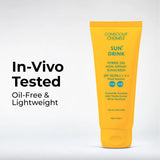
Try Conscious Chemist Sun Drink Oil-Free Sunscreen SPF 50, and use the three-finger amount daily. Reapply when you are outdoors.
It aligns well with the checklist for daily use:
-
Broad-spectrum SPF 50 protection
-
Lightweight, oil-free texture suited for oily and combination skin
-
Designed to avoid a white cast
-
Includes ceramides and hyaluronic acid for hydration and barrier support
-
Contains milk thistle for antioxidant support
-
Comes in a simple and reliable tube format
-
Made in India and easy to access
|
Key takeaway: Choose one sunscreen that fits your budget, feels comfortable on your skin, and delivers reliable broad-spectrum protection every day. |
Frequently Asked Questions
-
If I can only afford one sunscreen, should I choose SPF 50 or SPF 30?
SPF 50 is the better choice for daily use. It offers higher protection and gives you more margin for real-world application, where most people apply less than required. If SPF 30 is what you can afford to use generously every day, it can still work. The key is consistent and adequate application.
-
Does expensive sunscreen work better, or is it just marketing?
Price does not guarantee better protection. What matters is broad-spectrum testing, SPF level, and whether you can apply the correct amount daily. Research shows that higher costs can lead to using smaller amounts, which reduces effectiveness.
-
How long does a 50 g sunscreen last with daily use?
For the face and neck, a 50 g sunscreen typically lasts around 33 to 50 applications. That equals about 1 to 1.5 months if you apply once daily. It will last less if you reapply during the day.
-
Will daily sunscreen clog pores if I have oily or acne-prone skin?
It can if the formula is heavy or greasy. Many modern sunscreens are lightweight and designed for oily or acne-prone skin. Look for oil-free or non-comedogenic textures and cleanse properly at the end of the day.
-
Is it okay to apply less sunscreen to make it last longer?
No. Using less sunscreen reduces the level of protection you get. Instead, choose a sunscreen that fits your budget so you can apply the right amount daily without hesitation.
-
What is the simplest way to avoid wasting sunscreen?
Store it away from heat and direct sunlight, keep the cap tightly closed, and avoid mixing it with other products. Always use clean hands while applying and replace it after expiry or if the texture or smell changes.

Share:
How Often Should You Reapply Sunscreen When Outdoors?
Chemical, Mineral or Hybrid: Which Sunscreen is Best for Sensitive Skin?