


You step out after applying sunscreen and notice a white layer sitting on your face. It shows up in daylight, in photos, and sometimes your makeup starts to look uneven. That fresh, even finish just isn’t there.
Many people skip sunscreen because of this. The chalky or ashy residue feels hard to ignore, especially on Indian skin tones, where higher melanin makes it more visible.
What you really want is simple. An SPF 50 that protects your skin and still gives an invisible finish.
The shift starts with understanding formulation, not just application. Once you know what to look for, finding a sunscreen for Indian skin that leaves no white cast becomes much easier.
This guide breaks it down so you can choose better and wear sunscreen every day without hesitation.

Why Sunscreen Leaves a White Cast on Skin?
White cast is a cosmetic effect where sunscreen particles reflect and scatter visible light. This often appears as a grey or purple veil on deeper skin tones. It occurs more frequently on Indian skin due to higher melanin levels and contrast.
Why Does White Cast Look More Visible on Indian Skin Tones?
To explain this simply, white cast is visible light scattering, not a bad application. The ashy look isn’t always a result of bad application. Certain UV filters are opaque by nature.
When these particles sit on the skin surface, they scatter light back at the observer. On light skin, this might look like a glow, but on tan or deep skin, it looks like a layer of chalk.
Why Does White Cast of Higher SPF Look More Visible?
A higher SPF rating generally requires a larger load of UV filters. When a formula uses a high percentage of mineral filters to reach SPF 50, the product becomes more opaque.
You can still get high protection without the residue if you choose the right texture or filter combination.
When Does Sunscreen White Cast Look More Visible?
Even when you choose the best lightweight, non-greasy sunscreen in India, certain situations make the white cast more visible. These are:
-
High humidity and sweat
-
Layering too many products
-
Applying sunscreen in one thick layer
-
Reapplying without blending properly
These factors cause sunscreen to sit on the surface of the skin rather than blend evenly.
Mineral vs Chemical vs Hybrid: Which is the Best SPF Filter?
The type of UV filter in your bottle determines how it looks on your face. Each category behaves differently on the skin.
Understanding the difference between mineral, chemical, and hybrid options helps you predict the finish before you buy.

SPF Type 1: Mineral Filter (Most Likely to Cast)
Mineral sunscreens use zinc oxide or titanium dioxide. These sit on the skin and reflect UV rays.
While they are great for sensitive skin, they are the primary cause of flashback in photos. Even micronized or nanosized versions can leave a residue at high concentrations.
SPF Type 2: Chemical Filters (Provides a Transparent Finish)
Chemical filters absorb UV radiation and convert it into heat. These filters are typically transparent on the skin.
They are the best choice if your main goal is an invisible finish. Some users find they can sting the eyes, so the overall formula texture is important for comfort.
SPF Type 3: Hybrid Sunscreens (Offers a Practical Middle Ground)
Hybrid sunscreens blend mineral and chemical filters. This approach balances the broad spectrum coverage of minerals with the cosmetic elegance of chemical filters.
A well-formulated hybrid sunscreen reduces the risk of a white cast while providing strong protection in humid climates.
|
Key insight: If white cast is your main concern, chemical or well-formulated hybrid sunscreens are easier to use. |
What to Look for on a Sunscreen Label?
Check for the following signs:
-
If you are looking for a sunscreen that prevents tanning, pigmentation, and dullness, look for the broad spectrum label.
-
The SPF 50 rating protects against UVB rays, while the PA++++ rating indicates strong UVA protection.
-
This combination is essential for preventing tanning and dark spots.
Sunscreen Types at a Glance: Which One Leaves the Least White Cast
This quick comparison helps you understand how different sunscreen types behave on the skin.
Use it to choose a sunscreen for Indian skin with no white cast based on finish, comfort, and daily wear.
|
Type |
White Cast Risk on Indian Skin Tones |
Best For |
Trade-offs |
|
Mineral |
High |
Sensitive or post-procedure skin |
Can look chalky or ashy |
|
Chemical |
Very Low |
Daily wear and photo readiness |
May cause eye stinging in some |
|
Hybrid |
Low |
Indian climates and active lifestyles |
Requires good formulation for elegance |
What Clinical Studies Say About White Cast in Sunscreens?
-
Higher zinc oxide concentrations are associated with more visible white cast across skin tones. Lower ranges are more acceptable.
-
People with deeper skin tones actively want more no white cast options. A PubMed study reported 84% of colored skin sunscreen users wished there were more options made for their skin tones.
Texture, Finish, and Tint: How to Choose a No White Cast Sunscreen?
The physical form of the sunscreen is just as important as its filters. The right texture ensures the product spreads thinly and stays in place.
Which is the Best Sunscreen Texture for Indian Skin and Weather?
Gels, gel creams, and fluid SPF textures are ideal for the Indian climate.
Why?
-
These lightweight formulas spread thinly across the skin.
-
This prevents the product from bunching up in certain areas.
-
Oily and combination skin types benefit most from gel-based sunscreens because they do not feel greasy under makeup.
Tinted or Non-Tinted Sunscreens: Which One Should You Choose?
Tinted sunscreens can help cancel white cast. They also reduce flashbacks in photos. However, tint matching can be difficult across Indian undertones.

Dewy or Matte SPF Finish: Which One Should You Choose?
Different finishes behave differently on skin:
-
Very matte finishes can sometimes emphasize dry patches or residue on deeper skin.
-
A hydrated or dewy finish often looks more seamless.
-
If you have very oily skin, you can apply a light powder over a natural finish sunscreen to control shine.
Which Ingredients in Sunscreen Enhance Skin Tone?
Look for ingredients like niacinamide and antioxidants.
-
Niacinamide supports the skin barrier and helps with uneven tone.
-
Antioxidants help neutralize oxidative stress from the sun.
These do not remove white cast instantly, but they improve skin clarity with regular use
|
Key insight: For a no-cast look, texture often matters as much as filters. Thin spreading gels and fluids tend to dry down more evenly and show less residue. |
How to Apply Sunscreen for a No White Cast Look?
Even a high-quality, non-greasy sunscreen for Indian skin can look ashy if applied messily. Proper technique ensures the UV filters form a smooth, invisible shield.
Here are a few hacks to ensure your sunscreen does not leave a white cast:
Hack 1: Use the right amount in two layers
Apply sunscreen in two thin layers instead of one thick layer.
-
First layer: spread evenly
-
Second layer: build coverage
This helps create a smooth and even film.
Hack 2: Follow the dot, spread, press method
-
Dot sunscreen across your face
-
Spread gently
-
Press it into the skin
Avoid aggressive rubbing. It can create streaks and uneven patches.
Hack 3: Wait before stepping out
Give sunscreen 10 to 15 minutes to settle.
This improves:
-
Blending
-
Protection
-
Makeup compatibility
Hack 4: For makeup and photos
-
Let sunscreen settle fully
-
Use minimal base products
-
Avoid heavy layering
-
Use light powder if needed
Mineral-heavy formulas are more likely to cause flashbacks.
Hack 5: Reapply without buildup
-
Blot sweat or oil first
-
Apply a thin layer
-
Use a gentle pressing motion
Lightweight and water-resistant formulas make reapplication easier.
|
Key insight: Most white cast issues come from uneven application, not just the product. |
The No White Cast Sunscreen Buying Checklist for Indian Skin
Use this checklist to evaluate your next purchase. A good sunscreen should meet several of these criteria to ensure it works well on Indian skin.
|
Checklist Item |
Why It Matters |
What to Look For |
|
Broad-spectrum |
Protects the skin from both UVA and UVB rays. |
Look for a Broad-spectrum label. |
|
SPF 50 |
Ensures high protection against sunburn. |
Look for SPF 50 on the packaging. |
|
UVA Rating |
Prevents tanning, dark spots, and premature aging. |
Look for a PA++++ rating. |
|
Filter Type |
Determines how visible the product is on the skin. |
Choose chemical or hybrid filters. |
|
Texture |
Controls how easily the product blends. |
Look for gel or fluid textures. |
|
White Cast Claim |
Ensures real-world usability on deeper skin. |
Look for a No White Cast mention. |
|
Skin Compatibility |
Prevents breakouts and clogged pores. |
Look for a Non-comedogenic label. |
|
Water Resistance |
Helps the product stay on during sweat or humidity. |
Look for a Water-resistant label. |
A Practical Daily Sunscreen Option: Conscious Chemist Berry Bright Sunscreen
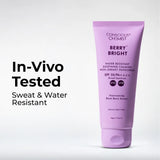
If you need a product that checks all these boxes, the Conscious Chemist Berry Bright Sunscreen SPF50 PA++++ is an excellent example. It uses a hybrid chemical mineral approach to ensure high protection without the chalky look.
Why Use Berry Bright Sunscreen:
-
Hybrid sunscreen system reduces white cast
-
Lightweight gel texture spreads evenly
-
Dewy finish blends well on Indian skin tones
-
Contains 1 percent niacinamide for oil balance
-
Includes berry antioxidants for skin support
-
Non-comedogenic formula suits acne-prone skin
-
Water-resistant for daily wear and reapplication
Who Should Use Berry Bright Sunscreen?
Best suited for:
-
Oily and combination skin
-
Anyone looking for a lightweight daily SPF
-
Users who want a glow without greasiness
P.S.: Remember to reapply sunscreen every two hours.
Frequently Asked Questions
-
Why do sunscreens look grey or purple on Indian skin?
This occurs due to light scattering from mineral filters or an uneven skin film. The contrast between the white particles and deeper skin tones creates a grey or purple tint, especially in photos.
-
Are mineral sunscreens always a bad choice for Indian skin?
No, they are great for sensitive skin. However, they are more likely to leave a cast. If you prefer minerals, look for micronized formulas or tinted versions that match your skin tone.
-
Does SPF 50 have more white cast than SPF 30?
Not necessarily, but SPF 50 formulas often have a higher concentration of filters. In mineral heavy products, this can increase opacity. A well-made chemical or hybrid SPF 50 can still be invisible.
-
How do I reapply sunscreen without it turning ashy?
Blot your skin to remove excess oil and sweat first. Apply the sunscreen in a thin layer and press it into the skin instead of rubbing. Lightweight, water-resistant formulas are easier to layer.
-
What is better for pigmentation: PA++++ or SPF 50?
They protect against different things. SPF 50 protects against UVB rays, which cause burning. PA++++ protects against UVA rays, which cause tanning and aging. For pigmentation, you need both, but prioritize a high PA rating.
-
Is niacinamide sunscreen good for acne-prone skin?
Yes, niacinamide helps balance oil and supports the skin barrier. Just ensure the sunscreen's overall texture is non-comedogenic so it does not clog your pores.
Share:
A Complete Guide to Hybrid Sunscreen for Every Skin Type
How to Choose a Lightweight Dewy Sunscreen for a Glow Without Grease?