


Most people switch shampoos when their hair starts falling more than usual. What they do not realise is that the shampoo itself could be making things worse. A formula that is too strong does not just clean your scalp; it also irritates your scalp. It strips it, and that shows up as dryness, frizz, and more hair in the drain.
If you have been looking for a hair fall control shampoo that actually works, the answer is not always about finding something stronger. It is about finding something that cleans without taking too much of it.

What Does an Over-Stripping Shampoo Feel Like?
Most people cannot tell their shampoo is too harsh until the damage is already visible. The signs show up in how your scalp feels right after a wash and how your hair behaves over the next day or two.
Knowing what to look for helps you catch the problem before it starts affecting your hair density.
-
The Signs Your Shampoo May Be Too Harsh
Your scalp and hair give clear signals when a cleanser is removing more than just dirt.
-
Tight or itchy scalp within an hour of rinsing
-
Squeaky lengths that feel rough to touch
-
Instant frizz right after air drying
-
Rough, tangled ends that are hard to comb through in the shower
-
Hair feeling dry the same day, even after using conditioner
If you regularly tick more than two of these boxes, your shampoo may be the problem.
-
How to Check If Your Shampoo Is Too Harsh in 48 Hours?
Wash your hair once and air-dry without heavy styling products. At the one-hour mark, notice how your scalp feels, then check again at 24 hours. While combing, pay attention to tangling and frizz in humidity.
If your scalp stays tight and your lengths stay rough on both cheeks, your cleanser is likely too strong for your hair and scalp.
-
Stripping vs Clarifying: When Does Your Hair Need a Deeper Clean?
Clarifying is not the same as everyday harshness. Occasional deep cleansing makes sense when there is product buildup, silicone residue, or heavy oil on the scalp.
A clarifying wash done once every two to four weeks is very different from using a strong shampoo on every wash day.

|
Key Note: If your scalp feels tight and your hair turns squeaky or frizzy right after washing, your shampoo may be doing more than cleansing. It may be stripping the scalp barrier and the hair’s natural lipids. |
Why Your Shampoo Might Be Making Hair Fall Look Worse?
There is an important distinction between hair fall and hair breakage, and a harsh shampoo can significantly worsen the latter. When more hair shows up in the drain, it is easy to assume the problem is shedding.
But a lot of what you see could be broken pieces caused by a rough cleansing routine rather than root-level shedding.
-
Is It Hair Fall or Hair Breakage?
Shed hair usually has a small white bulb at one end. Broken hair does not. It is shorter, uneven, and has no bulb. Both can happen together, but a shampoo that is too harsh tends to increase breakage by making the hair surface rougher and harder to detangle.
-
How Harsh Detergents Cause Hair Snapping?
Strong detergents remove sebum effectively but can leave hair drier and harder to detangle. When the hair surface is rougher post-wash, combing creates more friction, and that friction leads to snapping.
More snapping means more hair on your comb, in the shower, and on your pillow. The problem is not always the follicle. It is often the routine.
-
What Matters More: Frequency of Wash or What You Use?
Frequent washing is not automatically bad for your hair. A PubMed study found that washing hair five to six times a week did not harm the hair or scalp, and many people found it more comfortable.
The key is not how often you wash. It is whether your shampoo is gentle enough for regular use.
What to Look for on a Shampoo Label?
Choosing a gentler anti-hair fall shampoo does not require a chemistry degree. A few practical cues on the label can tell you how a formula will behave on your scalp and hair length.
The goal is not to avoid every ingredient you cannot pronounce, but to understand what certain combinations tend to do.
-
Why Mild Cleansers Matter More Than Sulfate-Free Labels?
Sulfate-free does not automatically mean gentle. What matters more is the surfactant system used. According to PubMed Central, Amphoteric surfactants like Cocamidopropyl Betaine are generally milder and work well alongside gentle anionic surfactants like Sodium Lauroyl Sarcosinate.
These combinations clean without the aggressive stripping that strong detergents can cause.
-
Best Ingredients for Scalp Comfort and Easy Detangling
These ingredients do not build up when the formula is balanced. They simply make the washing experience less damaging.

-
How to Care for Coloured, Treated, or Hard Water Hair?
Strong detergents are often too harsh for chemically treated or dyed hair. For hard water specifically, a gentle shampoo that rinses cleanly and contains chelating agents like EDTA can reduce the rough, mineral-coated feeling many women in Indian cities experience after every wash.
|
Checklist item |
Why it matters |
Example cues on the label |
|
Mild surfactant system |
Cleans without stripping scalp barrier |
Cocamidopropyl Betaine, Sodium Lauroyl Sarcosinate |
|
Humectants or conditioning agents |
Reduces post-wash roughness and frizz |
Glycerin, Panthenol, Aloe Vera |
|
No harsh secondary detergents |
Prevents over-drying of lengths |
Avoid high-concentration SLS or SLES as the primary wash |
|
Chelating agents |
Helps in hard water conditions |
Disodium EDTA |
|
pH-balanced formula |
Keeps scalp barrier intact |
Look for scalp-friendly or pH-balanced mentions |
|
Keynote: A gentle shampoo isn’t the one that lathers the most. It’s the one that cleans your scalp while keeping your lengths soft, easy to detangle, and comfortable to touch. |
How to Wash Your Hair Without Stripping and What to Use?
Switching to a gentler shampoo is one part of the solution. How you actually wash matters just as much. Small technique changes can reduce dryness, tangling, and breakage from the very first wash without overhauling your entire routine.
What are the Wash Day Habits That Reduce Breakage?
Small changes in how you wash and handle your hair can reduce breakage and improve manageability from the very first wash. These adjustments focus on minimizing friction, preserving moisture, and keeping the scalp comfortable without overdoing the routine.
- Wet hair thoroughly (30–60 seconds)
- Apply shampoo to the scalp only
- Massage gently, rinse through lengths
- Rinse thoroughly
- Apply leave-in on damp lengths
- Pat dry and detangle with a wide-tooth comb
How to Move Away From Strong Shampoo?
If you have been using a harsh shampoo for a while, the first few washes with a milder formula might feel less clean. That is normal as your scalp adjusts. For the first one to two weeks, alternate your old shampoo with the milder one once a week, then shift fully to the gentle formula.
Steady Routine Option: Anti-Hairfall Strength Duo
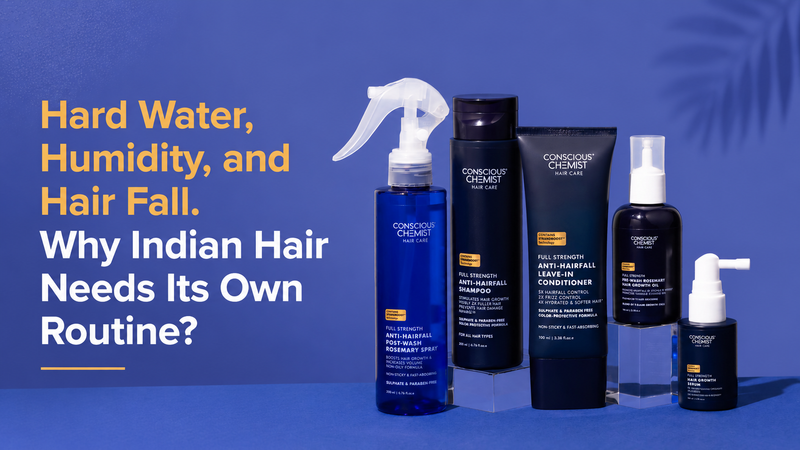
If you want a routine that stops the cycle of stripping and breakage, the Conscious Chemist Anti-Hairfall Strength Duo is built around exactly that. It pairs a non-stripping hair fall control shampoo with a lightweight leave-in conditioner designed to protect lengths between washes.
-
The shampoo is formulated for frequent use and is safe for coloured and treated hair
-
It works well even in hard water without leaving residue
-
The leave-in conditioner reduces friction on mid-lengths and ends, cutting down on mechanical breakage
-
StrandBoost technology with yeast extract and rosemary supports follicle health and strengthens hair fibers between washes
-
Routine: shampoo two to four times a week and apply leave-in after every wash
This is not about adding more steps. It is about making each step work better for your hair.
Frequently Asked Questions
1. My hair feels squeaky clean after washing. Is that not a good sign?
Usually not. A squeaky feel often means your lengths were over-cleansed, which increases friction and frizz.
2. Can a gentle shampoo clean oiled hair properly?
Yes, especially when you apply shampoo directly to the scalp, massage for 45 to 60 seconds, and rinse thoroughly.
3. Is frequent washing okay when dealing with hair fall?
Frequent washing can be fine when your shampoo is mild and your technique is scalp-focused.
4. Will a daily leave-in conditioner cause buildup or more hair fall?
A lightweight leave-in on mid-lengths and ends typically does not increase hair fall and can reduce breakage by lowering friction.
5. I have dandruff. Should I still avoid strong shampoos? ›
Dandruff usually needs a specific active ingredient, such as ketoconazole or zinc pyrithione, rather than a stronger cleanser. Keep non-treatment wash days gentle to prevent dryness and irritation.
6. How soon will I notice less frizz and breakage after switching shampoos?
Some women notice easier detangling within a few washes. Visible breakage reduction usually becomes clearer after a few weeks of consistent routine.
Share:
How to Choose a Shampoo for a Sensitive Scalp With Hair Fall?
How to Shampoo Every Day Without Causing Dryness or Hair Fall?