


You notice more hair in your comb than usual.
At first, you switch to a different shampoo. Then maybe you add oiling. Then maybe a serum. But the problem doesn't feel fully resolved, especially on wash days or while detangling.
This is where most routines start becoming confusing.
If you are trying to decide whether you need an anti-hairfall shampoo and conditioner, or if one step is enough, the answer is not about buying more. It is about understanding what your hair goes through every day.
Because what looks like one problem is usually a mix of two.

What Does Hair Fall Mean: Shedding vs Breakage?
Hair fall is not always what it seems.
What you see on your comb or in the shower includes different types of hair loss. Some strands fall from the root naturally, while others break along the length due to stress.
You can identify this with simple observation:
-
Full-length strands with a white bulb → shedding
-
Short, uneven strands → breakage
-
Hair mostly on wash day → accumulated shedding and tangles
-
Frizz and knots → higher breakage risk
Tracking this over a few days gives you a clearer picture than reacting to one bad wash.
Why Do Most People Misread Breakage as Hair Fall?
Breakage happens during handling, not at the root.
When hair becomes rough, tangled, or weakened, it snaps under tension. This often happens during combing, towel drying, or even tying hair.
The result looks like hair fall, but the cause is mechanical stress.
This is especially common in:
-
Colored or chemically treated hair
-
Frequent heat styling
-
Hard water conditions
-
Long hair with dry ends
Why Misidentifying Hair Fall Leads to Wrong Product Choices?
If you treat breakage as hair fall, you may keep switching shampoos, expecting different results.
But if the issue is friction and tangling, the missing step is not a stronger shampoo. It is protection for the lengths.
Before choosing products, this quick self-check helps connect what you see with what you need.
|
What you notice |
What it likely means |
What helps most |
|
Long strands with a bulb |
Shedding |
Scalp-focused care |
|
Short snapped strands |
Breakage |
Conditioning and slip |
|
Hair falls mainly on wash day |
Mixed issue |
Gentle wash and leave-in |
|
Frizz and tangles |
Surface damage |
Reduce friction |
|
Key Takeaway If your hair falls mostly during combing or detangling, you are likely dealing with breakage, not just shedding. |
What Does an Anti-Hairfall Shampoo Do and Its Limitations?
An anti-hairfall shampoo plays an important but limited role.
It helps maintain scalp hygiene by removing oil, sweat, and buildup. This keeps the scalp environment balanced, which can reduce irritation and discomfort that sometimes worsens shedding perception.
It also helps hair feel lighter and less tangled during washing.
Why Does the Way You Wash Matter More Than the Shampoo Itself?
Many people focus on the product but ignore the technique.
Rough scrubbing, hot water, and bunching hair together increase friction. Even a good shampoo can lead to breakage if used aggressively.
A gentle wash routine:
-
Focuses shampoo on the scalp
-
Let the foam run through the lengths
-
Avoids unnecessary rubbing
This reduces stress on the hair fiber.
Is Frequent Washing Bad for Hair Fall?
There is a common belief that frequent washing causes hair fall.
However, research shows that higher shampoo frequency can be associated with better scalp and hair condition when done correctly.
The key is using a gentle formula and avoiding harsh handling.
Why Can Shampoo Alone Not Solve Most Hair Fall Concerns?
Shampoo is a rinse-off product.
It stays on your hair for less than a minute and primarily works on the scalp. It does not remain on the lengths long enough to protect them from friction during detangling or daily handling.
Research also highlights that many ingredients marketed in hair-fall shampoos lack strong, standalone clinical validation.
This does not mean shampoos are ineffective. It means they are only one part of the solution.
When Is Shampoo Alone Enough?
In some cases, shampoo alone may be sufficient.
-
Very short hair
-
Minimal frizz or tangling
-
No chemical treatments
-
Low daily handling
But these cases are less common than people assume.
|
Key Takeaway Shampoo supports scalp health, but it cannot protect hair lengths from breakage on its own. |

How does Leave-In Conditioner Reduce Hair Fall from Breakage?
Hair is most vulnerable when wet.
At this stage, strands stretch more easily and are prone to snapping under tension. Without lubrication between strands, even gentle combing can lead to breakage.
This is why many people feel hair fall is worse after washing.
What Does a Leave-In Conditioner Actually Do for Hair?
A leave-in conditioner for hair fall control improves slip.
Slip allows strands to glide past each other instead of pulling. This reduces mechanical stress during detangling and styling.
Over time, this leads to:
-
Less breakage
-
Better manageability
-
Reduced frizz
A study on damaged hair found that conditioning treatments can improve recovery and reduce markers of damage, reinforcing the importance of conditioning.
Leave-In vs Rinse-Off Conditioner vs Oil: What’s the Difference?
Understanding this difference is important.
-
Leave-in conditioner stays on hair and provides continuous protection
-
Rinse-off conditioner works temporarily and washes away
-
Oil can reduce friction, but may feel heavy or attract buildup
Leave-in provides a balance between protection and a lightweight feel.
Who Benefits the Most from Adding a Leave-In?
You are more likely to benefit if:
-
Your hair tangles easily
-
You notice breakage while combing
-
You have frizz or rough ends
-
You wash frequently
-
You live in a hard water area
|
Key Takeaway If your hair falls increases during combing, adding a leave-in conditioner can reduce breakage more effectively than switching shampoos. |
When Do You Actually Need Both Shampoo and Leave-In Conditioner?
Most hair concerns are not isolated.
You may have:
-
Some shedding from the scalp
-
Some breakage from the lengths
-
Some frizz due to damage
This combination means a single product rarely solves everything.
A routine that supports both scalp and length works better.
How to Choose Between Shampoo and Leave-In Based on Your Hair?
Instead of guessing, you can map your symptoms to solutions.
This table helps simplify that decision.
|
Your situation |
Most likely issue |
Best next step |
|
Oily scalp, smooth hair |
Scalp imbalance |
Scalp care (cleansing) |
|
Frizz and breakage |
Fibre damage |
Leave-in repair & protection |
|
Hair fall on wash day and tangles |
Mixed issue |
Balance scalp & lengths care |
|
Hard water and rough texture |
Friction and buildup |
Clarifying & leave-in care |
Simple Hair Routine Using Shampoo and Leave-In Conditioner
A routine does not need to be complicated to work.
Start with this structure:
|
Routine step |
What to do |
What it helps with |
|
Shampoo |
Cleanse scalp gently |
Reduces buildup |
|
Leave-in |
Apply to lengths |
Reduces breakage |
|
Optional oil |
Use before washing |
Adds softness |
|
Optional serum |
Apply on ends |
Controls frizz |
Why Using Shampoo and Leave-In Together Works Better?
Consistency is easier when your routine is structured.
Instead of switching between multiple products, a complete hair care kit for hair fall ensures that each step has a clear purpose.
Over time, this reduces:
-
Wash-related breakage
-
Daily friction damage
-
Frizz and tangling
|
Key Takeaway Most people benefit from using both shampoo and leave-in because hair fall usually involves both scalp and length-related issues. |

How to Choose Between Shampoo Alone or a Full Hair Care Routine?
Choosing between shampoo and a leave-in conditioner depends on whether your hair fall is caused by shedding, breakage, or both.
If your concern is mainly scalp-related, a shampoo may be enough. However, if your hair falls increase during detangling or styling, adding a leave-in conditioner can significantly reduce breakage.
Using an anti-hairfall shampoo and conditioner together provides a balanced approach by supporting both scalp health and hair fibre strength over time.
How to Build a Hair Fall Routine with the Conscious Chemist Hair Care Duo?
If your hair fall feels worse on wash days or during combing, focus on reducing friction and improving manageability instead of adding multiple products.
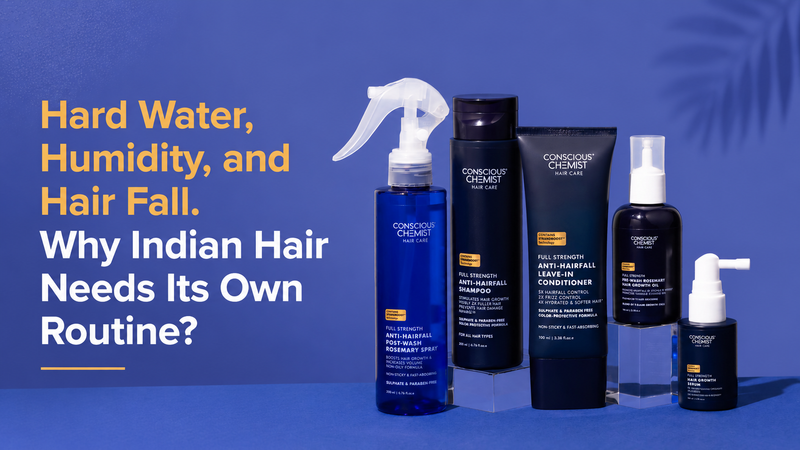
The Conscious Chemist Anti-Hairfall Shampoo and Conditioner work as a complete hair care kit for hair fall, helping improve detangling, reduce breakage, and support healthier-looking hair over time.
Order now and follow a consistent routine for 4–6 weeks to track smoother detangling and reduced breakage.
Frequently Asked Questions
1. Can I reduce hair fall using only shampoo?
Yes, if your main concern is scalp oil or buildup. However, if your hair falls during combing or detangling, adding a leave-in conditioner will help reduce breakage more effectively.
2. Is leave-in conditioner safe to use daily?
Yes, a lightweight leave-in can be used daily on mid-lengths and ends. It helps reduce friction and breakage, as long as you avoid applying too much product.
3. Should I apply conditioner to my scalp for hair fall?
Not usually. Apply conditioner to the lengths to avoid buildup, and use it on the scalp only if it’s specifically designed for that.
4. Do I need both shampoo and conditioner in hard water areas?
Yes, because hard water increases roughness and tangling. A combination of gentle cleansing and conditioning helps reduce breakage.
5. How long should I try a routine before switching?
You should follow a routine consistently for 3–6 weeks. This allows enough time to observe changes in breakage and overall manageability.
6. Will stopping the leave-in conditioner increase hair fall?
No, it will not affect root shedding. However, you may notice more breakage again because the protective slip is no longer present.
Share:
The Ultimate Guide to Preventing Hair Breakage from Heat Tools
How to Control Frizzy Hair in Humid Weather with a Simple Monsoon Routine?