




You step out after styling your hair, and within minutes, everything changes.
Your hair starts puffing up, flyaways appear, and whatever smoothness you had disappears. This is when most people start searching for ways to manage frizzy hair in humid weather, assuming they need more oil or heavier products.
But humidity does not respond well to heaviness.
It responds to structure.
Frizz in monsoon is not just dryness. It is how your hair reacts to moisture in the air, combined with how it is handled daily.
Why Does Humidity Cause Frizzy Hair in Monsoon?
Humidity increases the amount of water in the air.
Hair, especially porous hair, absorbs this moisture. When water enters the hair shaft unevenly, it causes swelling that appears as puffiness, halo frizz, and loss of definition.
This is why hair can look smooth indoors but frizz quickly outside.

Which Hair Types Frizz More in Humid Weather?
Not all hair reacts the same way.
-
High porosity hair absorbs moisture quickly and frizzes faster
-
Low porosity hair resists moisture but can feel greasy if overloaded
-
Medium porosity hair is manageable, but still reacts to humidity
Recognizing this helps you adjust your routine instead of copying generic solutions.
What Causes Frizz in Humid Weather and Monsoon?
Frizz is rarely caused by one factor.
It is usually a combination of:
-
Humidity exposure
-
Hair damage or porosity
-
Daily friction from handling
This combination creates what you can think of as a “frizz cycle.”
|
Key Takeaway Frizzy hair in humid weather is caused by moisture entering the hair shaft, combined with daily friction and damage. |
How Should You Shampoo Hair to Control Frizz in Monsoon?
The goal of shampoo is not deep cleaning.
It is balanced cleansing.
A good shampoo should:
-
Clean the scalp without stripping
-
Works well in sweat and humidity
-
Avoid making hair feel squeaky
Hair that feels overly clean often becomes frizzier later.
How Often Should You Wash Your Hair in Monsoon?
Frequency depends on your lifestyle.
If you sweat or commute daily, more frequent washing is fine as long as the shampoo is gentle. Avoid washing while layering products, as this can worsen frizz.
What Wash Habits Increase Frizz Without You Realizing?
Small habits make a big difference.
-
Scrubbing lengths instead of the scalp
-
Using hot water
-
Rubbing hair with a towel
-
Flipping hair aggressively
Even something as simple as water temperature matters. Using cooler water for the final rinse helps reduce frizz.
Correct Way to Wash Hair to Reduce Frizz in Monsoon
Keep it simple:
-
Detangle before washing
-
Apply shampoo only to the scalp
-
Rinse thoroughly
-
Use lukewarm to cool water
|
Key Takeaway Frizz starts at the washing stage when hair is over-stripped or handled roughly. |
How to Use a Leave-In Conditioner for Frizz Control Without Greasiness?
Application matters more than the product.
Apply leave-in only on mid-lengths and ends. Avoid the scalp unless it is extremely dry, as this can cause greasiness.
How Much Leave-In Should You Use?
Using too much product is one of the biggest mistakes.
Start small and build gradually.
Before applying, this guide helps you avoid overuse.
|
Hair length/density |
Leave-in amount (starting point) |
Application zones |
|
Short/fine |
Pea-sized |
Ends only |
|
Medium length |
2 pea-sized |
Mid-lengths and ends |
|
Long/thick |
Almond-sized |
Mid to ends evenly |
When Should You Apply Leave-In Conditioner?
Timing affects results.
Apply to damp hair after washing for even distribution. Use a very small amount on dry hair only for touch-ups before stepping out.
How does Leave-In Conditioner reduce breakage in Humid Weather?
Many people experience breakage during the monsoon and call it hair fall.
Leave-in improves slip, which reduces friction during detangling. This lowers snapping and protects hair during daily handling.
|
Key Takeaway Leave-in conditioner controls frizz by smoothing the hair surface and reducing friction, not by making hair oily. |

What Daily Habits Reduce Frizzy Hair in Humid Weather?
The first few minutes after washing matter the most.
Instead of rubbing hair with a towel, gently press out the water with a cotton t-shirt or microfiber cloth. This reduces friction, which is a major cause of frizz.
Detangle gently from the ends upward to avoid pulling.
How Do Sleep and Daily Friction Affect Frizz?
Friction continues even after styling.
Cotton pillowcases, tight hair ties, and helmets can increase frizz. Switching to softer materials and loose hairstyles reduces this stress.
Does Heat Styling Help or Worsen Frizz?
Heat can temporarily smooth hair, but it increases long-term damage.
Repeated heat exposure increases porosity, making hair more reactive to humidity. Using lower heat and fewer passes helps maintain smoother hair over time.
How to Fix Different Types of Frizz in Humid Weather?
Before changing your entire routine, this quick guide helps you identify what needs adjustment.
|
What you notice |
The likely reason in the monsoon |
What to do |
|
Halo frizz near the crown |
New growth and friction |
Gentle drying and avoid heavy roots |
|
Puffy lengths |
High porosity |
Use leave-in consistently |
|
Frizz after washing |
Rough handling |
Improve wash and drying technique |
|
Greasy roots and frizz ends |
Product imbalance |
Reduce scalp product |
Why Daily Hair Habits Matter More Than Products for Frizz Control?
Frizz is often caused by daily habits, not product gaps.
Reducing friction, improving application technique, and maintaining consistency can yield faster results than repeatedly switching products.

|
Key Takeaway Frizz control in the monsoon comes from consistent habits and correct product placement, not heavier products. |
How to Manage Frizzy Hair in Humid Weather Long-Term?
Frizzy hair in humid weather is caused by moisture entering the hair, combined with damage and friction from daily habits.
If you are using science-backed hair growth products or building a complete hair care kit for hair fall, focusing on gentle cleansing, proper leave-in use, and low-friction habits improves results over time.
Consistency, not heaviness, is what helps hair stay smoother and more manageable during the monsoon.
How to Control Frizz in Monsoon with the Conscious Chemist Hair Care Routine?
If your hair becomes frizzy within minutes of stepping out, focus on a routine that combines gentle cleansing and consistent leave-in protection.
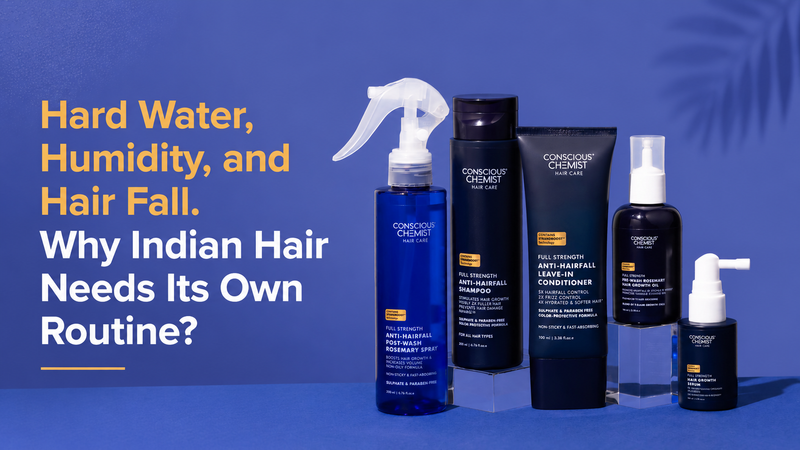
The Conscious Chemist Anti-Hairfall Shampoo and Conditioner work as a complete hair care kit for hair fall, helping reduce frizz, improve slip, and support smoother hair in humid conditions.
Order now and follow a simple routine that reduces frizz, breakage, and wash-related hair fall over time.
Frequently Asked Questions
1. Why does my hair frizz immediately in humid weather?
Humidity adds moisture to the air, which porous or damaged hair absorbs unevenly. This causes swelling and frizz, especially if the hair surface is rough.
2. Should I wash my hair more or less during the monsoon?
Wash as needed based on sweat and oil. Using a gentle shampoo is more important than reducing frequency, as buildup can worsen frizz.
3. Does leave-in conditioner cause hair fall or buildup?
A lightweight leave-in used on lengths does not cause hair fall. It can actually reduce breakage by improving slip. Buildup only happens if overused.
4. Where should I apply leave-in if my scalp is oily?
Apply only to mid-lengths and ends. For flyaways near the top, use a very small amount only on surface strands.
5. Is oil better than leave-in conditioner for frizz?
Leave-in conditioner is more effective in humid conditions because it smooths hair without weighing it down. Oil can be used sparingly on ends if needed.
6. Does hard water make frizz worse in the monsoon?
Yes, hard water can make hair feel rough and increase friction, worsening frizz. A gentle routine helps reduce this effect.

Share:
Shampoo vs Leave-In Conditioner: What Do You Need for Hair Fall?
How Does Hard Water Cause Hair Fall, Frizz, and Breakage?