


Indian summers look great in movies… not so great on your skin.
Picture this.
Your commute to work in peak summer — already a challenge — heat making you sweaty, shoulders bumping, and that sunscreen you carefully applied now trickling down your temples, giving up before you even reach the destination.
Most sunscreens feel heavy in humidity or leave a visible white cast on deeper Indian skin tones. Even a small amount can feel greasy….and the sweat? It only makes everything worse.
When the sun shows no mercy, nothing feels more disappointing than a sunscreen that doesn’t hold up. Indian weather refuses to cooperate, so your sunscreen has to.
Let’s decode why Indian weather breaks down most sunscreens, and what actually works here.
How Humidity & Sweat Break Down Sunscreen
Indian summers create a moisture-rich environment where your sunscreen is constantly being challenged. The moment you start sweating, your multi-step skincare routine can quickly lose stability.
Why SPF Fades When You Sweat
Sweat doesn’t just sit on top of skin, it mixes with your sunscreen film.
Once the sunscreen layer gets disrupted:
-
UV rays find unprotected patches faster
-
Filters become unevenly distributed
-
Protection drops well below the SPF rating
This is why long days outdoors or even hot commutes can leave you tanning or developing uneven tone, despite applying sunscreen correctly.
Water-Resistant ≠ Sweat-Proof
“Water-resistant 40/80 min” is tested in controlled water immersion...not crowded train humidity or summer sweat.
In Indian humidity, sunscreen:
-
Slides around
-
Gets rubbed off
-
Collects in oily areas (around nose, upper lip)
-
Leaves skin feeling heavy
(FDA Guidance — Labeling & Effectiveness Testing for Sunscreen Drug Products)
In sweating conditions, sunscreens need advanced film formers to stay put.
Why White Cast Happens — Especially on Indian Skin
India has a wide range of beautiful deeper skin tones that deserve formulas designed with melanin in mind, not adapted as an afterthought.
Physical Filters Reflect Visible Light
Mineral sunscreens with zinc oxide or titanium dioxide reflect not just UV, but visible light too, which shows up as a grey or white layer on medium to deep skin.
How Iron Oxides Help
When tinted or formulated with iron oxides, sunscreens absorb more visible light and blend more naturally, while giving extra protection against pigmentation.
Adding iron oxides (tinted component) results in:
-
Better shade blending
-
Reduced flashback
-
More protection from visible light (a pigmentation trigger)
This makes hybrid SPFs with iron oxides expert-level for medium to deep Indian skin, especially for those dealing with tanning, dark spots, or melasma.
How Hybrid SPFs Solve It
For years, sunscreen users have had to choose between two imperfect options — mineral sunscreens that leave a grey cast or chemical ones that feel greasy and unstable in the sun.
Hybrid SPFs bridge that gap. They combine both types of filters to create formulas that are powerful, lightweight, and invisible on deeper Indian skin tones — without compromising on protection or comfort.
What “Hybrid” Means
A hybrid sunscreen blends chemical (organic) and mineral (physical) UV filters — giving you the best of both worlds.
Chemical filters absorb UV rays and convert them into harmless energy, while mineral filters like zinc oxide reflect and scatter UV.
Together, they offer high protection, smooth texture, and minimal white cast, making them ideal for India’s climate and skin diversity.
Stable, Lightweight & Sweat-Proof
Pure mineral sunscreens often leave a visible layer, and chemical-only formulas can degrade faster under sunlight.
Hybrid filters improve photostability (González S., Int J Mol Sci, 2007) — meaning the SPF lasts longer and remains stable under heat and UV exposure.
The result: long-wear protection with a smooth, comfortable finish that resists sweat and humidity — perfect for Indian summers.
Brightening With Iron Oxides & Antioxidants
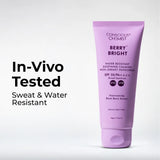
Berry Bright’s hybrid SPF also includes iron oxides and antioxidant-rich actives for next-level defense.
Iron oxides filter visible and blue light, reducing pigmentation and uneven tone
Niacinamide and berry extracts add antioxidant protection that keeps skin bright, calm, and barrier-strong.
Mineral vs. Chemical vs. Hybrid
|
Type |
Coverage |
White Cast |
Comfort in Humidity |
|
Mineral |
UVA + UVB |
Noticeable on deeper skin tones |
Heavy, can feel chalky |
|
Chemical |
UVA + UVB |
Invisible |
Light but may irritate sensitive skin |
|
Hybrid |
UVA + UVB + Visible |
Minimal to none |
Light, breathable, sweat-resistant |
In short: Hybrid sunscreens like Berry Bright SPF 50 PA++++ deliver broad protection, all-day wear, and a seamless, skin-like finish — the perfect match for Indian summers.
Regional Sunscreen Picks Across India
Climate can make or break sunscreen performance.
Here’s how to choose based on where you live:
|
Region |
Weather Challenge |
Recommended Product |
|
Delhi |
Intense heat + High Pollution |
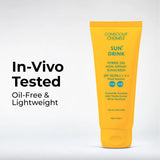
Sun Drink Sunscreen |
|
Mumbai/Pune |
Very high humidity + sweat |
Berry Bright Sunscreen |
|
Kolkata |
Heat + Moisture + visible light concern |
Peach The Sun Sunscreen |
These aren’t just preference differences —
air quality, humidity and UV index genuinely change how sunscreen performs.
How to Apply SPF in Indian Weather (So It Actually Works)
Even the best sunscreen struggles if it’s not applied correctly, especially in a climate where sweat and humidity constantly try to break it down. A few simple habits make a noticeable difference in how long your protection lasts.
-
Use the two-finger rule for face + neck
-
Apply 15 minutes before stepping out
-
Reapply every 3–4 hours — more with sweat
-
If wearing makeup → reapply with a sponge or compact
-
Choose hybrid formulas for comfort + consistency
Think of sunscreen as a shield and reapplication as maintaining that shield throughout the day.
Meet Berry Bright: Designed for Indian Heat, Humidity & Deeper Skin Tones
Indian weather asks a lot from sunscreen — strong sun, humidity, sweat, visible light exposure, and deeper skin tones that deserve a finish without grey streaks.
Berry Bright is engineered to meet all of these needs at once.
Berry Bright benefits:
-
Hybrid filters → strong UV protection + no white cast on brown skin
-
Humidity friendly finish → lightweight and wearable in heat
-
Sweat-resistant performance → film stays intact better
-
Iron oxides → blend seamlessly and help defend visible light
-
Antioxidants → support brightness and even tone
Real-world performance
-
87% of users reported zero visible white cast
-
Proven comfort during 8-hour humid wear
-
Users felt skin looked more even and less dull with daily use
When the climate is tough, your sunscreen needs to be too.
Berry Bright keeps your glow consistent, even when heat and sweat don’t.
Explore how it compares across seasons and boost everyday brightness with “Why Is My Skin Getting Darker Even Indoors? The Hidden Causes of Tanning You Didn’t Expect”
Key Takeaways
-
Indian heat + humidity can break down sunscreen faster
-
Hybrid sunscreens give strong protection without that grey film
-
Reapplication matters more in Indian weather due to sweat
-
The right SPF depends on both your skin tone and city climate
Simple rule: Sunscreen should suit your weather, not just your skin type.
FAQs
Q. Why does sunscreen feel greasy in Indian summers?
Heat and humidity increase sweat and oil. Heavy formulas can sit on skin instead of absorbing, causing a sticky finish.
Q. Why do mineral sunscreens leave a white cast on brown skin?
Their filters reflect visible light. That reflection looks white or grey on medium to deeper skin tones.
Q. What does “sweat-resistant” actually mean?
It means the SPF film stays on better when you sweat, but still needs reapplication during heat or outdoor exposure.
Q. Which finish should I use for my city?
Humid cities (Mumbai/Chennai): Sweat-resistant hybrid
Hot & dry (Delhi): Matte hybrid
Monsoon: Water-resistant hybrid
Q. Do I need sunscreen indoors?
Yes. UV through windows and blue light from screens still cause tanning and pigmentation.
Q. How much SPF do I apply?
Two fingers worth for face and neck. Less means weaker protection.
Q. Can I reapply sunscreen over makeup?
Yes. Use a hybrid formula and dab or press, don’t rub.
Share:
Why Is My Skin Getting Darker Even Indoors? The Hidden Causes of Tanning You Didn’t Expect
The Silent Killer: Why Winter Sun Hurts Your Skin More