



After months of mixing and matching serums, oils, and sprays, Rhea told us she was exhausted. She wanted the best ingredients for hair regrowth in one kit without having to research every label herself. The truth is, the right ingredients only work when the routine around them is right too. This guide covers both.
Why Do Most Anti-Hair Fall Routines Fail?
This section breaks down why a single-step approach falls short and helps you identify exactly what type of hair fall you are dealing with
Why Does Hair Fall Happen?

Hair fall is a broad term people use for very different things. Shedding, breakage, and scalp-triggered fallout each have separate causes and need separate fixes.
Here is where most routines leave gaps:
-
Oiling + shampooing: It addresses pre-wash preparation and scalp cleansing, but leaves post-wash breakage completely unaddressed.
-
Between-wash days: These are the days when the scalp environment shifts. That means oil, sweat, and pollution accumulate in the scalp. Yet most routines do nothing during this window.
-
Wet-hair handling: Right after a wash is one of the highest-friction moments for breakage, and it rarely gets attention in a standard routine
If your routine only includes oil and shampoo, you are missing the two highest-risk moments: wash-day friction and the days between washes.
What Are The 3 Types Of Hair Fall?
Understanding which category you fall into is the first step toward choosing the right fix. You can experience more than one type simultaneously.
|
Type |
What It Looks Like |
Key Signs |
|
Shedding |
Full-length strands with a white bulb at the root |
More noticeable during washing or combing; it is part of the natural hair cycle |
|
Breakage |
Short, snapped strands; no bulb present |
Frizz, split ends, rough texture; hair feels brittle |
|
Scalp-triggered fall |
Increased fallout linked to scalp discomfort |
Itching, flaking, soreness, excess oiliness, alongside higher than normal fallout |
How to Do a Quick Hair Self-Check?
Before building a routine, spend two minutes answering these questions. Your answers will point you toward the right fixes.
-
Are fallen strands long or short?
-
Do you see a white bulb at the root?
-
Does hair fall increase on wash day?
-
Is your scalp itchy, flaky, or greasy?
-
Does your hair tangle easily or feel rough?
-
Have you colored or chemically treated your hair?
-
Do you live in a hard water area?
Your answers decide the routine you need.
Hair Fall Quick Diagnosis: What to Do Next?
The right routine change depends entirely on what your hair is telling you. Start here before reaching for any product.
|
What you notice |
Most likely type |
Do this routine change first |
|
Long strands with a bulb |
Shedding |
Improve scalp care + daily support |
|
Short broken pieces |
Breakage |
Focus on leave-in + gentle detangling |
|
Itchy or flaky scalp |
Scalp-triggered |
Increase wash frequency + scalp treatment |
|
Rough, tangled hair |
Breakage |
Add conditioning + reduce friction |
|
Greasy scalp + fall |
Scalp-triggered |
Use lightweight scalp products |
What Is the Best Routine to Stop Hair Fall Step by Step?
A successful ingredient led hair regrowth routine protects your hair in four specific moments: before, during, after, and between washes.
What Is an Ideal Weekly Hair Care Schedule?
Consistency outperforms intensity. A baseline rhythm serves most hair types:
-
Wash hair 2 to 3 times per week
-
Use daily scalp support for 30 to 60 seconds
-
Adjust based on:
-
Sweat and workouts
-
Pollution exposure
-
Scalp oiliness or dryness
Research published in PubMed shows that increased shampoo frequency reduces scalp flaking and improves perceived hair health.
What Should Your Hair Care Routine Template Look Like Each Week?
A simple day-by-day breakdown that covers wash days, rest days, and high-sweat or high-pollution days, so nothing gets skipped.

How to Prep Your Scalp Before Washing?
Pre-wash oiling prepares the scalp and softens the hair shaft before it comes into contact with water and shampoo. But it works differently for different scalp types.
Who benefits from pre-wash oiling:
-
Dry scalp types dealing with tightness or itchiness
-
Those with rough lengths are prone to tangling
-
People who notice heavy shedding specifically during wash-day combing
Keep it lighter if:
-
The scalp feels greasy quickly
-
Dandruff is active
How To Wash Your Hair Without Increasing Hair Fall?
The goal of washing is to clean the scalp without stripping the lengths:
-
Use shampoo only on the scalp
-
Dilute it in your palms before applying
-
Massage gently for 60 to 90 seconds
-
Rinse thoroughly
-
Use lukewarm water
Avoid:
-
Piling hair on top of your head
-
Scrubbing lengths aggressively
Hard water can make hair feel rough, so a suitable cleanser helps maintain smoothness.
How to Handle Fragile Wet Hair?
Wet hair is at its weakest. You must minimize mechanical stress:
-
Pat dry with a towel, do not rub
-
Apply leave-in conditioner on lengths
-
Detangle from ends to roots
-
Use a wide-tooth comb
-
Avoid tight hairstyles on wet hair
Wet hair stretches easily, which increases breakage.
How to Take Care of Your Scalp Between Washes?
Your scalp environment changes daily due to sweat and pollution. Treating it only twice a week is insufficient:
-
Use a lightweight caffeine shampoo for hair regrowth or a daily scalp serum.
-
Part your hair into sections to ensure the product reaches the skin.
-
Massage the product in for 30 seconds to boost local circulation.
-
Choose water-based formulas that do not leave the hair looking greasy.
How to Avoid Common Mistakes in a Hair Care Routine?
Small habits repeated the wrong way can undo an otherwise good routine. Here are the right steps to hair care so your effort actually pays off.
How Much Oil Should You Use Before Washing?
Specific guidance based on scalp type:
-
Oily scalp: Use 2 to 3 drops per section; leave on for no more than 30 minutes.
-
Dry scalp: Use 4 to 5 drops per section; 45 to 60 minutes is appropriate if tolerated.
-
All scalp types: Apply only to the scalp and roots; the lengths do not need pre-wash oiling unless extremely dry.
Avoid:
-
Overloading hair lengths
-
Leaving oil too long on the scalp can cause it to become itchy
What Shampoo Technique Reduces Hair Fall During Washing?
The goal is scalp cleansing with zero mechanical damage to the strands.
-
Clean the scalp, not the lengths
-
Keep movements gentle
Avoid:
-
Rough scrubbing
-
Using nails instead of fingertips
If dandruff or irritation persists, consult a dermatologist.
Why Leave-In Conditioner Reduces Hair Breakage?
Leave-in conditioner reduces combing friction, a primary contributor to breakage. Here is how to apply:
-
Use on towel-damp lengths
-
Wait 1 to 2 minutes before combing
Avoid:
-
Skipping conditioner
-
Pulling through knots aggressively
How To Use Scalp Spray And Serum Without Buildup?
Remember, between-wash products only work when they reach the scalp, and not just the hair shaft.
-
Apply spray first (light texture)
-
Follow with serum (concentrated)
Frequency:
-
Once daily or as needed
Avoid:
-
Applying to hair lengths
-
Using excessive product
-
Skipping scalp massage
What Is the Simplest Hair Care Routine With a Complete Kit?
The most consistent routines are the simplest ones. Here is how to lock in the full framework and how to make it easier to maintain.

The 5-Step Hair Fall Control Checklist
Follow these five steps across your week to cover every hair-fall moment:
-
Pre-wash scalp nourishment
-
Gentle scalp-focused cleansing
-
Leave-in for detangling support
-
Lightweight spray for daily scalp comfort
-
Serum for targeted care
Follow this routine for 8 to 12 weeks before evaluating results.
What To Look For In Effective Hair Regrowth Products?
Choose products that offer:
-
Gentle cleansing agents
-
Scalp-friendly active ingredients
-
Lightweight textures without stickiness
-
Compatibility with treated or colored hair
-
Hard-water-friendly formulas
This approach supports an ingredient-led hair regrowth routine without unnecessary complexity.
How to Choose a Complete Hair Care Kit to Avoid Hair Fall?
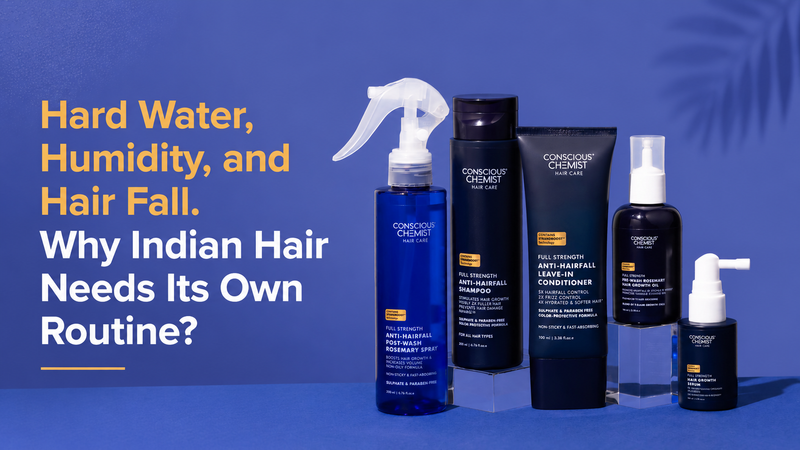
If managing multiple products feels overwhelming, a structured system like the Conscious Chemist hair regrowth kit simplifies consistency.
It works as:
-
A hair regrowth kit for thinning hair, covering all routine steps
-
A rosemary hair regrowth kit with targeted scalp support
-
A system with science-backed hair regrowth products
Key benefits include:
-
Continuous support from pre-wash to daily care
-
Ingredients like Redensyl, Biotin, and caffeine
-
Lightweight formulations suitable for Indian conditions
-
Compatibility with modern styling and treatments
This makes it a practical option for those seeking the best solution for hair fall and thinning hair without having to manage multiple standalone products.
Frequently Asked Questions
1. Is it normal to lose hair every day?
Yes. Daily shedding is normal. It becomes a concern if you notice a sudden increase, visible thinning, or consistent clumps.
2. Should you oil your hair if you have an oily scalp?
Yes, but keep it light and short. Avoid heavy or overnight oiling if it increases itch or flakes.
3. How often should you shampoo to reduce hair fall?
Shampoo as often as needed to keep your scalp comfortable. Higher frequency can improve scalp health.
4. Why does hair fall increase on wash day?
It combines natural shedding with breakage caused by friction and tangling during washing.
5. Can you use a leave-in conditioner with scalp serum?
Yes. Apply leave-in on lengths and serum on the scalp. Layer lighter products first.
6. How long does it take to see results?
You need 8 to 12 weeks of consistent routine to notice a visible improvement.


Share:
How to Apply Hair Serum on the Scalp for Best Regrowth Results?
5-Step Hair Regrowth Routine for Hair Fall and Thinning (2026)