


We have all stood in front of the mirror on a humid morning, feeling our skincare sit heavily on our skin rather than absorbing. One of our customers, Megha, shared that her previous routine left her face feeling so tacky and "suffocated" by noon that she almost gave up on her old serum for fine lines and wrinkles altogether.
Supporting your skin should never feel like wearing a thick, uncomfortable mask. By choosing the right weightless textures, you can achieve a firm, glowing look without any sticky residue.

Why Does Skincare Feel Sticky and How Can You Fix It Fast?
Your morning routine should take less than five minutes and leave your skin feeling comfortable under sunscreen or makeup. If it does not, something in your routine needs adjusting, not replacing.
What’s the Difference Between Sticky, Greasy and Filmy Skin?
These three sensations have completely different causes. Confusing them leads to the wrong fix.
-
Sticky (tacky touch):
-
Skin feels like it grips your fingers.
-
Common trigger: too many humectants, such as hyaluronic acid or glycerin.
-
Greasy (oil shine):
-
The surface looks shiny and feels slippery.
-
Common trigger: excess oils or occlusives.
-
Filmy (layer sitting on top):
-
Products roll or pill under sunscreen.
-
Common trigger: silicone-heavy formulas or too many layers.
What Causes a Greasy Feeling on the Skin After a Skincare Routine?
Here are some possible causes of the heaviness one feels on their skin after using a skincare routine:
-
Humectant overload:
-
Multiple “hydrating” products stack and trap moisture, leading to incorrect moisture retention.
-
Film-forming layers:
-
Thick serums and primers create buildup under sunscreen.
-
Over-application:
-
Using more product than needed increases the amount of residue.
How Do You Fix a Sticky Skincare Routine Without Buying Anything New?
The answer is almost always in your technique, not your product shelf. Start here before swapping anything out. Before buying new products, run through this quick checklist:
-
Use half the amount you normally apply.
-
Apply products on slightly damp skin for better absorption.
-
Wait 30-60 seconds between layers.
-
Replace thick serums with lighter formulations, such as essences.
-
Avoid duplicate ingredients, such as two hyaluronic acid products.
-
Adjust your routine based on humidity.
|
Key insight: If your routine feels sticky, the issue is usually a combination of texture, amount, and climate. |
How to Choose Lightweight Products That Do Not Feel Heavy on Your Skin?
Most people build routines based on what sounds impressive on packaging, not based on what each texture is designed to do. That is where the unnecessary weight accumulates. Understanding each format helps you choose only the steps that serve you.
What Are the Different Layering Steps in a Skincare Routine?
Most people layer products based on what the packaging promises, not what each texture is designed to deliver. This table shows exactly what each step (each product) does, and when you can skip it without losing results.
|
Step |
Texture |
Best For |
Skip It When... |
|
Essence / hydrating toner |
Watery |
Light hydration, prepping skin so the next layer absorbs evenly |
Your targeted serum already hydrates adequately |
|
Targeted serum |
Thin to medium |
Actives: fine lines, firmness, brightening, barrier repair |
You are layering overlapping actives in one routine |
|
Moisturizer |
Medium to rich |
Sealing hydration, supporting the skin barrier |
Your sunscreen already contains glycerin or sodium hyaluronate |
|
Sunscreen |
Varied |
UV protection: non-negotiable every morning |
Never skip this step |
You do not need every step. Choose based on how your skin feels after cleansing each day.
What Is the Product Layering Rule for Non-Sticky Skin?
Follow one principle: apply the thinnest texture first, add one targeted active, then seal lightly only where your skin needs it.

In practice:
Thin hydration → targeted treatment → light seal (only where needed)
Try spot-moisturising instead of applying cream all over.
How to Stop Products from Pilling Under Sunscreen?
Pilling under SPF is a signal that your AM routine has one too many layers, or that your layers aren't absorbing before sunscreen goes on. Here is how to fix it:
-
Do not layer more than 2-3 products in the morning.
-
Use pea-sized amounts.
-
Let each step settle before applying the next.
-
Avoid mixing incompatible textures, such as gel and heavy silicone.
How to Match Your Skincare Texture to Your Skin Concern?
Not all texture problems have the same fix. Match your specific complaint to the right adjustment so you stop guessing and start seeing a difference.
|
Your issue |
What usually causes it |
What to do instead (lightweight fix) |
|
Sticky finish |
Too many humectants |
Use one hydrating peptide serum with hyaluronic acid |
|
Greasy look |
Excess oils |
Switch to gel-based firming serum for the face |
|
Pilling under sunscreen |
Too many layers |
Reduce steps and use a lightweight anti-aging serum for daily use |
|
Heavy feeling in humidity |
Occlusive overload |
Skip moisturizer in AM and rely on sunscreen |
|
Key insight: A non-heavy routine needs one hydrator, one active, and the lightest possible seal. |
Should a Lightweight Anti-Aging Product Have Peptides?
People who dislike heavy skincare tend to avoid anti-aging products altogether. The assumption is that anything effective must feel rich or intense. Peptides challenge that assumption.
They work in lightweight formats, are suitable for daily use in both AM and PM, and carry a far lower irritation risk than stronger actives. Learn how peptides and hydration support smoother skin without irritation.
What Does a Peptide Serum Do for Your Face?
Peptides are short chains of amino acids. In skincare, they function as signaling molecules, communicating with skin cells and supporting processes such as collagen synthesis and barrier maintenance. When applied consistently, they contribute to firmer-looking skin and a visible reduction in fine lines over time.
Realistic expectations from consistent peptide serum for face use:
-
Signals skin to support collagen production.
-
Improves the look of fine lines and skin firmness.
-
Works best with consistent use and sunscreen.
This makes a multi-peptide anti-aging serum suitable for daily routines.
A 2026 review published in MDPI Cosmetics identifies UV radiation, pollution, and lifestyle habits as key drivers of skin aging, underscoring the importance of barrier support and daily sun protection as non-negotiable components of any anti-aging routine.
Peptides vs Retinoids: Which Should You Choose for Your Skin?
This is one of the most searched questions in anti-aging skincare. The answer depends on your skin tolerance and how much disruption your routine can handle.
-
Retinoids:
-
Strong results for wrinkles and texture.
-
Can cause irritation and dryness.
-
Peptides:
-
Gentle and suitable for daily use.
-
Ideal if you want a skin-tightening serum without discomfort.
A practical approach for beginners: start with a peptide serum for fine lines and wrinkles daily, then introduce a retinoid two to three nights per week once your skin feels stable. This keeps irritation low while gradually adding a stronger active over time.
Can Hydration Alone Make Your Skin Look Smoother?
Before any active ingredient delivers long-term results, your skin needs a stable, well-hydrated base to work from. These ingredients do the heavy lifting in the short term while your anti-aging actives catch up.
-
Hydrated skin appears plumper and smoother instantly.
-
Ingredients like:
-
Niacinamide improves barrier strength.
-
Allantoin soothes irritation.
-
A skin barrier repair serum reduces the appearance of fatigue.
This is why a hydrating anti-aging serum often shows visible improvement before bigger changes occur.
|
Key insight: If strong actives feel overwhelming, peptides and hydration create steady improvement without discomfort. |
What Is the Best No-Stick Routine for Daily Anti-Aging?
Knowing the right ingredients is half the work. Knowing exactly how much to use and how to adjust when the weather changes is what makes a routine actually comfortable to maintain.
How Much Skincare Product Should You Apply to Avoid Sticky Skin?
Over-applying products is the single most avoidable cause of sticky skin. Use these amounts as your baseline:
-
Essence: 3-6 drops
-
Serum: 2-3 drops
-
Moisturizer: pea-sized
-
Sunscreen: two-finger rule

Too much product increases stickiness and pilling.
How to Adjust Your Skincare Routine for Humid Weather Without Feeling Sticky?
In high humidity, your skin naturally holds onto atmospheric moisture. The amount of product it needs drops substantially.
Specific adjustments for warm, humid climates:
-
Use only one hydrating layer.
-
Skip heavy creams in the morning.
-
Choose a non-sticky peptide serum for oily skin.
-
Blot excess before sunscreen if needed.
What Is a 60-Second AM and PM Skincare Routine for Every Skin Type?
Follow quick, lightweight routines tailored for oily, dry, and sensitive skin that deliver anti-aging benefits without heaviness.
Note: To avoid pilling, allow each layer to settle for a few seconds before applying the next.
|
Scenario |
AM (fast-dry) |
PM (comfortable) |
|
Oily skin + humidity |
Cleanse → peptide booster serum → sunscreen |
Cleanse → anti-aging peptide serum → optional light gel |
|
Dry skin |
Cleanse → essence → serum for skin firmness and elasticity → sunscreen |
Cleanse → essence → collagen boosting serum → moisturizer |
|
Sensitive skin |
Cleanse → barrier repair peptide serum with niacinamide → sunscreen |
Cleanse → allantoin and peptide serum for soothing skin → light cream |
When Should You Use a Moisturizer Even If You Dislike Heavy Skincare?
Some people avoid moisturizer entirely because the texture bothers them. That approach works when the barrier is healthy. But certain signs indicate your skin needs more support immediately:
-
Skin feels tight or stings.
-
Flaking or redness appears.
-
Makeup clings to patches.
In such cases:
-
Use a richer cream at night.
-
Apply only to affected areas.
|
Key insight: If your skin becomes reactive, focus on repair before returning to anti-aging steps. |
How to Choose a Lightweight Peptide Step Without Stickiness?
Once your routine framework is in place, choosing the right daily peptide booster serum becomes straightforward. You already know what you need: a lightweight texture, a multi-peptide blend, a fragrance-free formula, and ingredients that support both hydration and barrier function.
What to Look for in a Daily Peptide Product?
Use this checklist when evaluating any product:
-
Multi-peptide blend for better support
-
Fragrance-free formula
-
Lightweight texture like peptide essence for face
-
Includes:
-
Hydration: sodium hyaluronate
-
Soothing: allantoin
-
Barrier support: niacinamide
Which Is the Best Lightweight Peptide Serum for Daily Anti-Aging Without Stickiness?
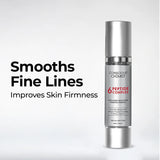
If you have sensitive skin, hate greasy finishes, or wear sunscreen daily, you need a peptide step that absorbs fast, layers clean, and delivers results without disrupting the rest of your routine. Here is how Conscious Chemist 6 Peptide Booster Complex is built for exactly that.
The Conscious Chemist 6 Peptide Booster Complex is formulated as a toner-plus-essence hybrid: lightweight enough to work as your first active step after cleansing, substantive enough to deliver real peptide support without a separate serum.
Here is a list of the ingredients and what each one does:
-
A 6-peptide complex that combines Acetyl Hexapeptide-8, Copper Tripeptide-1, Palmitoyl Pentapeptide-4, Tripeptide-1, Hexapeptide-9, and Palmitoyl Tripeptide-1 for multi-angle support on firmness and the visible reduction of fine lines.
-
Sodium hyaluronate for surface-level hydration without adding weight or stickiness.
-
Niacinamide for brightening and barrier reinforcement.
-
Allantoin for skin comfort and soothing support.
-
Fragrance-free formula, suitable for sensitive skin.
-
Designed for layering so it sits cleanly under moisturizer or sunscreen without pilling.
A 6-peptide complex serum for collagen boost supports firmness without heaviness.
Here is how to use it without a sticky finish:
Morning:
-
Cleanse → apply small amount → wait → sunscreen
Night:
-
Cleanse → apply → moisturise only if needed
Before you start:
-
Patch test on your inner arm or jawline for two to three days.
-
Use slightly less product in humid weather and allow extra time for absorption.
-
Start with once-daily use if your skin is reactive; move to twice daily once your skin is comfortable.
|
Key insight: A lightweight anti-aging serum for daily use can fit into any routine without changing how your skin feels. |
Frequently Asked Questions
1. Why does my hyaluronic acid serum feel sticky?
It usually happens due to excess product, multiple layers of humectants, or application to very dry skin. Use a smaller amount on damp skin and seal lightly.
2. Do peptide serums actually work for anti-aging?
They support firmer-looking skin and gradually improve the appearance of fine lines. Consistent use and sunscreen enhance results.
3. What is the difference between an essence and a serum?
An essence hydrates and prepares skin. A serum delivers targeted treatment, like serum for fine lines and wrinkles.
4. How do I stop products from pilling under sunscreen?
Use fewer layers, apply smaller amounts, and wait between steps. Avoid stacking similar products.
5. Can I use peptide serum every day?
Yes. Most formulas are suitable for daily use, especially if they are gentle and fragrance-free.
6. When should I use a richer moisturizer?
If you notice dryness, irritation, or redness, your barrier needs support. Use a richer product at night or only on the affected areas.

Share:
How to Prevent Skincare Pilling Under Sunscreen in 2026?
Peptides, Niacinamide and Hyaluronic Acid: An Anti-Aging Routine for Daily Use