


Freshly straightened hair always looks better in the first few weeks.
It feels smoother, falls into place easily, and looks less frizzy. But slowly, something changes. The ends begin to feel rough, strands start snapping during combing, and shorter broken strands begin to show up more often than before.
At that point, the concern shifts toward finding hair fall control products for daily use or even switching to a hair growth kit for thinning hair.
But chemically treated hair usually does not fall more from the root. It breaks more easily.
Chemical treatments like straightening, smoothening, or rebonding alter the internal structure of the hair fiber. They make the hair less elastic and more prone to snapping under stress. This is why hair can look smooth but still be fragile underneath.
How Can You Tell Breakage vs Hair Fall in Chemically Treated Hair?
Before changing a routine, it helps to understand what is actually happening.
This quick comparison makes it easier to identify the difference.
|
What you notice |
More likely breakage |
More likely hair fall |
|
Short, uneven strands |
Yes |
No |
|
Hair with a white bulb at the end |
No |
Yes |
|
Rough ends & tangling |
Yes |
Sometimes |
|
Hair on pillow/clothes |
Yes |
Yes |

Why Does Hair Fall Feel Worse After Chemical Treatment?
Chemically treated hair tangles more easily during washing and detangling.
This increases snapping, especially in mid-lengths and ends. Because these strands fall during washing, it feels like excessive shedding even when the roots are not affected.
Why Does Conditioning Become More Important After Chemical Treatments?
Conditioning is not only about softness.
It creates a protective layer that reduces friction between strands. Research shows that conditioning agents help reduce protein loss and improve resistance to mechanical damage in chemically treated hair.
This is why both gentle cleansing and consistent conditioning are essential.
|
Key Takeaway Chemically treated hair usually does not fall more from the root. It breaks more easily because the fiber becomes weaker and less elastic, especially during washing and detangling. |
Why Does Harsh Cleansing and No Leave-In Protection Increase Breakage?
Harsh cleansing is not always obvious. It can include using high-foam shampoos that leave hair feeling squeaky clean, scrubbing the lengths aggressively, washing with hot water, or clarifying too often. In Indian conditions, hard water can make hair feel rough and coated, which often leads to overwashing in an attempt to restore softness.
Over time, this creates a damaging cycle. The more you cleanse harshly, the more natural oils are stripped away. Hair loses its smooth outer layer, becomes dry and porous, and is far more prone to tangling and breakage.
Why Conditioning Matters for Chemically Treated Hair?
Rinse-off conditioners only provide temporary softness during the wash. Once rinsed out, their protective effect is limited.
A leave-in conditioner, however, remains on the hair and forms a protective layer. It reduces friction during daily activities like combing, tying, and styling, when most mechanical damage actually occurs.
Chemically treated hair, such as hair that has been colored, straightened, or rebonded, needs continuous protection, not just short-term conditioning.
The Role of the Hydrophobic Barrier
Healthy hair has a natural hydrophobic (water-repelling) barrier, primarily formed by the cuticle layer and surface lipids. This barrier helps hair retain moisture internally while keeping excess water and environmental stressors out.
Chemical treatments like coloring, bleaching, or smoothing strip away this hydrophobic barrier. As a result:
-
Hair absorbs water too quickly and loses it just as fast
-
The cuticle becomes lifted and uneven
-
Strands become rough, porous, and highly prone to friction
Without restoring this protective layer, hair remains vulnerable even if it feels clean.
What Happens When Hair Is Clean but Unprotected?
Clean hair without protection becomes fragile.
It tangles more easily, requires more force to detangle, and breaks under tension. This is why combining anti-hairfall shampoo and conditioner with leave-in protection becomes important.
|
Key Takeaway For chemically treated hair, the biggest preventable damage comes from stripping cleansers combined with unprotected lengths, which increases tangling and breakage. |
How Can You Follow a 2-Step Wash Routine That Reduces Breakage?
A simple routine works better than multiple steps.
This approach focuses on cleaning the scalp while protecting the lengths.
Step 1: Cleanse the Scalp
Shampoo should be applied only to the scalp.
Massage gently with fingertips, allowing the foam to flow through the lengths. Avoid scrubbing the lengths directly, as this increases tangling.
If oil is used, cleansing should remove it without leaving the hair stripped.

Step 2: Use Leave-In Conditioner to Protect Hair Daily
A leave-in conditioner for hair fall control should be applied after every wash.
Use a small amount on mid-lengths and ends. It should absorb into the hair and not sit heavily. This improves detangling and reduces snapping.
How Can You Adjust This Routine for Different Conditions?
Different situations require small adjustments.
-
For hard-water hair problems, focus on thorough rinsing and avoid harsh shampoos.
-
In humidity, apply leave-in on damp hair to reduce frizz
-
After salon treatments, reduce heat and handle hair gently for 1–2 weeks
Hair Care Routine for Consistent Results
Using a system simplifies care.
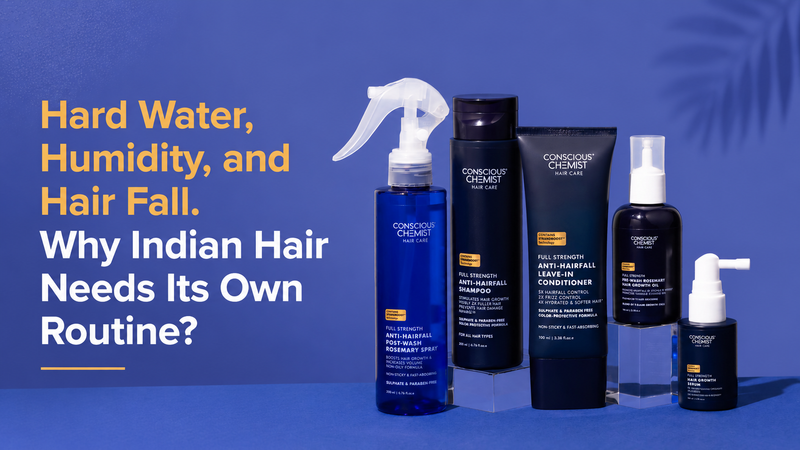
The Conscious Chemist anti-hairfall shampoo and conditioner work as a complete hair care kit for hair fall, combining gentle cleansing with lightweight leave-in protection.
With StrandBoost™ (yeast extract and rosemary), it supports both scalp health and fiber strength, aligning with science-backed hair growth products.
|
Key Takeaway The simplest routine works best: cleanse the scalp gently and protect the lengths with a lightweight leave-in after every wash. |
How Can Daily Habits Between Washes Reduce Breakage in Treated Hair?
Hair is constantly under stress.
Detangling, tying, sleeping, and styling all create friction. Over time, this friction weakens the fiber and leads to breakage.
Reducing this friction directly impacts hair fall and frizz control.
What Small Daily Changes Reduce Breakage Significantly?
Instead of changing everything, focusing on a few habits helps.
-
Detangle from the ends upward to reduce tension
-
Use a wide-tooth comb instead of fine brushes
-
Avoid rubbing hair with a towel
-
Sleep on smooth pillowcases or tie your hair loosely
These changes reduce stress on the hair fiber.
How Should Heat Styling Be Managed Without Avoiding It Completely?
Heat styling does not need to be eliminated.
Using lower temperatures, reducing passes, and avoiding styling on damp hair helps maintain strength. Studies show repeated heat exposure reduces fiber strength and increases damage.
Why Does Leave-In Conditioner Work as Daily Protection?
Leave-in acts as a barrier.
It reduces friction between strands, making detangling smoother and reducing snapping. This makes it an essential step in any hair growth kit for a thinning hair routine.
|
Key Takeaway For treated hair, reducing daily friction through detangling, styling, and sleep habits is key to controlling breakage. |

How Can You Track If Your Routine Is Actually Reducing Breakage?
Understanding progress helps avoid switching routines too quickly.
This table helps track realistic changes over time.
|
Timeframe |
What improves first |
What improves later |
|
2–4 weeks |
Less snapping, easier detangling |
Slightly smoother ends |
|
6–8 weeks |
Reduced breakage |
Better length retention |
|
8–12 weeks |
Improved manageability |
Fuller appearance |
What Signs Indicate Breakage Instead of Hair Loss?
Breakage appears as uneven ends, short strands, and rough texture.
Hair loss from the root shows thinning areas or widening part lines. This difference helps decide whether routine changes or medical advice is needed.
What Should You Look for on Labels When Choosing Products?
Before buying products, this quick checklist helps simplify decisions.
|
Hair problem |
What to look for |
Why it helps |
|
Dryness |
Humectants & lightweight oils |
Improve hydration |
|
Breakage |
Conditioning agents |
Reduce friction |
|
Rough texture |
Proteins (in moderation) |
Improve strength |
|
Buildup |
Lightweight formulas |
Maintain balance |
Research shows protein and conditioning systems improve resistance and reduce structural damage in treated hair.
|
Key Takeaway If a routine is working, detangling becomes easier, and breakage reduces before visible hair growth changes appear. |
How Should You Maintain Chemically Treated Hair Long-Term Without Breakage?
Managing breakage in chemically treated hair requires consistent care rather than aggressive treatments.
Using a complete hair care kit for hair fall or science-backed hair growth products works best when combined with gentle cleansing, leave-in protection, and reduced daily friction.
Over time, this approach improves hair strength, reduces breakage, and supports better length retention.

How Can You Maintain Chemically Treated Hair Without Increasing Damage?
When hair feels weak and breaks easily, the goal shifts from adding more products to reducing friction and maintaining consistency.
The Conscious Chemist anti-hairfall shampoo and conditioner duo helps build a complete hair care kit for hair fall, designed to cleanse gently and protect hair lengths daily.
Order now and follow a consistent routine to reduce breakage in chemically treated hair and improve manageability over time.
Frequently Asked Questions
1. Can chemically treated hair be washed frequently without damage?
Yes, if a gentle anti-hairfall shampoo and conditioner are used. Frequent washing is safe when cleansing is mild, and lengths are protected with leave-in conditioner.
2. Is breakage after smoothening permanent?
The treated portion remains altered, but breakage can be reduced significantly with better care, reduced heat, and improved conditioning.
3. Should leave-in conditioner be applied to the scalp?
No, it should be applied mainly to mid-lengths and ends. Applying it to the scalp may cause buildup.
4. How soon does breakage reduce with a proper routine?
Many people notice reduced snapping within a few weeks, while visible improvement in length retention takes longer.
5. Do protein treatments help after rebonding?
Yes, they can improve hair strength when used in moderation along with conditioning products.
6. Can oiling help reduce breakage?
Yes, moderate oiling can reduce friction, but excessive oiling followed by harsh cleansing can increase dryness.
Share:
How Does Rosemary Oil for Hair Fall Work Without Overpromising Results?
How Aloe Vera Helps Hair Growth and Reduces Frizz Naturally?