







A small bottle of rosemary oil sits on a shelf, picked up after seeing multiple claims about hair growth.
At first, it is used occasionally. Then more consistently. Over time, it becomes part of a routine, especially when hair fall and breakage start becoming noticeable.
But the results feel unclear.
Some days hair feels better, and on other days nothing changes. This confusion usually comes from one key gap. Not all hair fall is the same.
And rosemary oil for hair fall does not work the same way for every type of hair concern.
How Can You Understand Hair Fall vs Breakage Before Using Rosemary Oil?
Hair fall is often used as a general term.
But it usually includes two different things. Shedding happens from the root and appears as full-length strands. Breakage occurs along the length and appears as shorter pieces due to friction and damage.
This difference matters because rosemary oil for hair fall supports the scalp rather than the damaged hair fiber.

When Does Rosemary Oil Work for Hair Loss?
If the concern is root-level shedding, rosemary oil may help support scalp conditions over time.
If the issue is breakage, rosemary oil alone will not fix it. Breakage requires better washing, conditioning, and reduced friction during daily handling.
What Does Research Say About Rosemary Oil for Hair Growth?
Research shows promising but limited results.
A randomized clinical trial reported improved hair growth rate, density, and reduced hair fall over about 90 days when rosemary blends were used.
Another study found rosemary oil performed similarly to 2% minoxidil in improving hair count over time, though results varied.
This means rosemary oil can support certain types of hair loss, but it is not a guaranteed solution.
|
Key Takeaway: Rosemary oil may support scalp-related hair fall when used consistently, but it does not fix breakage or deliver instant results. |
Signs Rosemary Oil Isn’t Working for Your Hair Fall
Before continuing with rosemary oil for hair fall, it is important to identify when it may not be effective.
This table helps connect situations with the right approach.
|
Situation |
Will rosemary oil help? |
Better primary action |
|
Mild scalp imbalance |
Yes |
Consistent use |
|
Breakage from damage |
No |
Improve conditioning routine |
|
Iron deficiency |
No |
Medical evaluation |
|
Hormonal hair loss |
Limited |
Dermatologist guidance |
|
Postpartum shedding |
Limited |
Time & medical support |
Causes of Hair Fall That Oils Cannot Fix
Hair fall can be influenced by multiple factors.
Conditions like thyroid imbalance, iron deficiency, vitamin deficiencies, hormonal changes such as PCOS, postpartum shedding, or high stress levels affect hair growth from within. Oils cannot correct these causes.
This is why relying only on a hair growth kit for thinning hair may not deliver results if the root cause is systemic.
When to See a Doctor for Hair Fall?
Certain patterns require attention.
Sudden increase in shedding, widening part lines, bald patches, scalp pain, or hair fall lasting more than three months are indicators that go beyond routine care.
In such cases, consulting a dermatologist helps identify the underlying cause.
Hair Fall Causes: Scalp, Length, and Internal Factors
Hair concerns can be divided into three areas.
-
Scalp health includes itchiness, oiliness, or dandruff
-
Strand health includes dryness, frizz, and breakage
-
Systemic factors include nutrition, stress, and hormones
Understanding which area is affected helps avoid relying only on oils.
|
Key Takeaway: If hair fall is caused by nutritional, hormonal, or medical factors, rosemary oil can support the routine but cannot replace targeted treatment. |

How Should You Use Rosemary Oil Safely Without Increasing Hair Fall?
Using rosemary oil for hair fall safely is more important than using it frequently.
This quick guide helps simplify correct usage.
|
Step |
What to do |
What to avoid |
|
Dilution |
Mix 1–2% with carrier oil |
Always dilute the essential oil before applying it to your scalp. |
|
Frequency |
Use 1–2 times weekly |
Use the oil treatment 1–2 times per week. |
|
Application |
Apply gently to the scalp |
Gently apply the diluted oil to your scalp with your fingertips. Massage lightly. |
|
Patch test |
Test for 24 hours |
Before applying the full product, perform a patch test. |
How Should Rosemary Oil Be Diluted for Safe Use?
Rosemary oil is an essential oil and should not be used directly.
Mixing a few drops with carrier oils like coconut or jojoba helps reduce the risk of irritation. A 1–2% dilution is considered a safer starting point.
How Often Should Rosemary Oil Be Used?
Consistency works better than frequency.
Using it 1–2 times per week allows the scalp to adjust. Overuse can lead to irritation, which may worsen hair fall.
Why Is Patch Testing Important Before Use?
Scalp sensitivity varies between individuals.
Testing on a small area helps prevent irritation. Redness, itching, or discomfort may indicate that the product is not suitable.
Who Should Be More Careful with Rosemary Oil?
Certain individuals need extra caution.
Those with sensitive scalp conditions, eczema, or those using strong actives should avoid layering multiple treatments. Pregnant individuals should seek medical advice before use.
|
Key Takeaway: Safe use of rosemary oil depends on proper dilution, controlled frequency, and avoiding irritation rather than increasing quantity. |
How Can You Wash Out Oil Without Increasing Hair Fall and Breakage?
Oiling can create buildup.
Heavy oil combined with harsh shampoo leads to dryness and tangling. This creates a cycle in which hair becomes rough, increasing breakage that appears as hair fall.
This is common in hard water hair problems.
How Should You Wash Oil Out Without Causing Damage?
A simple method works best.
Start by detangling gently before washing. Apply shampoo to the scalp and let the lather flow through the lengths. Avoid scrubbing lengths directly.
If oil is heavy, a second gentle wash may help.
How Can You Reduce Hair Breakage Between Washes?
Breakage happens mostly between washes.
Using a leave-in conditioner for hair fall control improves slip and reduces friction during combing and styling. This helps reduce snapping over time.
How Does a Structured Routine Help Reduce Wash-Day Hair Fall?
Consistency improves results.
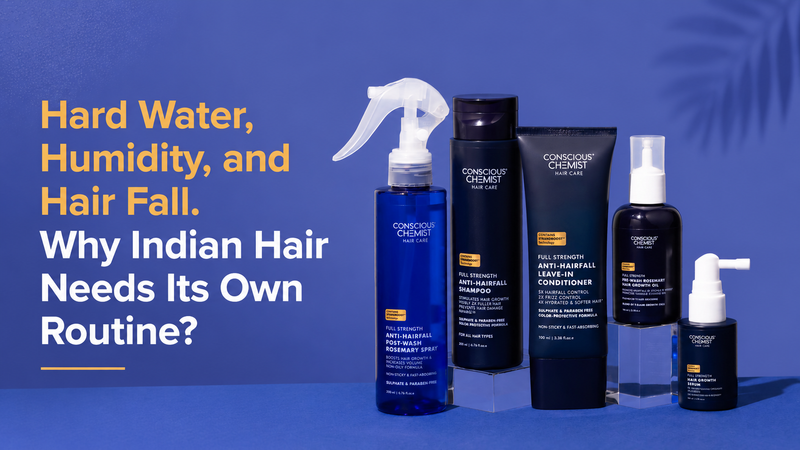
The Conscious Chemist Anti-Hairfall Shampoo and Conditioner work as a complete hair care kit for hair fall, combining:
-
Gentle cleansing suitable for frequent use
-
Lightweight leave-in protection
-
StrandBoost™ with yeast extract and rosemary
This supports a science-backed hair growth product approach designed to reduce breakage and improve manageability.
|
Key Takeaway: Reducing wash-day hair fall depends on gentle cleansing and improving slip, not just oiling the hair. |
When Should You Stop Using Rosemary Oil and What Should You Do Next?
Certain reactions require immediate attention.
Persistent itching, redness, dandruff flare-ups, or scalp acne indicate irritation. Continuing use in such cases may indirectly worsen hair fall.
What Should Be Done If Hair Fall Continues or Worsens?
Simplifying the routine is the next step.
Stop using actives, focus on gentle cleansing, and monitor hair fall patterns over a few weeks. If shedding continues, medical evaluation is recommended.
What Is a Sustainable Routine That Works Long-Term?
A simple routine works best.
Using rosemary oil for hair fall as an optional step, along with gentle cleansing and lightweight conditioning, creates balance. Over time, this improves manageability and reduces breakage.
|
Key Takeaway: A consistent routine that balances scalp care and strand protection delivers better results than relying only on rosemary oil. |

How Should You Use Rosemary Oil for Hair Fall in the Long Term?
Using rosemary oil for hair fall works best when it is part of a balanced routine.
While it may support scalp conditions, consistent cleansing, conditioning, and reduced friction are essential for visible improvement.
Over time, combining these steps helps reduce breakage, improve manageability, and support healthier hair.
How Can You Build a Routine That Supports Hair Growth Without Overcomplicating It?
If hair fall feels inconsistent, focusing on a balanced routine works better than relying on a single ingredient.
The Conscious Chemist Anti-Hairfall Shampoo and Conditioner help create a complete hair care kit for hair fall, supporting scalp care and reducing breakage through consistent use.
Order now and follow a routine that improves hair fall and breakage over time.
Frequently Asked Questions
1. Can rosemary oil be applied to the scalp directly?
No, rosemary oil should always be diluted with a carrier oil to reduce the risk of irritation.
2. How long does rosemary oil take to show results?
Results are gradual and may take weeks to months. It depends on the underlying cause of hair fall.
3. Is rosemary oil as effective as minoxidil?
Some studies show comparable results, but the evidence is limited. It should be considered a supportive option, not a replacement.
4. Can rosemary oil increase hair fall initially?
It may appear so if irritation or breakage increases due to incorrect use.
5. How can oil be washed out without dryness?
Using a gentle shampoo focused on the scalp and adding leave-in conditioner helps reduce dryness and breakage.
6. Can leave-in conditioner be used daily with rosemary oil?
Yes, lightweight leave-in products can be used daily to reduce friction and breakage.


Share:
How to Use a Peptide Essence in Your Skincare Routine?
Why Does Chemically Treated Hair Break More, Even When It Looks Smooth?