


You switch to an anti-hairfall shampoo and conditioner, expecting quick results.
The first few washes feel promising. Hair feels cleaner, lighter, and slightly smoother. But by the next wash day, you still see strands in the drain.
At this point, many people assume the product isn’t working. In reality, hair fall is rarely caused by a single factor.
Most people experience both scalp shedding and breakage along the lengths at the same time. If your routine focuses only on scalp cleansing and ignores friction and dryness in the lengths, hair will still break during washing and detangling.
What Is the Difference Between Hair Fall and Hair Breakage?
Hair fall and breakage look similar, but they behave very differently.
Shedding usually appears as long strands with a small bulb at one end. Breakage appears as shorter, uneven pieces that snap during combing or styling.
Most people experience both, especially in Indian conditions, where heat styling, oiling, and hard water increase hair stress.

Why Does Wash Day Make Hair Fall Look Worse?
Hair naturally sheds daily, but loose strands often show up together during washing.
On top of that, harsh cleansing, tangling, and friction during detangling can add to breakage. This creates the feeling that hair fall increases on wash day.
Why Scalp-Only or Lengths-Only Hair Care Doesn't Work?
A scalp-only routine focuses on cleansing but ignores friction in the lengths. A lengths-only routine smooths hair but does not support scalp health.
This is why many people using even the best anti-hairfall shampoo and conditioner still feel inconsistent results.
Before changing your routine, this quick comparison helps identify what might be missing.
|
Approach |
What it helps with |
What it misses |
|
Scalp-only care |
Cleansing, oil balance |
Breakage, tangles |
|
Lengths-only care |
Smoothness, frizz |
Scalp imbalance |
|
Scalp and fibre care |
Balanced support |
More consistent results |
|
Key Takeaway If your routine does not support both scalp and lengths, you can still lose hair during wash day due to combined shedding and breakage. |
How Does an Anti-Hairfall Shampoo Support the Scalp During Washing?
Scalp support is not about harsh cleansing or strong actives.
A healthy scalp environment includes:
-
A balanced barrier that does not feel irritated
-
Stable oil production
-
A microbiome that does not trigger dandruff or itching
A good anti-hairfall shampoo works by maintaining this balance rather than stripping the scalp.
How Does Scalp Health Affect Hair Growth and Hair Fall?
The condition of your scalp directly affects how hair grows and stays anchored.
Research shows that scalp stress, including oxidative stress, can impact hair growth and retention over time.
This means improving scalp condition is not just about comfort. It supports long-term hair stability.
What Should You Look for in an Anti-Hairfall Shampoo for Indian Hair?
A well-designed shampoo should:
-
Clean oil without over-stripping
-
Work with oiling routines
-
Be suitable for colored or treated hair
-
Perform well in hard water
-
Avoid leaving residue
These factors matter more than marketing claims.
What Does Research Say About Scalp-Focused Cleansing?
Clinical data show that targeted shampoos can significantly improve scalp condition.
In an 8-week randomized controlled study, dandruff severity decreased by 56% with a specialized shampoo, highlighting how the scalp environment can improve with the right cleansing approach.
This reinforces that scalp care is measurable, not just cosmetic.
|
Key Takeaway A good anti-hairfall shampoo supports the scalp without stripping it, creating a better foundation for hair retention. |
How Does Conditioner Reduce Hair Fall by Protecting Hair Lengths?
Hair is weakest when wet.
It stretches more easily and becomes prone to snapping under tension. This is why many people notice the most hair fall while combing after a wash.
Without protection, friction from detangling causes significant breakage.
What Does a Conditioner Actually Do for Hair Strength?
A conditioner improves slip and reduces friction between strands.
This helps:
-
Reduce tangling
-
Lower breakage during combing
-
Improve manageability
A well-formulated anti-hairfall shampoo and conditioner combination ensures that hair is both clean and protected.

How Does Frizz Increase the Appearance of Hair Fall?
Frizz is not just a cosmetic issue.
It indicates raised cuticles, which increase friction. This leads to tangling and snapping, making hair appear thinner over time.
Reducing frizz helps maintain length and improves the appearance of density.
Signs Your Hair Needs Better Protection from Breakage
Look for these signs:
-
Hair feels rough after drying
-
Ends look thinner than roots
-
Frequent knots and tangles
-
Short broken strands on the comb
These indicate breakage rather than shedding.
|
Key Takeaway Reducing friction and breakage in the lengths can visibly reduce hair fall faster than focusing only on the scalp. |
How does a 2-Step Anti-Hairfall Shampoo and Conditioner Routine Work Better?
The most effective approach combines two steps:
-
Scalp care during washing
-
Fibre protection after washing
This ensures that both shedding and breakage are addressed consistently.
Hair Fall Results Timeline from an Anti-Hairfall Shampoo and Conditioner Routine
Results appear gradually.
-
Weeks 1–2: easier detangling, less frizz
-
Weeks 3–6: reduced breakage during combing
-
Longer term: improved manageability and density appearance
Clinical evidence also shows that a botanical shampoo can improve hair thickness and reduce shedding over time.
This supports the role of consistent routines rather than quick fixes.
How Should You Use an Anti-Hairfall Shampoo and Conditioner Without Buildup?
Using the right amount and placement is key.
This quick guide simplifies usage.
|
Product step |
Where to apply |
How much to apply |
|
Shampoo |
Scalp |
Small amount, rinse thoroughly |
|
Conditioner |
Mid-lengths and ends |
Coin-sized, avoid scalp |
|
Routine frequency |
2–3 times/week |
Adjust based on oiliness |
Who Should Use an Anti-Hairfall Shampoo and Conditioner Routine?
This approach works best for:
-
Frizz-prone hair
-
Breakage-prone lengths
-
Chemically treated hair
-
Hard water conditions
-
Frequent washing routines

How the StrandBoost™ Approach Improves Shampoo and Conditioner Results?
The StrandBoost™ logic focuses on combining scalp support with fibre protection.
The conscious chemist anti-hairfall shampoo and conditioner uses this approach, with ingredients like yeast extract and rosemary, to support follicles during washes while reinforcing hair strands between washes.
This creates a balanced system rather than relying on one product.
|
Key Takeaway The most effective anti-hairfall routine supports both scalp and length consistently, not just one step. |
How to Build a Long-Term Routine with Anti-Hairfall Shampoo and Conditioner?
A single factor rarely causes hair fall. It usually involves both shedding from the scalp and breakage along the lengths.
Using an anti-hairfall shampoo and conditioner together helps address both aspects by maintaining scalp balance and reducing friction in the hair strands.
If you are using a complete hair care kit for hair fall or exploring science-backed hair growth products, consistency is what determines results. Over time, this approach improves hair strength, manageability, and perceived density.
How to Use the Conscious Chemist Anti-Hairfall Shampoo and Conditioner for Best Results?
If you want a routine that supports both scalp and lengths without heaviness, follow a structured two-step system instead of switching between random products.
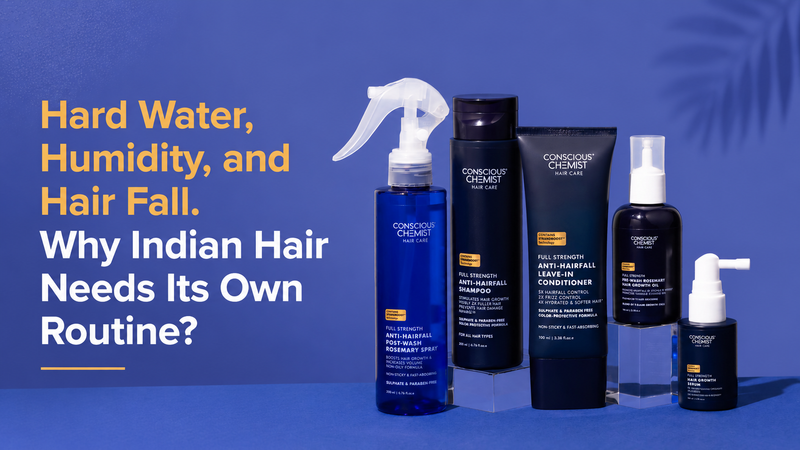
The Conscious Chemist Anti-Hairfall Shampoo and Conditioner work as a complete hair care kit for hair fall, designed for scalp cleansing and fibre protection together.
Order now and follow a consistent routine to reduce breakage, control frizz, and improve hair strength over time.
Frequently Asked Questions
1. How do I know if my hair fall is shedding or breakage?
Check the strands you lose. A white bulb usually indicates shedding, while shorter, uneven strands suggest breakage. Many people experience both, which is why a combined routine works better.
2. Can I use conditioner daily without causing buildup?
Yes, if it is lightweight and applied only to lengths. Using the right amount prevents buildup and helps reduce breakage during daily styling.
3. Will shampoo remove oil properly without drying hair?
A good anti-hairfall shampoo should remove oil while maintaining scalp balance. Focus on cleansing the scalp and let the conditioner handle softness in the lengths.
4. Does hard water increase hair fall?
Hard water can make hair rough and tangled, which increases breakage. Using a conditioner helps improve slip and reduce this effect.
5. How long should I try this routine before expecting results?
You may notice better manageability within 1–2 weeks, but reduced breakage and visible improvement usually take 3–6 weeks of consistent use.
6. Is this routine safe for treated or colored hair?
Yes, as long as the shampoo is gentle and the conditioner is lightweight. Treated hair benefits more from reduced friction and improved manageability.
Share:
How Hydrolyzed Keratin Strengthens Hair and Eliminates Frizz Effectively?
Leave-In Conditioner for Hair: Definition, Benefits, and How it Works for Frizzy Hair