


You run your fingers through your hair and notice something small but frustrating.
The ends feel rough. Hair catches slightly while combing. And every time you detangle, a few short strands snap off instead of sliding through smoothly.
This is when most people start looking for hydrolyzed keratin for hair, hoping it will "repair” the damage instantly.
But what actually matters is understanding what it can and cannot do.
When used correctly, it can significantly reduce breakage. When used incorrectly, it can make hair feel stiff and worse.
What Is Hydrolyzed Keratin for Hair and How Is It Different from Keratin Treatments?
Keratin is the main structural protein that gives hair its strength.
Daily exposure to heat, coloring, friction, and hard water creates weak points in the hair fiber. These weak points show up as roughness, frizz, and snapping during detangling.

What Does “Hydrolyzed” Keratin Mean in Hair Products?
Hydrolyzed keratin is keratin broken into smaller peptides.
These smaller fragments can more easily attach to the hair surface and form a light protective layer. This makes hair feel smoother and stronger without altering its natural structure.
This is where confusion happens.
Hydrolzsed keratin in products is a conditioning ingredient. Salon keratin treatments are chemical processes that use heat and resins to change how hair behaves for weeks or months.
They are completely different categories.
What Should You Expect from Hydrolyzed Keratin Products?
Hydrolyzed keratin can:
-
Reduce breakage
-
Improve smoothness
-
Reduce frizz
It cannot:
-
Permanently repair split ends
-
Change hair texture
-
Stop root-level hair loss
|
Key Takeaway Hydrolyzed keratin for hair temporarily strengthens and smooths strands, but it is not the same as a salon keratin treatment. |
How Does Hydrolyzed Keratin Reduce Breakage and Frizz in Daily Hair Care?
Hydrolyzed keratin forms a thin film over damaged areas.
This film fills in weak spots and smooths the surface, reducing friction between strands. As a result, hair becomes easier to detangle and less prone to snapping.
Research confirms that hydrolyzed keratin forms a protective film and improves tensile strength, helping hair resist damage from daily stress.
How Does Reduced Friction Help Prevent Hair Breakage?
A large part of visible hair fall is actually breakage.
When friction is reduced:
-
Hair tangles less
-
Combing becomes smoother
-
Fewer strands snap
This leads to less hair loss during everyday handling.
How Does Hydrolyzed Keratin Help with Frizz and Rough Texture?
Frizz happens when the hair cuticle is raised.
Hydrolyzed keratin smooths the surface, which:
-
Reduces frizz
-
Improves shine
-
Makes hair easier to manage
This is especially useful in humid conditions or hard water environments.

Why Consistent Use of Hydrolzed Keratin Matters?
Hair is exposed to stress daily.
Sun exposure, heat styling, and pollution gradually weaken the hair fiber. Using keratin occasionally does not maintain protection.
Consistent use helps maintain a smoother surface and reduces cumulative damage.
|
Key Takeaway Hydrolyzed keratin works best as a breakage-reducing agent, improving strength and reducing friction over time. |
Who Should Use Hydrolyzed Keratin for Hair and Who Should Be Careful?
Hydrolyzed keratin is most effective for hair that shows visible damage.
It works well for:
-
Colored or chemically treated hair
-
Heat-styled hair
-
Rough, frizzy ends
-
High porosity hair
-
Hair that tangles easily
These conditions indicate weakened hair fibers.
Can Fine or Thin Hair Use Hydrolyzed Keratin Without Becoming Flat?
Yes, but the format matters.
Lightweight products like gentle shampoos and leave-ins work better than heavy masks. Using small amounts prevents heaviness and buildup.
When Can Hydrolyzed Keratin Make Hair Feel Stiff?
You should be cautious if:
-
Hair already feels stiff
-
You are using multiple protein-heavy products
-
Hair has low porosity
In these cases, overuse can make hair feel rigid instead of soft.
|
Key Takeaway Hydrolyzed keratin is most useful for breakage-prone hair, but it should be used in balanced amounts to avoid stiffness. |
How Do You Use Hydrolyzed Keratin Without Causing Stiffness or Overload?
Hair needs both strength and softness.
Protein strengthens the hair, while moisture keeps it flexible. Too much protein without enough moisture can make hair feel dry and brittle.
This is why keratin should always be paired with conditioning and hydration.
What Are the Signs of Protein Overload in Hair?
Before adjusting your routine, it helps to recognize early signs of imbalance.
|
Concern you notice |
Likely cause |
Will keratin help? |
What to do |
|
Hair snapping |
Weak fibres |
Yes, strengthens |
Add moisture too |
|
Frizz and roughness |
Raised cuticle |
Yes, smooths |
Use leave-in |
|
Stiff or straw-like hair |
Overuse |
No |
Pause protein |
|
Dull, dry ends |
Imbalance |
Partial |
Increase hydration |
What Should You Do If Hair Starts Feeling Stiff?
If you notice stiffness:
-
Pause keratin products for 1–2 weeks
-
Focus on moisturizing conditioners
-
Reduce heat styling
Then reintroduce slowly.
How to Build a Weekly Routine with Hydrolyzed Keratin for Hair?
Consistency matters more than intensity.
Use this simple structure to balance strength and softness.
|
Hair type |
Wash frequency |
Wash day |
Between washes |
Watch-outs |
|
Oily scalp |
3–4x/week |
Keratin shampoo & conditioner |
Light leave-in |
Avoid buildup |
|
Dry hair |
2–3x/week |
Gentle cleanse & conditioner |
Leave-in regularly |
Avoid overuse |
|
Treated hair |
2–3x/week |
Keratin-based wash |
Leave-in daily |
Reduce heat |
What Are the Most Common Mistakes with Keratin Products?
-
Using keratin only occasionally and expecting repair
-
Applying leave-in on the scalp instead of the lengths
-
Layering multiple protein products
These mistakes often lead to poor results.
|
Key Takeaway The safest way to use hydrolyzed keratin is to use it consistently in small amounts, balanced with moisture and gentle care. |

How to Use Hydrolyzed Keratin for Long-Term Hair Strength?
Hydrolyzed keratin is most effective when used as part of a balanced routine. It strengthens hair fibres and reduces breakage, but it needs to be paired with moisture and consistent care.
If you are using hydrolyzed keratin for hair as part of a science-backed hair growth routine, the goal is not instant repair but gradual improvement in hair strength and texture.
Over time, consistent use helps reduce breakage, improve manageability, and maintain healthier-looking hair.
How to Use Hydrolyzed Keratin with the Conscious Chemist Hair Care Routine?
If your hair breaks easily during detangling and feels rough, you need a routine that balances cleansing and protection instead of layering multiple products.
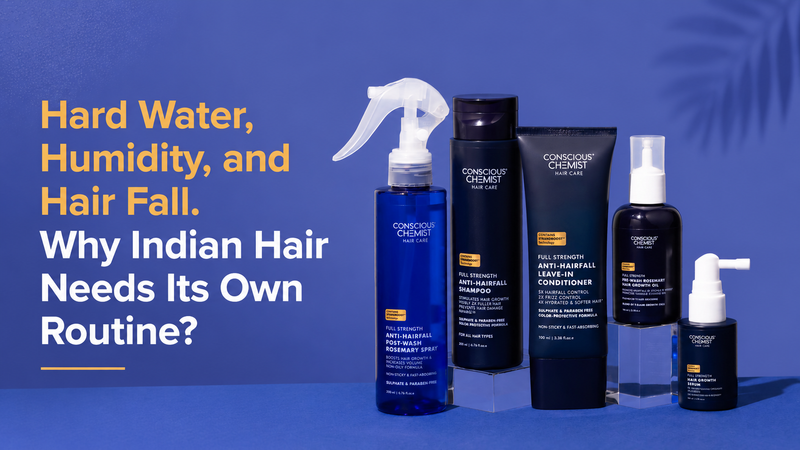
The Conscious Chemist Anti-Hairfall Shampoo and Conditioner follow a complete hair care kit for hair fall approach, combining gentle cleansing with lightweight fibre protection using StrandBoost™.
Order now and follow a consistent routine to reduce breakage, control frizz, and improve hair strength over time.
Frequently Asked Questions
1. Will hydrolyzed keratin make my hair fall worse?
No, it does not increase root-level hair fall. If hair fall seems higher, it is usually due to breakage or product overload, which can be fixed by balancing moisture.
2. Is hydrolyzed keratin safe for colored or treated hair?
Yes, it is often beneficial because treated hair has less damage. It helps reduce tangling and improves smoothness when used correctly.
3. How often should I use hydrolyzed keratin products?
Most people benefit from regular use in small amounts. If hair feels stiff, reduce frequency and focus on hydration before reintroducing it.
4. What is the difference between hydrolyzed keratin and salon keratin treatment?
Hydrolyzed keratin is a conditioning ingredient that temporarily strengthens hair. Salon keratin treatments are chemical processes that permanently change hair structure.
5. Can I use a keratin leave-in daily?
Yes, if it is lightweight and applied to lengths. Avoid applying it to the scalp and adjust the quantity to prevent buildup.
6. How do I know if my problem is breakage or hair loss?
Breakage shows as short, snapped strands, while hair loss shows full-length strands with a bulb. A medical professional should evaluate persistent or patchy loss.
Share:
How Hyaluronic Acid Helps Frizz and Dry Hair, and How to Use It Right?
How Does an Anti-Hairfall Shampoo and Conditioner Work Better Together?