


You move to a new place, and within a few washes, something feels off.
Your hair looks clean but feels rough. It tangles more easily, frizz does not settle even after oiling, and detangling feels harder than usual. That is when most people start looking for solutions to hard water hair problems, assuming their hair suddenly “changed.”
But in many cases, it is not your hair.
It is your water.
Hard water can quietly change how your hair behaves, making it feel dry, rough, and more prone to breakage without you realizing the cause.
How Can You Check If Hard Water Is Causing Your Hair Problems?
Hard water leaves subtle but consistent signs.
You may notice:
-
Hair feels coated or “grippy” after washing
-
Increased tangling and roughness
-
Frizz that does not improve with oil
-
Dull appearance
Outside of hair, you may also see white residue on taps or reduced soap lather.

How to Check Hard Water at Home with a Simple Soap Test?
A simple check can give you a quick idea.
Take a bottle of tap water, add a few drops of liquid soap, and shake it. If the lather is weak and the water looks cloudy, it may indicate hard water.
This is not a precise test, but it helps identify a pattern.
Can TDS or Local Water Reports Help?
If you have access to a TDS (Total Dissolved Solids) meter or a local water report, higher readings may indicate mineral-rich water. While TDS is not the same as hardness, it often overlaps in real conditions.
|
Key Takeaway If your hair suddenly feels rough, tangled, and coated after washing, hard water mineral deposits may be the reason, not just dryness |
How Hard Water Damages Hair and Causes Frizz and Breakage?
Hard water contains a high concentration of minerals like calcium and magnesium.
These minerals deposit on the hair surface, forming a thin layer. This layer increases friction between strands, making hair feel rougher and harder to detangle.
How Does Hard Water Increase Breakage Over Time?
This mineral layer does more than affect texture.
Studies show that hair exposed to hard water has reduced tensile strength and elasticity compared to softer water conditions.
In real life, this means:
-
Hair stretches less
-
Snaps more easily
-
Breakage increases during detangling
What Research Shows About Hard Water Damage to Hair?
Microscopic studies also show surface damage in hair exposed to hard water, including cuticle disruption and reduced thickness.
This explains why hair feels rough even when you are using good products.
Is Hard Water Causing Hair Fall or Just Breakage?
Most of the time, hard water leads to breakage, not root-level hair fall.
Short, snapped strands without bulbs indicate breakage, while full-length strands with bulbs indicate shedding.
|
Key Takeaway Hard water increases friction and weakens hair strands, which leads to more breakage during washing and detangling. |
How Should You Wash Hair in Hard Water Without Increasing Damage?
When hair is already rough from mineral deposits, harsh washing can worsen damage.
Over-cleansing strips natural oils, making strands even more prone to friction and snapping.
How Should You Use Shampoo in Hard Water Conditions?
Focus on scalp cleansing.
Apply shampoo only to the scalp, then run it through the lengths. Avoid scrubbing or bunching hair, as this increases tangling.
Gentle cleansing is especially important if you regularly oil your hair.
Why Is Conditioner Alone Not Enough in Hard Water?
Rinse-off conditioners provide temporary softness.
But when mineral buildup exists, the effect may not last long. Hair can still feel rough during detangling, especially after drying.
Why Is Leave-In Conditioner Important for Hard Water Hair?
A leave-in conditioner for hair fall control provides lasting slip.
This reduces friction between strands, making detangling smoother and reducing breakage. It acts as a protective layer throughout the day.
Hard Water Hair Results Timeline: What to Expect in 1–2 Weeks and Beyond?
Results appear gradually.
-
Immediate: smoother detangling
-
1–2 weeks: reduced frizz
-
Over time, there will be less breakage
|
Key Takeaway In hard water, reducing friction during and after washing is more important than adding heavy products. |

What Extra Steps Help Manage Hard Water Hair Problems in India?
A few targeted steps can help counter hard water damage and restore your hair’s natural balance. Here’s the list:
a) Shower Filter
Filters can help improve water quality to some extent.
They may reduce certain impurities and improve the hair's feel, but results vary depending on water conditions and filter type.
b) Final Rinse with Filtered Water
Yes, especially if your hair feels extremely rough.
Using filtered or RO water for the final rinse can improve smoothness, but it may not be practical daily.
c) Clarify Your Hair
If your hair feels coated or products stop working, clarifying can help.
Doing this every 2–4 weeks removes buildup without over-stripping the hair.
Before trying multiple solutions, this table helps you identify what your hair might be experiencing.
|
What you notice |
Most likely cause |
First step to try |
|
Hair feels coated after washing |
Hard water minerals |
Add leave-in and a gentle wash |
|
Hair feels heavy over time |
Product buildup |
Clarify occasionally |
|
Hair tangles easily |
Friction |
Improve slip |
|
Hair looks dull |
Mineral residue |
Reset routine |
How Do You Tell Hard Water from Product Buildup?
Hard water issues can appear quickly, especially after moving to a new location.
Product buildup develops gradually and improves after clarifying. In many cases, both exist together.
|
Key Takeaway Managing hard water is about reducing buildup and friction, not constantly changing products. |
How to Build a Hair Care Routine for Hard Water That Actually Works?
A simple routine works best.
-
Gentle shampoo for the scalp
-
Leave-in conditioner for lengths
This combination reduces roughness and improves manageability without overcomplicating your routine.
Before starting, this weekly planner helps simplify consistency.
|
Day/Trigger |
What to do |
Notes for best results |
|
Wash day |
Gentle shampoo and leave-in |
Avoid scrubbing lengths |
|
Mid-week |
Apply leave-in |
Focus on ends |
|
Every 2–4 weeks |
Clarify |
Follow with conditioning |
|
Dry hair days |
Light leave-in |
Avoid overuse |
How a Consistent Hair Routine Improves Hard Water Hair Over Time?
Consistency reduces cumulative damage.
Instead of reacting to hair problems daily, a routine helps maintain balance. This reduces breakage and improves the hair's feel and appearance over time.

|
Key Takeaway A hard water routine works best when it combines gentle cleansing with daily friction control through leave-in care. |
How to Manage Hard Water Hair Problems Long-Term?
Hard water hair problems are caused by mineral buildup that increases friction and weakens hair strands over time.
If you are using science-backed hair growth products or a complete hair care kit for hair fall, focusing on gentle cleansing and consistent leave-in protection helps improve results.
Over time, reducing friction and buildup can improve hair texture, reduce breakage, and make hair easier to manage.
How to Reduce Hard Water Frizz and Breakage with the Conscious Chemist Routine?
If your hair feels rough, frizzy, and difficult to manage after washing, focus on reducing friction and maintaining slip rather than layering heavy products.
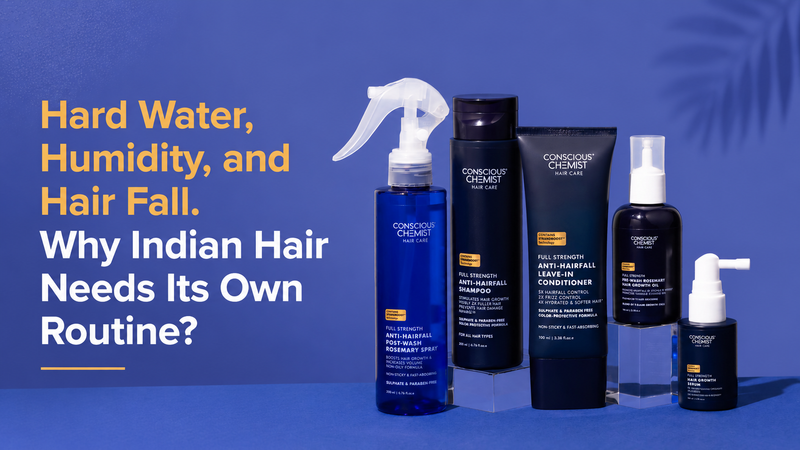
The Conscious Chemist Anti-Hairfall Shampoo and Conditioner help improve detangling, reduce breakage, and support smoother hair over time.
Order now and follow a consistent routine to manage hard water hair problems effectively.
Frequently Asked Questions
1. How can I tell if my hair problem is hard water or dryness?
If your hair feels coated, rough, and difficult to lather or manage, hard water is likely the cause. Dryness alone usually does not create that “grippy” texture or buildup feeling.
2. Does hard water cause hair fall or just breakage?
Hard water mainly causes breakage by weakening hair strands. If you see shorter snapped strands, it is breakage. Root-level hair fall may have different causes.
3. Should I oil my hair if I live in a hard water area?
Yes, but keep it light and avoid heavy buildup. Excess oil requires stronger cleansing, which can increase friction and breakage in hard water conditions.
4. Can I use leave-in conditioner daily in hard water?
Yes, if it is lightweight. It helps reduce friction and improve detangling. Adjust the quantity if hair starts feeling heavy or coated.
5. What is the correct order of products in hard water?
Start with shampoo, then conditioner if needed, and finish with a leave-in on damp hair. This ensures both cleansing and protection.
6. Do shower filters completely fix hard water hair issues?
They can improve results, but not always completely. Combining filters with a proper routine gives better overall results.

Share:
How to Control Frizzy Hair in Humid Weather with a Simple Monsoon Routine?
How to Control Hair Fall on Wash Day & Identify Shedding vs Breakage?