


You wash your hair. It feels clean, soft, and manageable. Step outside for a few hours, and everything changes.
The roots start feeling sticky. Hair looks flatter. By the second day, your scalp feels coated, even with very little product. This is where most people assume the product is too heavy.
But in Indian humidity, the problem is not just the product. It is how sweat, oil, and product interact on the scalp.
A lightweight hair spray for Indian humidity needs to do more than feel light in your hand. It needs to absorb quickly, sit comfortably on a sweaty scalp, and not turn into buildup by day two.
Why Does Lightweight Hair Spray Feel Different in Indian Humidity?
Humidity changes how products behave.
In Indian conditions, your scalp already has to deal with heat, sweat, pollution, and frequent handling. When you layer products on top of that, even lightweight formulas can start feeling heavy if they do not absorb properly.
What Happens to Your Scalp in Humid Weather?
-
Sweat increases throughout the day.
-
Natural oil production rises.
-
Products sit on top rather than absorb.

This combination creates what most people describe as “greasy” or “sticky” hair.
Many people also have a common pattern of oily roots and dry lengths. This makes product selection more difficult because what works for the ends may not suit the scalp.
How To Tell If Your Hair Spray Is Causing Buildup or Making Your Hair Feel Heavy?
Before changing products, it helps to identify early signs of buildup.
-
Roots look flat within a day. The scalp feels itchy or coated
-
White residue appears along the parting
-
Hair feels greasy even with small amounts
In such cases, the issue is usually poor absorption or over-layering, not necessarily the product category itself.
|
Key takeaway: In humid conditions, buildup is caused by sweat, oil, and product layering, not just by the product itself. |
What To Look for in a Lightweight Hair Spray for Daily Use in Humidity?
Not all sprays are designed for daily scalp use. Some are made for styling, which behave very differently.
Before choosing a spray, it helps to evaluate how it performs on your scalp rather than how it feels in your hand.
How Can You Check If a Hair Spray Is Truly Lightweight in Humidity?
This quick table helps you identify whether a spray will actually work in Indian conditions.
|
Criteria |
What to Look For |
Good sign / Red flag |
|
Texture |
Feels like water when sprayed |
Light mist vs oily droplets |
|
Absorption |
Dries within 60–90 seconds |
No film vs sticky layer |
|
Finish |
No tackiness when touched |
Smooth vs slightly sticky |
|
Residue |
No flakes or white cast |
Clean scalp vs visible buildup |
A spray that passes these checks is more likely to work in humid conditions.
Research also indicates that frequent use of certain spray formats can lead to scalp irritation in some users, which is why choosing gentle, non-residue formulas is important.
Why Should You Avoid Styling Sprays for Daily Scalp Use?
There is a difference between styling sprays and scalp sprays.
Styling sprays use holding agents, such as polymers, to create structure. These can feel stiff or sticky when used regularly on the scalp.
Scalp sprays, on the other hand, are designed for comfort, hydration, and support between washes.
If your goal is to reduce breakage and maintain scalp health, choosing the right category matters more than choosing a strong formula.
|
Key takeaway: A truly lightweight spray absorbs quickly, leaves no residue, and does not feel sticky by day two. |
How To Use a Hair Spray in Indian Humidity Without Causing Buildup?
Usage plays a major role in whether a spray feels effective or problematic.
How To Apply Hair Spray on Wash Days?
Apply the spray on a damp scalp.
This is when hair is most fragile and prone to breakage. A lightweight spray helps reduce friction and improve manageability during this stage.
-
Part your hair into sections.
-
Spray lightly on the scalp.
-
Massage gently
-
Leave it on
Avoid applying to lengths unless required.
How To Use Hair Spray Between Washes?
Between washes, the goal is maintenance, not heavy application.
Focus only on areas that need it, such as the parting or crown. Applying all over the scalp increases the chances of buildup.
If your scalp is oily, reduce frequency. If it feels dry or uncomfortable, you can use it more regularly.
How Does Weekly Hair Oiling Affect Hair Spray Usage?
Many Indian routines include weekly oiling, which changes how sprays behave.
If you spray directly over heavy oil, it can mix and leave a residue that looks like dandruff. This works better:
-
Use sprays on clean scalp days
-
Avoid layering immediately after oiling
-
If needed, use very small amounts
This simple adjustment prevents buildup and keeps the scalp balanced.
How To Identify Product Buildup vs Dandruff on Your Scalp?
This confusion is common.
-
Product buildup: uniform flakes, waxy feel, no strong itching
-
Dandruff: uneven flakes, itching, redness
If flakes appear suddenly after changing products, it is likely buildup rather than dandruff.
|
Key takeaway: Use small, targeted amounts; over-application is the main cause of buildup. |

How To Adjust Hair Spray Usage Based on Weather and Routine?
Weather and routine affect how often you should use a spray. Before deciding on frequency, it helps to look at your environment and lifestyle:
|
Your context |
Recommended frequency |
Application style |
|
Humid monsoon, oily scalp |
Alternate days |
Targeted application |
|
Hot summer, frequent sweating |
Light daily use |
Minimal quantity |
|
Dry winter, low sweat |
Daily if needed |
Even but controlled |
Industry reports also show growing demand for humidity-resistant and lightweight sprays, reflecting how climate influences product performance.
What Makes a Hair Spray Work Effectively in Humid Conditions?
A lightweight hair spray for Indian humidity is not defined by how it feels in your hand. It is defined by how it performs on your scalp throughout the day.
The right spray absorbs quickly, prevents buildup, and supports daily hair styling without leaving your roots feeling heavy or coated. More importantly, it should work consistently across wash days and between washes without requiring constant adjustment.

Looking for a Lightweight Hair Spray That Works in Humidity?
If your hair feels sticky, flat, or difficult to manage between washes, switching to a lightweight routine can make a visible difference.
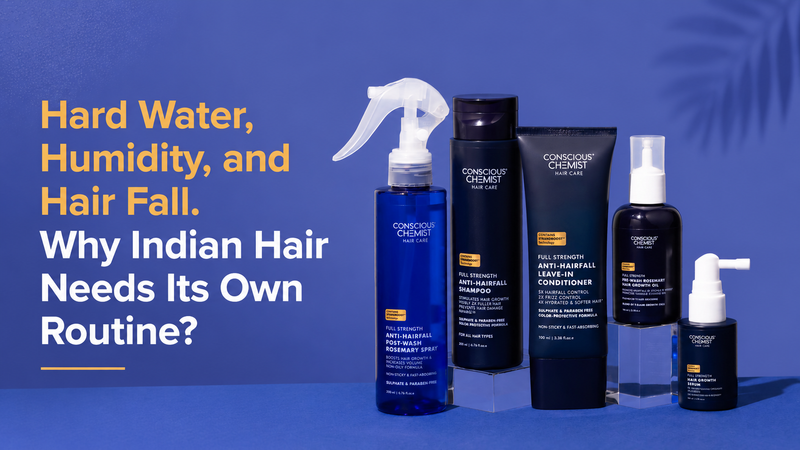
The Conscious Chemist Rosemary Hair Growth Spray is designed for daily use in Indian humidity, helping reduce buildup, support breakage-prone hair, and maintain scalp comfort.
Use it after wash days and between washes to keep your routine simple, consistent, and effective.
Frequently Asked Questions
1. What does lightweight mean in a hair spray for humidity?
It means the spray absorbs quickly and leaves no sticky or oily residue. In humid weather, products that sit on the scalp tend to feel heavy by the next day.
2. Will a lightweight spray make my oily scalp worse?
A water-based spray should not feel greasy if used in small amounts. Apply only where needed and avoid overuse.
3. Can I use a hair spray on dry hair between washes?
Yes, apply directly to the scalp and massage lightly. Avoid spraying on lengths to prevent buildup.
4. When should I use a spray if I oil my hair weekly?
Use it mainly on clean scalp days. Avoid applying directly over heavy oil to prevent residue.
5. Is buildup the same as dandruff?
No, buildup appears as uniform flakes without severe itching, while dandruff usually includes irritation and redness.
6. Are hair sprays safe for chemically treated hair?
Yes, if the formula is lightweight and non-irritating. Always apply gently and patch test if needed.


Share:
How to Use Rosemary Hair Spray for Chemically Treated Hair Without Increasing Breakage?
How Does Rosemary Hair Spray Help Hair Growth and Reduce Breakage?