


Chemically treated hair may look smooth and polished at first, but it becomes more delicate with time. After a few washes, you may notice roughness when wet, uneven ends, or more strands on your comb.
This is where confusion begins. It often feels like hair fall has increased, but in most cases, the issue is breakage caused by weakened strands.
Once hair structure changes, your routine needs to change as well. A rosemary hair spray for chemically treated hair works best when it supports the scalp and reduces daily stress on the strands, without adding heaviness or interfering with the treatment.
Why Does Chemically Treated Hair Break More Easily?
Chemical treatments like coloring, rebonding, or keratin smoothing change how your hair's structure behaves.
They increase porosity, weaken internal bonds, and make the cuticle less smooth. This causes hair to absorb more water, swell, and stretch when wet.
That is where most damage happens. Before adjusting your routine, it is important to identify whether the issue is breakage or hair fall.

What Is the Difference Between Hair Breakage and Hair Fall?
-
Full strands with a white bulb indicate hair fall
-
Short, uneven strands indicate breakage
Breakage reduces your hair length over time, which is why hair feels thinner even when growth is normal. This difference becomes even more important during the damp stage.
Why Is Damp Hair the Most Sensitive Stage After Chemical Treatment?
Wet or damp hair stretches more than dry hair.
After chemical treatments, this flexibility increases, but strength does not. This makes strands more likely to snap during:
-
Towel drying
-
Rough detangling
-
Tight hairstyles
-
Heat styling immediately after washing
This is why leave-on support during this stage becomes important.
|
Key takeaway: Chemically treated hair breaks more easily, and what looks like hair fall is often breakage. |
What Makes Rosemary Hair Spray Safe for Chemically Treated Hair?
Rosemary extract is widely studied for scalp support and may help improve hair conditions over time when used consistently.
Most importantly, it does not interfere with chemical treatments when used correctly. However, the way it is applied matters.
Use this quick checklist to evaluate whether a rosemary spray is suitable for chemically treated hair:
|
What to check |
Green flag (good for treated hair) |
Red flag (be cautious) |
|
Texture |
Lightweight, water-based |
Heavy, oily formula |
|
Application |
Scalp-focused |
Applied heavily to lengths |
|
Residue |
No buildup between washes |
Sticky or waxy feel |
|
Sensitivity |
No irritation or itching |
Burning or flaking |
A well-formulated rosemary product is generally considered non-irritating at controlled concentrations, which is why formulation quality matters.
When to Start Using Rosemary Hair Spray After Chemical Treatment?
Timing plays an important role.
After coloring or smoothing, it is best to keep your routine minimal for the first 48–72 hours or follow your stylist’s advice. Once your scalp and hair have settled, you can gradually introduce a rosemary hair spray to treated hair.
Start with a lower frequency and increase based on how your scalp responds.
How to Use Rosemary Hair Spray Without Affecting Chemically Treated Hair?
A consistent, controlled routine works better than heavy or irregular use.
What Does a Post-Wash Routine Look Like for Treated Hair?
After washing:
-
Gently blot excess water
-
Section your hair
-
Apply the spray directly to the scalp
-
Massage lightly for 30–60 seconds
-
Leave it on
Avoid applying to mid-lengths if your hair feels dry.
What Is The Right Frequency For Using The Rosemary Spray After Treatment?
Frequency depends on your scalp type and how recently you had the treatment.
Before deciding how often to use it, this quick guide helps you avoid overuse or dryness.
|
Your situation |
Suggested frequency |
How to apply (most important detail) |
|
First 1–2 weeks after treatment |
3–4 times/week |
Light application on the scalp only |
|
Oily or normal scalp |
Daily or alternate days |
Targeted use on the crown and parting |
|
Dry or sensitive scalp |
3–4 times/week |
Minimal amount, avoid lengths |
Gradual usage helps maintain both scalp balance and treatment longevity.
|
Key takeaway: Rosemary is generally safe for treated hair; problems usually come from heavy formulas or incorrect application. |

How to Use Rosemary Spray with Heat Styling and Conditioning?
Using the right sequence prevents additional damage.
-
Apply the spray on the scalp first
-
Let it absorb completely
-
Use heat protectant on lengths
-
Style with controlled heat
Avoid using scalp spray as a substitute for conditioning or heat protection.
What Results Appear First with Rosemary Spray on Treated Hair?
Results vary based on consistency and hair condition.
What improves first:
-
Reduced breakage
-
Easier detangling
-
Better scalp comfort
What takes longer:
-
Improved hair density
-
Better overall hair thickness
Clinical research shows rosemary-based topical treatments can improve hair growth-related parameters over time when used consistently.
What Hair Issues Need Correction Before Continuing Rosemary Spray?
Sometimes the issue isn't the product but the overall routine.
Signs you need more moisture in your hair instead of more actives:
-
Hair feels rough or straw-like
-
Ends tangle easily
-
Increased frizz
Signs of overusing strengthening products on hair:
-
Hair feels stiff
-
Breaks easily despite treatment
What to do in case of overusing strengthening products on hair:
-
Focus on conditioning and hydration
-
Reduce active product usage temporarily
-
Avoid over-spraying on lengths
Balancing moisture and strength is essential for treated hair.
|
Key takeaway: Apply lightly to the scalp and use consistently; overuse or applying to lengths increases breakage risk. |

What Is the Best Way to Maintain Chemically Treated Hair Without Breakage?
Chemically treated hair requires a routine that focuses on protection, not just growth. When hair becomes more fragile after treatments, reducing breakage becomes even more important for improving how it looks and feels over time.
A rosemary hair spray for chemically treated hair supports this by maintaining scalp balance and reducing daily damage without adding heaviness. However, results depend on how consistently it is used within a well-structured routine.
A simple, consistent routine that avoids overloading the hair delivers better long-term results than relying on heavy treatments.
How to Maintain Treated Hair Without Increasing Breakage?
If your hair feels fragile, breaks easily, or becomes difficult to manage after coloring or smoothing, switching to a lightweight routine can help maintain results.
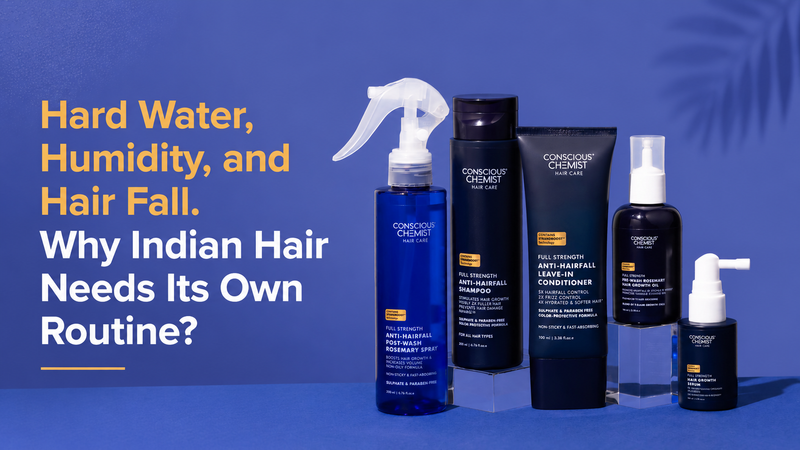
The Conscious Chemist Rosemary Hair Growth Spray is designed for daily use on treated hair, helping reduce breakage and support scalp health without heaviness.
Use it consistently after wash days and between washes to maintain smoother, stronger, and more manageable hair over time.
Frequently Asked Questions
1. Can I use rosemary hair spray on keratin-treated hair?
Yes, you can use a scalp-focused rosemary spray after the initial post-treatment period. Apply only on the scalp and avoid overuse to prevent dryness.
2. Will rosemary spray fade my hair color?
A well-formulated spray applied to the scalp is unlikely to cause color fading. Color fade is more affected by washing frequency and heat exposure.
3. How soon can I use rosemary spray after coloring or rebonding?
Wait 48–72 hours or follow your stylist’s recommendation. Then introduce it gradually to monitor scalp response.
4. Do I need to wash my hair after using rosemary spray?
No, it is a leave-on product. Use it on a damp or dry scalp without rinsing.
5. What should I do if my scalp starts itching after using it?
Stop using the product and wash your scalp gently. If irritation continues, avoid actives and consult a professional.
6. Can I use rosemary spray with hair oil and serum?
Yes, but avoid layering all at once. Use oil as a pre-wash step and spray it on the clean scalp on clean-skin days.


Share:
How to Restore Skin Bounce with a 1-Week Hydration Reset?
How to Choose a Lightweight Hair Spray for Indian Humidity Without Stickiness or Buildup?