





There is a pattern that repeats for most people dealing with thinning hair.
You start using new products for thinning hair, and within a few washes, your hair feels softer, smoother, and easier to manage. It looks healthier, so you assume the product is working.
Then, a few weeks later, nothing feels different.
Hair still sheds, your part still looks slightly wider, and the improvement you noticed early on does not translate into real density. This creates frustration and leads to switching products again.
The issue is not that products stop working.
It is that most routines only improve surface-level feel at first, while thinning hair requires consistent support across the scalp and strands over time.
What Is Thinning Hair and How Is It Different from Hair Fall or Breakage?
Hair concerns are often grouped, but they behave very differently.
Shedding happens at the root and is usually visible as full-length strands with a small bulb. Breakage occurs along the hair shaft, appearing as shorter, uneven pieces. Thinning is a gradual reduction in density, visible as a wider part or a lower overall volume.
If you treat all three the same, your routine will feel inconsistent, since each requires a different approach.

Why Thinning Hair Needs More Than Just One Product?
Thinning hair is not caused by just one issue.
It is often a mix of scalp imbalance, breakage, and weaker hair regrowth over time.
That’s why a single product is rarely enough.
An effective routine needs to support the scalp, reduce breakage, and protect hair between washes.
If your routine only works on wash day, results will feel temporary. Most products seem to work at first because they improve texture, but thinning hair needs deeper, consistent support actually to improve over time.
Hair Regrowth Timeline for Thinning Hair: When to Expect Real Results?
Most early improvements are cosmetic.
Hair may feel softer or less tangled within days, but real changes in density take time. Hair cycles are slow, which is why a minimum of 8–12 weeks is needed before evaluating a hair regrowth kit for thinning hair.
|
Key Takeaway Thinning hair improves when both the scalp and strands are consistently supported, not just during wash day. |
How to Choose the Right Shampoo for Thinning Hair?
A shampoo’s role is often misunderstood.
It does not directly grow hair, but it sets the foundation for everything else. A good shampoo keeps the scalp clean without irritating it and prevents excessive tangling during washing.
If the scalp becomes dry or irritated, shedding may feel worse, even if the root cause remains unchanged.
How Does Hard Water Affect Thinning Hair?
Hard water is an overlooked factor.
Minerals deposit on the hair shaft, making it feel rough and more prone to tangling. This increases friction during combing, leading to breakage and making hair appear thinner.
Over time, this can create the illusion of worsening hair fall even if shedding remains the same.
How Can You Evaluate a Shampoo in Real Use?
Instead of relying on claims, observe how your hair behaves.
After two washes, your scalp should feel comfortable, with no tightness or itching. Hair should feel easier to detangle, not rougher. If you notice increased dryness or irritation, the shampoo is not supporting your routine.
Before choosing, this table helps connect your concern with the right shampoo approach.
|
Your main issue |
What helps most |
What to look for |
Mistake to avoid |
|
Oily scalp |
Balanced cleansing |
Mild surfactants |
Over-washing |
|
Dry scalp |
Hydration |
Humectants |
Harsh shampoos |
|
Tangling |
Conditioning support |
Polymers |
Skipping conditioner |
|
Hard water |
Chelation |
EDTA |
Ignoring buildup |
|
Key Takeaway The right shampoo supports scalp comfort and reduces friction, which indirectly helps reduce hair fall. |
How Do Leave-In Products Improve Density in Thinning Hair?
Many people focus only on shedding, but breakage plays a major role in how dense hair looks.
When hair breaks along its length, the ends become thinner and uneven. This reduces volume and makes the overall density appear lower, even if hair is not falling from the root.
How Does Leave-In Conditioner Reduce Hair Fall During Daily Handling?
A leave-in conditioner for hair fall control works by improving slip.
Slip allows hair strands to move past each other without resistance, which reduces pulling during detangling. This directly lowers breakage, especially in long or treated hair.
Unlike rinse-off conditioners, leave-ins remain on the hair and continue protecting it throughout the day.
What Features Should You Look for in a Leave-In?
Lightweight formulations work best for thinning hair.
Ingredients like hydrolyzed proteins, ceramides, and humectants help improve strength and softness without weighing hair down. Heavy butters or waxes may make hair feel flat, which is not ideal when density is already reduced.
How Should You Apply Leave-In Without Affecting Volume?
Application technique determines results.
Use a small amount, apply only to lengths, and distribute evenly. Applying near the scalp or using too much product can make hair look greasy, which exaggerates the appearance of thinning.
How Do You Choose Between a Spray and a Serum for Thinning Hair?
A scalp spray provides lightweight, frequent support.
It is useful for maintaining hydration and comfort without creating buildup. This makes it ideal for people who do not like heavy products or have oily scalps.
How Is a Serum Different from a Spray?
A serum is more concentrated and focuses on targeted support.
It often includes actives such as peptides, caffeine, and botanical complexes found in advanced hair regrowth products. These are designed to support the scalp over time rather than provide immediate cosmetic benefits.

How Should You Use Spray and Serum Together Without Buildup?
Layering should be intentional.
Apply the spray first because it is lighter, then follow with serum. Avoid applying large amounts or layering multiple products on the same area repeatedly, as this can lead to buildup.
Before choosing, this table simplifies the decision process.
|
Category |
Best for |
Texture |
How often |
Layering tip |
|
Spray |
Daily comfort |
Lightweight |
Frequent |
Apply first |
|
Serum |
Targeted care |
Slightly heavier |
Daily |
Apply after the spray |
What Results Can You Expect from Consistent Scalp Care?
Consistency matters more than intensity.
A randomized, controlled study by PubMed showed that regular scalp application of antioxidant-based formulations improved scalp condition and reduced hair shedding over a 24-week period.
This highlights an important point.
Hair care routines do not work instantly. They create gradual improvements when applied consistently over time.
|
Key Takeaway Sprays maintain daily comfort, while serums provide targeted support. Both require consistent use for results. |
How Do You Build a Routine for Thinning Hair Without Getting Overwhelmed?
The biggest mistake is trying to fix everything at once.
People often buy multiple products without understanding their roles, leading to inconsistent use and confusion about which is working.
A simpler approach is more effective.
What Is the Simplest Routine for Thin Hair That Works?
A basic routine includes:
-
Gentle shampoo for scalp balance
-
Leave-in conditioner for breakage control
-
Scalp spray or serum for daily support
This combination addresses the most common causes of thinning without overcomplicating the process.
How Should You Introduce Products Without Causing Irritation?
Adding everything at once can overwhelm the scalp.
Instead, introduce products gradually. Start with cleansing and conditioning, then add leave-on products one at a time. This helps identify any irritation and allows your scalp to adjust.
Why Does a Structured System Work Better Than Random Products?
Consistency is easier when your routine is predefined.
Using separate products, such as a peptide hair regrowth serum or a caffeine shampoo for hair regrowth, without a structured regimen can lead to overlap or gaps in care.
A structured system ensures that each step has a clear role.
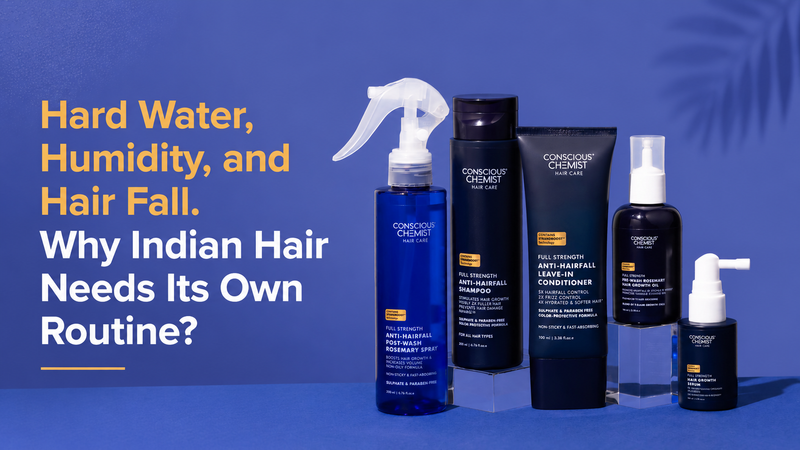
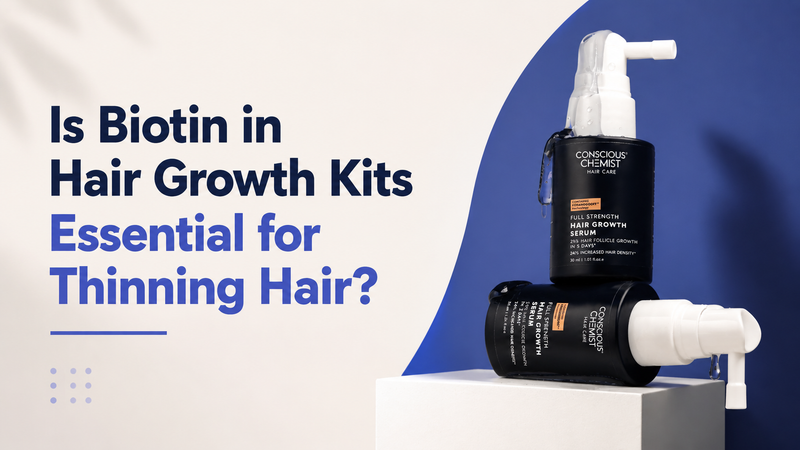
The Conscious Chemist hair regrowth kit combines cleansing, conditioning, and scalp support into one routine. This reduces guesswork and improves consistency.
|
Key Takeaway A consistent, lightweight routine works better than multiple products used inconsistently. |

How Should You Choose the Best Products for Thinning Hair Long-Term?
Choosing the right products for thinning hair requires understanding what your hair needs over time. No single product can solve thinning, but a routine that supports the scalp, reduces breakage, and maintains consistency can improve results.
If you are using a hair regrowth kit for thinning hair or exploring science-backed hair regrowth products, focus on building a routine that works across all stages of your hair care.
Small improvements in breakage and scalp health add up over time, leading to better density and overall hair quality.
How Can You Easily Follow a Consistent Routine for Thinning Hair?
If you want a routine that supports your hair at every stage without weighing it down, a structured system is better than randomly mixing products.
The Conscious Chemist hair regrowth kit works as a complete hair care kit for hair fall, designed for lightweight layering and consistent results.
Order now and follow a structured 8–12 week routine to reduce breakage and improve scalp balance.
Frequently Asked Questions
1. Can a shampoo alone fix thinning hair?
No, shampoo mainly supports scalp health and reduces irritation. Most people need a leave-in to reduce breakage, and a leave-on product, like a serum or spray, for consistent scalp support.
2. What is better for thinning hair, oil or serum?
They serve different purposes. Oil helps reduce dryness before washing, while serums provide targeted, daily scalp support. The best choice depends on your scalp type and routine.
3. How do I know if a product is causing irritation?
If you notice burning, itching, or increased flaking, it is likely irritation, not a normal reaction. Stop using the product and reintroduce items slowly to identify the cause.
4. Do sprays and serums cause buildup?
They can, if overused or layered excessively. Using small amounts and maintaining regular cleansing helps prevent buildup while still getting benefits.
5. When should I see a dermatologist for thinning hair?
If hair loss is sudden, patchy, or continues for several weeks without improvement, it is best to seek medical advice for proper diagnosis.
6. How long should I try a routine before switching?
You should follow a routine consistently for at least 8–12 weeks. Hair regrowth takes time, and switching too early prevents you from seeing real results.

Share:
How Does a Yeast Extract Shampoo Help Reduce Hair Fall?
How To Know If Your Hair Regrowth Kit for Hair Fall Is Working?