


You count the strands in the drain after every wash and wonder if your shampoo is actually doing anything. The answer lies within the bottle. This guide breaks down how yeast extract works in an anti hair fall shampoo and what results you can realistically expect.
Why Do Brands Include Yeast Extract In Shampoos?
A clear explanation to help you understand what you are applying to your scalp.
What Is Yeast Extract?

Yeast extract is a cosmetic-grade ingredient derived from fermented yeast.
-
It contains amino acids, peptides, vitamins, and bioactive compounds that support skin and scalp condition.
-
It is not the same as kitchen yeast. Manufacturers process it to make it safe and effective for hair care.
-
It is like a nutrient-rich blend designed for scalp comfort and hair strength.
Why Does Yeast Extract Appear in Anti-Hair Fall Formulas?
Many brands include it in a hair fall control shampoo to improve the scalp environment. It helps:
-
Maintain a balanced scalp surface
-
Improve how hair strands feel and behave
-
Reduce breakage-related hair fall during washing
This is why it is part of many functional ingredient shampoo formulations in India.
What Yeast Extract in Shampoo Cannot Do?
Before expectations run too high, here is what a topical shampoo ingredient simply cannot do:
-
It does not reverse genetic hair loss.
-
It does not deliver overnight regrowth.
-
It cannot replace treatment for hormonal or nutritional issues.
-
Seek medical advice if you notice:
-
Sudden heavy shedding
-
Patchy hair loss
-
Pain or burning on the scalp
|
Key Insight: Yeast extract supports the scalp environment and strengthens fragile strands. It helps reduce breakage over time, not instant regrowth. |
How Does Your Scalp Health Influence Hair Fall?
Many people treat hair fall as a single problem. In reality, the hair you see in the drain could mean three completely different things. Understanding which one you are dealing with changes everything about how you respond.
What Are The Three Types Of “Hair Fall”?
Here is a table to understand the three types of hair fall:
|
What you notice |
Most likely meaning |
What to do next |
|
Long strands with a white bulb at the end |
Natural shedding cycle |
Maintain a gentle scalp barrier shampoo routine |
|
Short broken pieces without bulb |
Hair breakage |
Use a hair strengthening shampoo and reduce friction |
|
Visible scalp or widening part |
Hair thinning |
Consider a dermatologist's evaluation |
Why Does Scalp Condition Directly Impact Hair Retention?
The scalp is skin. It has a microbiome, a moisture barrier, and follicles that respond to their immediate environment. When that environment is disrupted by inflammation, dandruff, or oxidative stress, follicles face more challenging conditions for retention. Common issues include:
-
Itchiness
-
Dandruff
-
Oxidative stress
Why Is Gentle Cleansing Of The Scalp Important?

Your hair is in a natural hair cycle. It is important to understand its needs. One of those needs is cleansing. However, harsh cleansers, hard water mineral buildup, and aggressive scrubbing all contribute to two outcomes: a stripped scalp and brittle lengths. When those lengths are already fragile, everyday actions like detangling or rinsing snap them. That snapping is what most people experience as hair fall due to hard water or heavy washing.
A non-stripping daily shampoo formula helps you:
-
Wash regularly
-
Prevent buildup
-
Reduce breakage
|
Key Insight: Improving scalp comfort and reducing friction often lowers the hair fall you notice first. |
What Are the Realistic Results of Using a Yeast Extract Shampoo?
Set realistic expectations so you can accurately track progress.
Week 1-2: Early Changes You May Notice
The first changes are sensory, not visual:
-
Less scalp tightness or itchiness after washing (if dryness was a trigger)
-
No squeaky-clean stripping sensation
-
Slightly better slip during rinsing, which means less pulling
-
Easier initial combing after towel drying
Note: You may not see any change in shedding yet, and that is completely expected. Your scalp is recalibrating.
Weeks 3-6: Visible Improvement In Hair Handling
As the scalp environment stabilizes and fibres receive consistent support, you may notice:
-
Fewer short, broken strands on the brush or comb
-
Less hair is left on the towel after drying
-
Smoother ends that do not catch or tangle as aggressively
-
A reduction in frizz after air drying
This phase reflects improved fibre integrity, not new growth. The hair strengthening shampoo effect is working at the strand level during these weeks.
Weeks 6-12: Stronger And More Manageable Lengths
With sustained use, the cumulative benefits become more visible:
-
Improved manageability on non-wash days
-
Fewer split ends at the midpoint of strands
-
Better tolerance to regular washing without feeling depleted
-
Consistent reduction in wash-day shedding volume
A 2025 study published in the journal Antioxidants found that fermented yeast complex extract reduced oxidative stress and supported hair regrowth conditions by improving key cellular pathways in hair follicles.
When Should You Seek Expert Advice For Hairfall?
-
Sudden heavy shedding
-
Bald spots
-
Persistent dandruff with irritation
-
Symptoms like fatigue or low iron
Who Should Use Yeast Extract Shampoo, and Who Should Avoid It?
Use this section to decide if it fits your hair type and lifestyle.

Who May Benefit From Using A Yeast Extract Shampoo?
-
Hair fall is mostly visible during washing
-
Exposure to pollution or sweat requires frequent cleansing
-
Hard water exposure
-
Chemically treated or colored hair
-
Frizz and tangles are causing breakage
-
Fine hair needing lightweight care
These cases align with people searching for the best shampoo for hair fall in India.
Who Needs To Be Cautious Of Yeast Extract Shampoos?
If you relate to any of the following, it is best to avoid a yeast extract shampoo:
-
Highly sensitive scalp
-
Active eczema or psoriasis
-
Known allergies to cosmetic ingredients
-
Stop usage if you notice:
-
Burning sensation
-
Redness
-
Itching
How To Patch Test Yeast Extract Shampoos Safely?
Follow these steps before committing to a full routine:
-
Apply a small amount behind the ear
-
Wait 24 hours
-
Start with a small quantity during the first wash
-
Avoid mixing multiple new products
|
Key Insight: The best anti hair fall shampoo is one you can use consistently without irritation. |
What Is A Simple Routine Using Yeast Extract Shampoo For Less Hair Fall?
A practical method you can follow without overcomplicating your routine.
Why Does A 2-Step Haircare Routine Work Better?
A shampoo works on the scalp and removes buildup. It does its job and rinses away. But the lengths, where breakage occurs, get no ongoing protection after rinsing. That is what a leave-in conditioner does.
-
Step 1: Shampoo improves scalp condition
-
Step 2: Leave-in protects hair length
This combination targets:
-
Root environment
-
Strand strength
-
Friction reduction
How To Use The 2-Step Haircare Routine?
Here is a simple breakdown of the 2-step haircare routine:
-
Shampoo:
-
Apply a small amount
-
Focus on the scalp
-
Massage gently and rinse well
-
Leave-in:
-
Apply to damp hair
-
Focus on mid-lengths and ends
-
Do not rinse
Frequency:
-
Shampoo: 2 to 4 times per week
-
Leave-in: daily if lightweight
3 Additional Tips For Indian Hair Conditions
These are some tips to take the best care of Indian hair type:
-
If you oil your hair:
-
Use a gentle cleanse
-
Avoid aggressive scrubbing
-
For hard water:
-
Rinse thoroughly
-
For heat styling:
-
Add heat protection
-
Reduce tight hairstyles
What Is A Simple Haircare Routine Builder Based On Your Situation?
Refer to the following table to understand your hair and give suitable care:
|
Your situation |
Shampoo approach |
Leave-in approach |
|
Wash-day hair fall |
Use a hair fall shampoo with gentle cleansing |
Apply daily to reduce friction |
|
Frizz and tangles |
Choose the best shampoo for hair fall and frizz control |
Smooth ends after every wash |
|
Hard water exposure |
Use shampoo for hair fall due to hard water |
Apply lightweight protection |
|
Chemically treated hair |
Use mild keratin repair shampoo for breakage |
Focus on damaged lengths |
What Is The Best Anti-Hair Fall Shampoo And Leave-In Duo For Indian Hair?
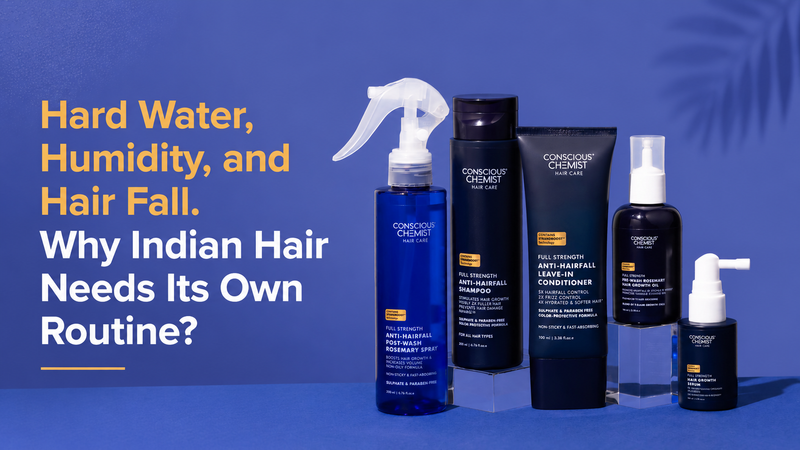
If you want a ready-made version of this approach, Conscious Chemist's Anti-Hairfall Strength Duo is built around exactly this logic.
The formula uses StrandBoost™, a proprietary complex that combines yeast extract with rosemary oil shampoo for hair fall support. It also includes saw palmetto, which helps manage DHT activity and supports a healthier scalp during cleansing.
The shampoo in the duo is:
-
Safe for colored and chemically treated hair
-
Formulated to work in hard water conditions without leaving residue
-
Free from ingredients that strip the scalp's natural moisture
The lightweight leave-in that accompanies it:
-
Applies to damp or dry hair without weighing strands down
-
Reduces friction between washes, targeting the breakage that reads as hair fall
-
Contains hyaluronic acid for hydration, along with targeted hair actives and aloe vera to support moisture retention and fibre protection.
Frequently Asked Questions
1. Is yeast extract in shampoo safe for regular use?
Yes. It is widely used in cosmetic formulations. Patch testing helps if you have sensitive skin.
2. Can yeast extract shampoo completely stop hair fall?
No product can stop all hair fall. A good anti-hair loss shampoo reduces breakage and improves scalp condition.
3. How long does it take to see results?
You may notice improvements in 3 to 6 weeks. Visible density changes take longer and depend on underlying causes.
4. Can I use leave-in conditioner daily?
Yes. A lightweight formula applied to lengths helps reduce friction and breakage.
5. Does yeast extract help with dandruff?
It supports scalp balance. Persistent dandruff may need medicated treatment.
6. How should I use shampoo if I oil my hair?
Apply oil to lengths. Use a gentle shampoo on the scalp. Rinse thoroughly without harsh scrubbing.
Share:
Best Routine for Weak Hair Strands and Breakage Control
How to Pick the Right Products for Thinning Hair Without Wasting Money?