


Freshly smoothened or keratin-treated hair has a very specific look.
It reflects light better, feels softer to touch, and looks more controlled than before. But within a few weeks, many people notice something confusing.
More hair on the comb. More strands during washing. Ends that feel thinner.
This is when most people start searching for the best hair regrowth kit for hair fall or switching to a complete hair care kit for hair fall, assuming the treatment caused hair loss.
But in most cases, it is not true hair fall. It is breakage.
And unless you understand what changed in your hair after chemical treatment, even science-backed hair regrowth products will not give consistent results.
What Changes in Chemically Treated Hair Structure After Smoothening or Keratin Treatments?
Chemical treatments reshape the internal bonds of your hair and flatten the cuticle so strands appear smooth and aligned.
But this smoothness is not the same as strength.
Studies in PubMed show that chemical straightening can alter the hair shaft and weaken cuticle integrity, making hair more sensitive to everyday stressors like brushing and washing.
That means your hair may look polished on the outside, but internally, it has reduced resilience. It cannot handle pulling, stretching, or repeated heat the same way untreated hair can.

Why Does Chemically Treated Hair Become More Fragile Even If It Feels Soft?
Softness creates a false sense of health.
In reality, chemically treated hair loses some of its natural elasticity. When elasticity drops, hair cannot bounce back from tension. Instead, it stretches and snaps.
Research by SciELO Brazil on chemically altered hair fibers shows increased structural stress, leading to breakage under repeated mechanical actions such as detangling or towel drying.
This is why breakage increases gradually, not immediately.
How Can You Quickly Identify Breakage vs Hair Fall in Daily Life?
Most people misread what they see.
If your comb shows shorter, uneven strands, especially after detangling or washing, you are dealing with breakage.
If you see long strands with a bulb, that is shedding from the root.
For chemically treated hair, breakage is the dominant issue because the hair shaft has already been altered.
Why Does the Scalp Sometimes Feel Sensitive After Chemical Treatments?
The focus is usually on hair, but the scalp is affected too.
Chemical treatments can irritate the scalp barrier, leading to:
-
Mild inflammation
-
Tightness or itching
-
Increased sensitivity to products
Studies by NCBI also indicate that straightening processes can affect scalp health and hair structure, potentially worsening perceived shedding.
If the scalp is not calm, your routine will not feel stable, no matter how many products you use.
Breakage vs Shedding Quick Guide
Before adjusting your routine, this quick guide helps you identify whether your concern is breakage or actual shedding.
|
What You Notice |
Likely Issue |
Best First Fix |
|
Long strands with a bulb |
Shedding |
Focus on scalp care |
|
Short broken pieces |
Breakage |
Improve slip and reduce friction |
|
Hair snaps while combing |
Breakage |
Use leave-in conditioner |
|
Itchy scalp and shedding |
Scalp irritation |
Gentle cleansing |
|
Key Takeaway Chemically treated hair becomes structurally weaker, which makes breakage the main reason behind visible hair fall. |
What Are the 3 Most Important Priorities to Reduce Hair Fall in Chemically Treated Hair?
-
Gentle Cleansing to Protect Chemically Treated Hair from Further Damage
Cleansing is not just about removing oil. It determines how much stress your hair goes through during washing.
Harsh shampoos strip moisture and increase friction between strands. When this happens, hair tangles more and snaps during rinsing or detangling.
A gentle cleanser helps keep the scalp balanced without leaving the lengths dry. This is especially important in hard water conditions, where mineral deposits can already make hair feel rough.
So the goal is not deep cleansing. It is controlled cleansing that protects the hair fiber.
-
“Slip” for Reducing Breakage
Slip is what allows strands to move past each other without resistance.
When hair lacks slip:
-
It tangles easily
-
Combing pulls harder
-
Ends snap
Hydrolyzed keratin and conditioning agents help form a protective layer around hair strands, improving tensile strength and reducing friction, as found in research by PubMed.
This is why a leave-in conditioner for hair fall control is not optional for treated hair. It directly impacts how much hair you lose during daily handling.
-
Specific Moments Like Wash Day and Styling Cause Maximum Hair Loss
Hair does not break randomly.
It breaks when stress is highest.
These moments include:
-
Wet hair detangling
-
Towel drying
-
Blow drying
-
Straightening
Wet hair is especially vulnerable because it stretches more easily. Without protection, even gentle pulling can lead to snapping.
|
Key Takeaway Hair fall after treatments is reduced fastest by lowering friction during wash, detangling, and styling, not by adding heavier products. |
What Is the Best Wash Day and Daily Routine for Chemically Treated Hair Without Making It Flat?
Wash day is where most damage happens, but it is also where you can control it.
Start with optional pre-wash oiling, but only if your scalp feels dry. Keep it limited to the scalp and restrict it to about 30 minutes. Long oiling sessions make hair heavier and require stronger cleansing, which increases damage.
During washing:
-
Apply shampoo only to the scalp
-
Let the foam run through lengths
-
Avoid rubbing or twisting
After washing, your focus should shift completely to protection.
Apply a leave-in conditioner for hair fall control only on the lengths while the hair is damp. This creates slip before detangling, which is the most critical step to prevent breakage.

How Should You Care for Chemically Treated Hair Between Washes Without Buildup?
This is where most routines fail.
People either:
-
Ignore their scalp completely
-
Or overload it with oils and heavy products
Between washes, your goal is balance.
Use lightweight products that:
-
Support scalp comfort
-
Do not create buildup
-
Do not force extra washing
A light spray can help maintain hydration, while a targeted serum supports long-term scalp health.
How Do You Layer Products Without Making Hair Feel Heavy or Greasy?
Layering determines whether your routine works or fails.
Follow a simple structure:
-
Start with water-based products
-
Add lightweight serums
-
Keep heavier textures only for ends
Avoid stacking oils, creams, and serums together on the scalp. This creates buildup and makes hair feel flat quickly.
Why Does Consistency Matter More Than Intensive Treatments?
One of the biggest mistakes is expecting quick fixes.
Hair responds to repeated, low-stress care. When you reduce friction consistently, breakage decreases gradually.
You may notice:
-
Less hair on the comb
-
Smoother detangling
-
Ends feeling stronger
But density changes take longer because hair regrowth cycles are slow.
Wash Day vs Daily Routine Guide
To keep your routine consistent without causing heaviness, this table breaks down what to do on wash days and between washes.
|
Step |
When to Do It |
How to Avoid Heaviness |
|
Oil |
Before wash |
Keep short and scalp-only |
|
Shampoo |
Wash day |
Focus on the scalp |
|
Leave-in |
After wash |
Apply to lengths only |
|
Spray |
Daily |
Use a light amount |
|
Serum |
Daily |
Apply in parts |
|
Key Takeaway A routine that stays lightweight and consistent between washes prevents more breakage than heavy, occasional treatments. |
How Do Heat Styling and Detangling Habits Quietly Increase Hair Fall After Smoothening?
Treated hair has already undergone structural change.
Adding heat on top of that accelerates damage because the hair cannot recover its original strength.
Repeated heat exposure:
-
Weakens internal bonds further
-
Increases dryness
-
Leads to snapping at ends
Reducing heat frequency is one of the fastest ways to control breakage.
What Is the Correct Way to Detangle Hair Without Causing Breakage?
Detangling is where most breakage happens.
The correct method is slow and controlled:
-
Start from the ends
-
Move upward gradually
-
Hold hair above tangles
This reduces tension on both the roots and the shaft.
Why Is Towel Drying One of the Most Overlooked Causes of Hair Fall?
Towel friction is aggressive.
Rubbing hair with a towel creates micro-damage, especially when hair is wet and stretched.
Switching to blotting significantly reduces this damage.
Why Do Small Habit Changes Show Faster Results Than Product Changes?
Because habits act daily.
Even the best hair regrowth kit for thinning hair cannot compensate for:
-
Rough handling
-
Frequent heat styling
-
Aggressive detangling
Reducing these factors often shows results faster than switching products.
|
Key Takeaway Handling habits have a bigger impact on breakage than most products used incorrectly. |
How Can You Build a Complete Lightweight Routine for Chemically Treated Hair That Works?
Hair care becomes inconsistent when products are used without a structured routine.
You may use:
-
Oil one day
-
Serum occasionally
-
Conditioner inconsistently
But without a system, there is no continuity.
A routine works when each step supports the next.
How Does a Multi-Step Routine Support Hair Throughout the Week?
Hair needs different support at different times:
-
Before washing: nourishment
-
During washing: protection
-
After washing: slip
-
Between washes: scalp balance
A routine that covers all these stages prevents both breakage and buildup.

How Does a Complete System Simplify This Process?
Managing individual products like a peptide hair regrowth serum or caffeine shampoo for hair regrowth can feel scattered.
A structured system brings clarity.
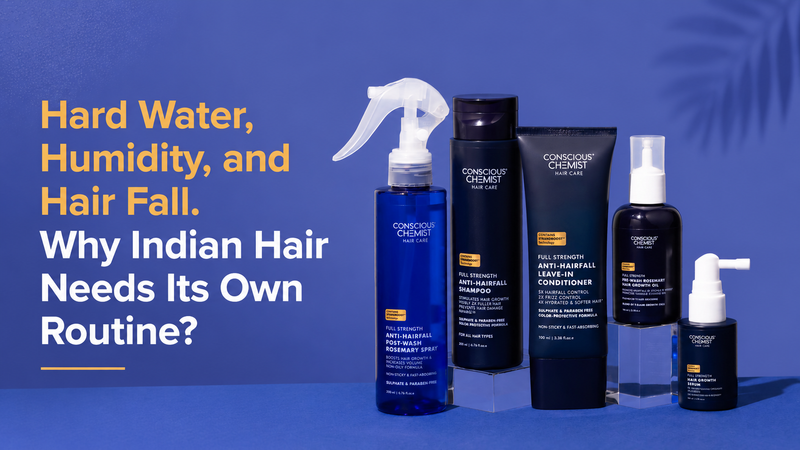
The Conscious Chemist hair regrowth kit, designed as a premium hair regrowth system in India, includes:
-
Oil for controlled pre-wash use
-
Gentle shampoo for scalp cleansing
-
Leave-in conditioner for slip
-
Spray for daily scalp support
-
Serum for targeted care
This reduces guesswork and improves consistency.
How Should You Adjust Your Routine Based on Scalp Type?
For oily scalp:
Focus on lighter products and regular cleansing.
For dry scalp:
Include short pre-wash oiling and consistent scalp hydration.
The key is adjusting weight, not skipping steps.
How Should You Maintain Hair Strength After Keratin or Smoothening in the Long Term?
Chemically treated hair requires a different approach than untreated hair. While it appears smoother, it is more vulnerable to breakage due to internal structural changes.
If you are using a hair regrowth kit for thinning hair or following a science-backed hair regrowth products routine, focusing on reducing friction and maintaining scalp balance is what improves long-term results.
A routine that stays gentle, lightweight, and consistent helps reduce breakage and supports better hair quality over time. The goal is not heavy nourishment, but daily protection that keeps hair stable and manageable.
How Can You Follow a Lightweight Routine Without Overloading Your Hair?
If you want a routine that supports both scalp and lengths without heaviness, use a structured system instead of mixing products randomly.
The Conscious Chemist hair regrowth kit works as a complete hair care kit for hair fall, designed for treated hair that needs a lightweight layering.
Order now and follow a consistent 8–12 week routine to reduce breakage, improve texture, and support healthier-looking hair.
Frequently Asked Questions
1. Can I oil my hair after keratin or smoothening?
Yes, but keep it light and limited to the scalp. Use it as a short pre-wash step instead of leaving it overnight to avoid buildup and heavy washing.
2. What is better for treated hair, rinse-off or leave-in conditioner?
A lightweight leave-in is more helpful because it improves slip during detangling, when most breakage occurs. Apply it only to lengths.
3. Can I use a hair regrowth serum on chemically treated hair?
Yes, since serums are applied to the scalp. Use small amounts and avoid layering too many products to prevent buildup.
4. Why do I lose more hair during wash days after smoothening?
This is usually due to breakage caused by tangling and friction when hair is wet. Gently improving slip and handling can reduce this.
5. How long does it take to reduce hair fall after starting a routine?
Breakage reduction can be seen within a few weeks, but visible density improvement usually takes 8–12 weeks of consistent care.
6. When should I see a dermatologist after hair treatment?
If you experience burning, patchy hair loss, or persistent heavy shedding, it is best to seek professional evaluation.
Share:
How To Know If Your Hair Regrowth Kit for Hair Fall Is Working?
How Does Copper Tripeptide-1 Fit into a Hair Care Routine?