




You follow a haircare routine, oil regularly, and avoid obvious damage, yet your hair still feels weak or keeps breaking.
It’s frustrating because nothing seems to fix the problem fully.
This is often where the approach needs to shift from just treating the hair to supporting the scalp.
Copper Tripeptide-1 is one such ingredient that targets this deeper level of hair health. Use this guide to learn how Copper Tripeptide-1 helps hair regrowth and where it fits into your routine.
What Is Copper Tripeptide-1 for Hair Regrowth and Why Is It Used in Scalp Care Products?
Copper Tripeptide-1, also known as GHK-Cu, is a small peptide bonded with copper ions. In simple terms, it works as a signalling molecule that interacts with skin and scalp cells.
Instead of acting like a drug that directly stimulates hair regrowth, it supports the processes around the hair follicle.
Think of it as improving the environment where hair grows, not forcing regrowth itself.
This is why it is commonly found in advanced formula hair regrowth products, hair regrowth kits with biotin and caffeine, and leave-on scalp treatments. It is designed to stay on the scalp long enough to support repair and maintenance processes.

Why Is Copper Tripeptide-1 Not a Replacement for Hair Regrowth Treatments Like Minoxidil?
This is one of the biggest misconceptions.
Copper Tripeptide-1 is a cosmetic ingredient. It supports scalp health and hair quality, but it is not a clinically proven treatment for conditions such as androgenetic alopecia.
If someone is dealing with:
-
Sudden hair loss
-
Patchy thinning
-
Hormonal shedding
Then medical intervention is necessary.
This ingredient works best when used as part of a performance-driven hair care routine, not as a replacement for medical treatments.
Why Do People Get Confused Between Copper Tripeptide-1 and Copper Metal?
The word “copper” can sound intimidating.
But Copper Tripeptide-1 is not the same as raw copper exposure. It is used in controlled cosmetic formulations at safe levels.
The important thing is proper usage:
-
Follow instructions
-
Patch test before use
-
Avoid over-layering
|
Key Takeaway Copper Tripeptide-1 for hair regrowth supports scalp repair and maintenance processes, but it is not a direct hair regrowth drug. |

How Does Copper Tripeptide-1 Support Hair Regrowth and Scalp Health Mechanisms?
Hair follicles do not function in isolation.
They depend on surrounding tissue, blood supply, and cellular signaling to function properly. If the environment around the follicle is weak or stressed, hair quality declines.
Research by PubMed shows that tripeptide-copper complexes can increase dermal fibroblast activity and support VEGF expression in vitro.
What this means in simple terms:
-
Fibroblasts help maintain structural support
-
VEGF is linked to blood vessel support
Together, these processes contribute to a healthier scalp environment.
While this does not guarantee new hair regrowth, it creates conditions that support stronger hair over time.
How Does Copper Tripeptide-1 Help Reduce Scalp Stress and Sensitivity?
Many people experience low-level scalp irritation from:
-
Heat styling
-
Pollution
-
Frequent product use
-
Hard water
Copper peptides are discussed in cosmetic research by NCBI for their calming and repair-support roles.
A calmer scalp matters because irritation often leads to:
-
Increased shedding
-
Frequent touching or scratching
-
Disruption in hair cycles
Reducing this stress helps improve overall hair consistency.
Why Do People Notice Reduced Breakage Before Hair Regrowth?
This is an important distinction.
Most early improvements come from:
-
Reduced friction
-
Better scalp balance
-
Improved hair texture
This leads to less breakage, which makes hair appear fuller.
Actual regrowth changes take longer because hair cycles are slow.
Why Does Copper Tripeptide-1 Work Better in a Routine than Individually?
Hair concerns are rarely caused by one factor.
Breakage, thinning, and scalp stress all interact.
Using Copper Tripeptide-1 alone without:
-
Proper cleansing
-
Leave-in conditioning
-
Scalp maintenance
limits its effectiveness.
This is why it performs better when included in a natural hair regrowth kit with actives or a structured routine.
|
Key Takeaway Copper Tripeptide-1 improves scalp support systems, helping reduce breakage and maintain healthier hair over time. |
Who Should Use Copper Tripeptide-1 for Hair Regrowth and Who Should Avoid It?
This ingredient is most useful for people dealing with ongoing, mild-to-moderate concerns.
It works well for:
-
Diffuse thinning (not patchy loss)
-
Weak hair prone to breakage
-
Scalp stress from styling or pollution
-
People who cannot tolerate heavy oiling daily
-
Colored or chemically treated hair
It fits naturally into a hair regrowth kit for thinning hair focused on long-term consistency.
How Does Copper Tripeptide-1 Perform on Oily or Dandruff-Prone Scalp?
Because it is usually in water-based formats, it feels lighter than oils.
This makes it suitable for:
-
Oily scalps
-
People who sweat frequently
-
Humid climates
However, layering too many leave-on products can still cause buildup.
This is why cleansing frequency matters.
When Should You Avoid Using Copper Tripeptide-1 and Seek Medical Advice?
Certain signs require professional attention:
-
Sudden or excessive hair fall
-
Patchy bald spots
-
Painful or inflamed scalp
-
Severe dandruff or scaling
In such cases, relying only on cosmetic products delays proper treatment.
What Timeline Should You Expect from Copper Tripeptide-1?
Hair improvement follows a pattern:
-
1–2 weeks: scalp feels calmer
-
3–6 weeks: reduced breakage
-
8–12 weeks: visible density changes
Consistency matters more than frequency.
Copper Tripeptide-1 Decision Guide
Before deciding whether Copper Tripeptide-1 fits your routine, this quick guide connects common hair concerns with how this ingredient can support them.
|
Your Situation |
What It Helps With |
How to Start |
|
Thinning hair |
Scalp support |
3–4x/week |
|
Breakage |
Strength retention |
Combine with leave-in |
|
Oily scalp |
Lightweight care |
Use spray format |
|
Sensitive scalp |
Calming support |
Patch test |
How Should You Use and Layer Copper Tripeptide-1 for Hair Regrowth Without Irritation?
The application should be controlled, not excessive.
A structured method works best:
-
Apply to a clean scalp
-
Section hair into parts
-
Use a small amount
-
Massage gently for 30–60 seconds
Over-application is one of the main causes of buildup.
What Is the Correct Layering Order with Other Hair Regrowth Products?
Layering determines whether your routine works or causes problems.
Correct order:
-
Spray or mist
-
Serum
-
Styling products
Leave-in conditioner should be applied only to the lengths.
What Ingredients Should You Avoid Using with Copper Tripeptide-1?
To reduce irritation risk:
-
Avoid strong exfoliating acids
-
Avoid low-pH vitamin C
-
Avoid aggressive actives in the same routine
Instead, alternate routines.
Layering Routine Guide
Layering products correctly is essential to avoid buildup and irritation. This table simplifies how to structure your routine across different days.
|
Routine |
Order |
Avoid |
|
Wash Day |
Shampoo, then Leave-in, then Spray, then Serum |
Applying to a soaking wet scalp |
|
Non-Wash |
Spray then Serum |
Over-layering |
|
Night |
Spray then Massage |
Heavy product use |
What Should You Do If You Notice Itching or Buildup?
Common fixes include:
-
Reduce frequency
-
Use smaller amounts
-
Improve cleansing
-
Avoid layering multiple leave-ons
If irritation persists, stop usage.
|
Key Takeaway Thin layers, correct order, and controlled frequency prevent irritation and buildup. |
How Does a Complete Copper Tripeptide-1 Routine Improve Hair Regrowth Results?
Why Do Multi-Step Hair Care Routines Work Better Than Single Products?
Hair concerns develop across multiple stages.
-
Pre-wash dryness
-
Wash-day friction
-
Post-wash breakage
-
Between-wash scalp stress
A routine that addresses all stages performs better than isolated products.
What Should You Look for in a Copper Tripeptide-1 Routine?
A well-designed routine includes:
-
Lightweight leave-ons
-
Balanced cleansing
-
Scalp-focused products
-
Compatibility with colored hair
-
Minimal buildup risk
How Does a Structured System Simplify Hair Care?
Managing separate products, like a peptide hair regrowth serum or a caffeine shampoo for hair regrowth, can become inconsistent.
A system organizes usage and improves adherence.
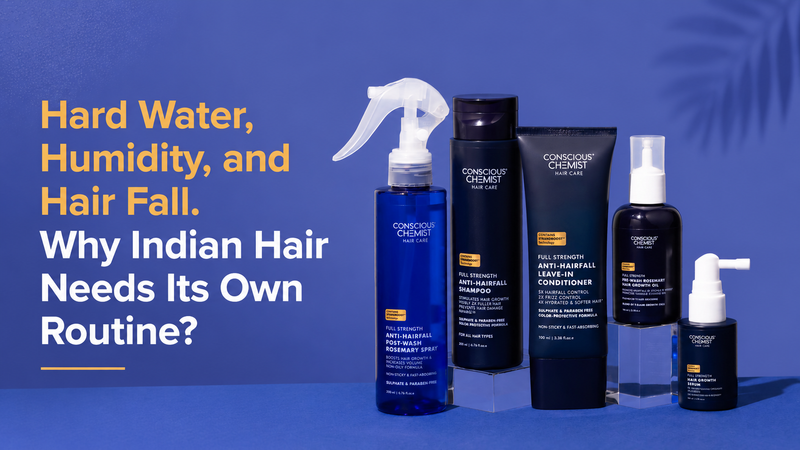
The Conscious Chemist hair regrowth kit, designed as a premium hair regrowth system in India, includes:
-
Pre-wash oil
-
Anti-hairfall shampoo
-
Leave-in conditioner
-
Copper Tripeptide-1 spray
-
Regrowth serum
This creates continuous support across all stages of your routine.
What Is a Simple 8–12 Week Routine You Can Follow?
-
Wash 2–3 times per week
-
Use the spray with serum regularly
-
Adjust based on scalp condition
-
Track progress every 2 weeks
Consistency leads to visible improvement.
|
Key Takeaway Consistent between-wash scalp care is what improves long-term hair results, not just wash-day products. |

How Should You Use Copper Tripeptide-1 for Long-Term Hair Regrowth Support?
Copper Tripeptide-1 is most effective when treated as a supportive ingredient rather than a quick fix. It helps improve the scalp environment and reduces breakage, which contributes to better hair appearance over time.
If you are using a hair regrowth kit for thinning hair or following a science-backed hair regrowth products routine, incorporating Copper Tripeptide-1 into a consistent routine improves results.
The key is regular use, proper layering, and combining it with a structured system. Over time, this approach supports healthier, stronger hair without causing buildup or irritation.
How Can You Start a Complete Copper Tripeptide-1 Routine Easily?
If you want a structured approach instead of managing multiple products, choose a routine designed for consistency.
The Conscious Chemist hair regrowth kit works as a complete hair care kit for hair fall, combining Copper Tripeptide-1 scalp support with a full system.
Order now and follow a consistent 8–12 week routine to improve scalp health and reduce breakage.
Frequently Asked Questions
1. Does Copper Tripeptide-1 help with hair regrowth?
It supports the scalp environment and repair processes, thereby improving hair quality over time. However, it is not a direct hair regrowth drug, and results depend on consistency and the cause of hair loss.
2. How long does Copper Tripeptide-1 take to show results?
You may notice scalp comfort within a couple of weeks and reduced breakage in a few weeks. Visible density improvements usually take at least 8–12 weeks.
3. Can I use Copper Tripeptide-1 spray and serum together?
Yes, apply the spray first, then the serum. Use small amounts and adjust frequency if you notice buildup or greasiness.
4. Is Copper Tripeptide-1 safe for colored hair?
Yes, it is typically applied to the scalp and does not interfere with hair color. Keep conditioning products on lengths to avoid heaviness.
5. What should I not mix with Copper Tripeptide-1?
Avoid using it with strong acids or aggressive actives in the same routine. Alternating routines helps reduce irritation.
6. Why does my scalp feel itchy after using it?
This is usually due to overuse or layering too many products. Reduce frequency, use smaller amounts, and ensure proper cleansing.


Share:
The Hidden Damage: Why Chemically Treated Hair Breaks Despite Looking Healthy?
Why Does Leave-In Conditioner Make Hair Greasy?