



Maintaining healthy length is about winning the battle against breakage. Our users, like Neha, finally moved past hair growth plateaus by switching to a routine that protects ends from fraying. This guide helps you build a science-backed hair-fall solution that preserves every inch of your progress.
What Are Split Ends and Why Do They Keep Traveling Up the Hair Strand?
Split ends are not a sign of bad hair days or dry weather. They are structural damage, and understanding that changes how you deal with them.

Are Split Ends a Sign of Structural Hair Damage?
Your hair strand works like a braided rope. The outermost layer, called the cuticle, is made of overlapping scales that protect the inner fiber. When that protective layer breaks down from friction, heat, or chemical exposure, the inner fibers are exposed and begin to separate.
This separation is what you see as a split end. It shows up in different patterns:
-
Single split: The classic Y-shape at the tip, where one strand divides into two.
-
Multiple splits: Multiple branches form from a single point, giving the ends a feathered or frayed appearance.
-
Deep splits (feathering): The split extends farther up the strand, leaving the hair thin and uneven toward the bottom.
Split ends are not reversible because hair is not living tissue. Once the fiber separates, no biological process can reconnect it.
Why Split Ends Move Upward Over Time?
Here is something most people do not realize
-
A split behaves like a torn thread in fabric.
-
Daily actions pull the split higher along the strand.
-
This is known as the “zipper effect”:
-
Combing creates tension
-
Towels add rough friction
-
Tight hairstyles stretch the fiber
-
Over time, strands break unevenly, making hair look thinner.
|
Key takeaway: Split ends do not stay at the tips. Once damage starts, daily friction pushes it higher unless you trim or protect the strand. |
What Causes Split Ends In Everyday Routines?
A number of habits and environmental factors accelerate split-end formation. Here is what causes the most damage:
-
Mechanical stress
-
Aggressive brushing
-
Tight ponytails or buns
-
Chemical exposure
-
Coloring, bleaching, or smoothening
-
Heat styling
-
Flat irons and blow dryers weaken protein bonds
-
Environmental factors
-
UV exposure dries the cuticle
-
Hard water deposits increase roughness
-
Wet hair vulnerability
-
Hair stretches more when wet, making it easier to snap
Many people notice more shedding after wash days. This happens because wet strands are fragile and more prone to breakage during handling.
Can Split Ends Be Repaired or Only Managed?
Set realistic expectations about what trimming and products can actually do.
What Is The Difference Between Permanent Repair Vs Temporary Smoothing?
When a strand physically separates, the only way to fully remove that split is to cut it off. Products cannot fuse the fiber back together because hair is dead tissue. There is no biological healing process happening.
That said, the word "repair" gets used in two very different ways in hair care. Permanent repair means the strand is structurally restored, which products cannot do. Cosmetic repair means the split looks smoother and snags less, which products can do temporarily.
Understanding this distinction prevents disappointment and helps you use products correctly.

What Hair-Care Products Can Actually Do For Split Ends?
Temporary sealing is genuinely useful. When a conditioner, leave-in, or treatment coats the surface of a split strand, it does several things:
-
Conditioners and leave-ins create a smooth coating.
-
Ingredients like proteins and silicones:
-
Reduce friction between strands
-
Help detangle without pulling
-
Make ends appear smoother
-
This process is called temporary sealing.
-
It reduces further breakage before your next trim.
Which Hair Types Benefit Most From Sealing Products?
Here is a list of hair types that may benefit from sealing hair products:
-
Colored or bleached hair
-
Chemically treated strands
-
Frequent heat styling users
-
Long hair exposed to clothing friction
|
Key takeaway: You cannot heal a split end, but you can seal and protect it to prevent further damage before trimming. |
Split Ends: What Helps vs What Is a Myth
Below is a clear comparison of the most common split-end claims, what the science actually says about each one, and when each approach genuinely earns a place in your routine.
|
Claim/Approach |
Reality |
Best use case |
|
Hair oil repairs split ends |
Adds shine but does not fix splits |
Mild dryness |
|
Protein treatments heal damage |
Strengthens the surface only |
Weak, processed hair |
|
Leave-in conditioner seals ends |
Smooths and reduces friction |
Daily protection |
|
Trimming removes split ends |
Only a permanent solution |
Visible splitting |
|
Shampoo fixes split ends |
Cleans scalp, not ends |
Maintenance routine |
5 Steps to Prevent Split Ends and Reduce Breakage Fast
Follow a practical system to reduce damage over the next 4 to 8 weeks. Here is what to build your routine:
Step 1: Which Trim Strategy Saves Hair Length?
A micro-trim removes a small amount of length (as little as 3 to 5 millimeters) on a regular schedule to prevent splits from traveling upward. The logic is straightforward: cutting before the split migrates means you lose less overall length compared to waiting until the damage is visible and extensive.
-
Trim every 6 to 12 weeks, depending on damage.
-
Use micro-trims:
-
Remove small sections regularly
-
Prevent splits from traveling upward
-
Check strands in natural light to spot early damage.
Step 2: Which Wash Day Habits Reduce Hair Breakage?
Wash day is when hair is most fragile. Wet hair stretches under tension and snaps more easily than dry hair. Make these adjustments:
-
Apply shampoo only to the scalp.
-
Use lukewarm water instead of hot water.
-
Do not pile hair into a tight knot while washing.
-
Gently squeeze water using soft cotton or microfiber.
-
Detangle only after applying conditioner or leave-in.
Step 3: What Are The Detangling And Styling Rules To Protect Ends?
Build these into your daily and styling routine:
-
Start detangling from the ends, then work your way up.
-
Hold hair above knots to reduce pulling force.
-
Avoid high-tension hairstyles daily.
-
Use heat protectant before styling tools.
-
Limit the number of heat passes on the same section.
-
Reduce friction from bags, helmets, or clothing by using braids or soft scrunchies.
Research published on PubMed shows that mechanical stress, such as combing and tangling, accelerates split-end formation. Bleached hair fails faster under repeated friction compared to untreated strands.
|
Key takeaway: The fastest way to reduce split ends is to minimize daily friction and add consistent protection. |
How Do Shampoo and Leave-In Conditioner Protect Hair From Split Ends?

Products earn their place in a routine when you understand exactly what problem each one solves. Here is where shampoo and leave-in conditioner actually matter.
What To Look For In A Split-End-Safe Shampoo?
Look for these qualities in your shampoo:
-
Gentle cleansing that does not strip natural oils.
-
Focus on scalp cleaning rather than scrubbing ends.
-
Works well in hard water conditions.
-
Suitable for treated or colored hair.
-
Avoids leaving hair squeaky or rough.
A non-stripping daily shampoo formula helps smooth strands and reduce friction buildup.
Why Is A Leave-In Conditioner Essential For Daily Hair Protection?
Here is what a leave-in conditioner does for your ends:
-
Forms a lightweight protective layer.
-
Improves slip for easy detangling.
-
Reduces frizz and rough texture.
-
Minimizes breakage caused by brushing and styling.
-
Works throughout the day, not just during wash.
Apply only to mid-lengths and ends for best results.
What Is the Best 2-Step Routine for Hair Breakage?
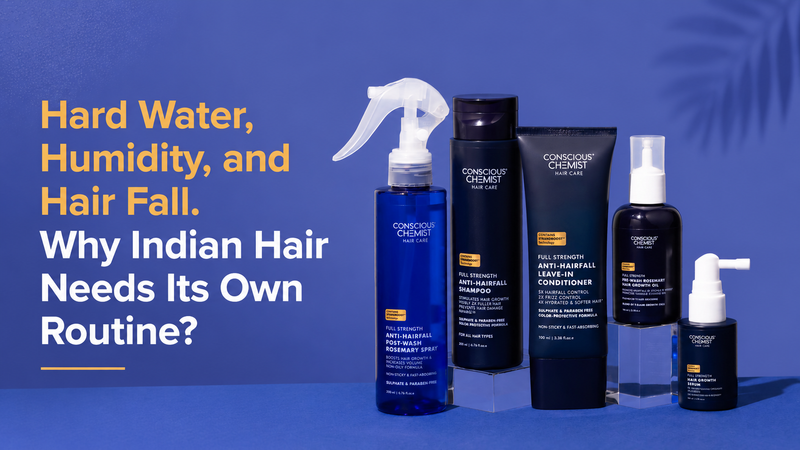
If you are looking for a two-step routine that addresses both wash-day breakage and daily friction, the Conscious Chemist Anti-Hairfall Strength Duo is built around these principles.
-
A gentle scalp barrier shampoo cleans without drying the lengths
-
A lightweight leave-in conditioner protects strands between washes
-
StrandBoost™ combines yeast extract and rosemary:
-
Supports scalp environment
-
Helps reduce breakage linked to weak fibers
-
Works well for:
-
Wash-day hair fall with frizzy ends
-
Chemically treated or colored hair
-
Hard-water exposure
-
Fine hair that needs lightweight care
|
Key takeaway: A gentle cleanser protects hair on wash day, but a leave-in conditioner protects your ends during daily friction. |
Should You Trim Your Hair Now or Wait?
Follow this plan between now and your next salon appointment:
-
Days 1 to 3: Switch to your gentlest shampoo. Apply leave-in conditioner to dry ends before bed.
-
Days 4 to 7: Detangle only after applying conditioner in the shower. No brushing on wet hair.
-
Days 8 to 11: Avoid all heat styling. Wear a loose braid or low bun during physical activity.
-
Days 12 to 14: Examine the ends in natural daylight. If roughness has reduced and no new knots are forming, you can proceed with a micro-trim. If splits are now visible, book a trim immediately.
Refer to the table below to decide whether it is time to trim your hair or not:
|
What you notice |
Likely happening |
Do this next |
|
Ends look thin |
Advanced splitting |
Trim immediately |
|
Frequent knots |
High friction damage |
Add leave-in + detangle gently |
|
Mild frizz only |
Surface roughness |
Improve routine |
|
Breakage while brushing |
Weak strands |
Reduce heat + trim soon |
|
Key takeaway: If your ends keep snapping or knotting, trimming early prevents losing more length later. |
Frequently Asked Questions
1. Can split ends be repaired without cutting?
No. A split strand cannot rejoin. You can smooth and protect it temporarily until your next trim.
2. Why do split ends return quickly after a haircut?
The causes remain unchanged. Heat, friction, and rough handling create new damage even after trimming.
3. Does daily leave-in conditioner cause hair fall or buildup?
A lightweight leave-in used on ends does not increase hair fall. It reduces breakage. Buildup occurs only with excessive layering.
4. What is the safest way to detangle hair?
Start from the ends, use a conditioner or leave-in, and hold the strand above knots to avoid pulling.
5. Can hard water cause split ends?
Hard water does not directly cause splits. It increases roughness and tangling, which leads to more breakage.
6. How often should you trim while growing hair?
Most people benefit from trimming every 6 to 12 weeks. Adjust based on styling habits and damage level.
Share:
Why Your Shampoo Stops Working in Hard Water And How to Fix It?
Best Routine for Weak Hair Strands and Breakage Control