


Hard water can leave hair feeling dull, coated, and frizzy. If you are searching for the best shampoo for hair fall India residents trust, this guide explains what to look for in a formula, how to improve your washing technique, and when to use a clarifying treatment without causing dryness.
Why Does Your Hair Feel Waxy After Washing in Hard Water?
If you live in a city with high mineral content, you might notice your favorite products suddenly underperform. This happens because the water contains high concentrations of calcium and magnesium.
What Does Hard Water Do To Your Hair?
You wash your hair. You use the same shampoo you have used for months. But your hair feels waxy, looks dull, and tangles more than it used to. Before you blame the product, check your water.
-
Hard water contains higher levels of minerals, such as calcium and magnesium.
-
These minerals sit on the hair surface after rinsing.
-
They mix with leftover product and form a coating.
-
This coating blocks moisture and creates a rough texture.
|
Key Insight: In hard water, minerals can deposit on hair, making strands feel coated and rough and making hair look dull and frizzier, even when your cleansing routine has not changed. |
What Are The Common Signs Of Hard Water Hair Damage?

You do not need a water test kit to suspect hard water damage. Your hair will tell you. Watch for:
-
Hair looks dull even after washing
-
Ends feel rough and tangle easily
-
Frizz increases after every wash
-
Roots feel flat or greasy
-
Shampoo lathers less than before
-
Hair feels sticky or wax-like
-
Color fades unevenly or turns brassy
-
Breakage increases during combing
What Does Research Say About Hard Water And Hair Health?
Research published in the International Journal of Trichology found that hard-water-treated hair showed more mineral deposition and a more ruffled surface appearance than distilled-water-treated hair in scanning microscopy observations.
A rougher surface means strands grip and catch on each other more during combing, detangling, and even towel drying. That increased friction is what drives the snapping. It is not a sudden loss of strength. It is gradual wear from daily handling on a cuticle that no longer lies flat.
What To Look For In A Hard Water Shampoo?
Choosing a hair fall control shampoo or hair strengthening shampoo is already a decision with many variables. Hard water adds one more. The right shampoo for soft water may perform very differently in hard water, and that is not a flaw in the formula. It is a mismatch.
Here is what to look for when your tap water is working against you.
Trait 1: Gentle Cleansing System That Does Not Strip Hair
Look for shampoos with milder cleansing agents such as:
-
Look for mild surfactants, such as sarcosinates or betaines.
-
Choose a non-stripping daily shampoo formula if you wash frequently.
-
Avoid judging performance solely on foam.
-
Pick a hair-strengthening shampoo if your strands feel weak.
Trait 2: Chelating Ingredients That Manage Mineral Buildup
Chelators are ingredients that bind to mineral ions, helping them rinse away with water instead of staying stuck on the hair shaft. In practical terms, they help break down that "coated" feeling.
Look for these on labels:
-
Disodium EDTA
-
Sodium gluconate
-
Citrates
Use chelating formulas occasionally, not daily.
Trait 3: Balanced Conditioning For Smoother Strands
A well-formulated anti-hair fall shampoo should:
-
Choose formulas that improve manageability
-
A gentle scalp barrier shampoo helps reduce friction
-
Avoid heavy residue if your water already leaves buildup
-
Look for a shampoo for hair thinning that maintains softness without weight
What Is A Simple Hard-Water Shampoo Checklist?
Before buying a hard-water shampoo, check the description. Here is a table to understand which ingredient affects how:
|
The good signs |
Why does it help in hard water |
Watch-outs / what can go wrong |
|
Mild surfactants |
Clean scalp without over-drying |
May foam less, which is normal |
|
Chelating agents |
Remove mineral buildup |
Overuse can dry hair |
|
Lightweight conditioning |
Reduces tangling and breakage |
Heavy buildup if not rinsed well |
|
Balanced pH formulas |
Smooth cuticle and reduce friction |
Extremely low pH can feel heavy |
What Should You Avoid If Your Hair Feels Dry And Frizzy?
If your hair is already showing signs of hard water stress, certain habits can accelerate the problem. Avoid:
-
Using strong clarifying shampoos daily.
-
Washing with very hot water.
-
Scrubbing hair lengths aggressively.
-
Layering multiple harsh cleansers in one wash.
-
Skipping conditioner completely.
-
Over-oiling before every wash without proper cleansing.
|
Key Insight: For hard water, the winning combination is a gentle cleanser for frequent use, plus periodic chelation, because constant, strong shampooing increases dryness and breakage. |
How Can You Wash Your Hair Better In Hard Water?

You can buy the best shampoo for hair fall and frizz control on the market and still get poor results if the washing technique is working against you. Hard water changes how shampoo acts, so small adjustments to how you wash, rinse, and handle wet hair can dramatically reduce the breakage that mimics hair fall.
Do You Need To Double Cleanse Your Hair?
Not everyone needs to shampoo twice. Use this simple rule:
Double cleanse if:
-
You oil your scalp.
-
You use styling products.
-
Hair feels coated.
Single cleanse if:
-
Your scalp is dry or sensitive
-
You wash frequently (four or more times per week)
-
You did not use any pre-wash oils or heavy products
For the second cleanse, use less shampoo than in the first round and spend less time on it. The first cleanse lifts product and surface buildup; the second cleanse actually contacts the scalp.
How To Do A Proper 60-90 Second Scalp Cleanse?
Here is the correct sequence:
-
Fully soak hair before applying shampoo
-
Apply the product only to the scalp
-
Use fingertips, not nails
-
Let foam run through lengths
-
Avoid scrubbing ends
How Should You Rinse In Hard Water?
Hard water often needs a longer rinse than you think. Residue from minerals and product that has not fully rinsed out is a common cause of the "clean but coated" feeling.
-
Rinse longer than you usually do.
-
Use lukewarm water.
-
Finish with a cooler rinse.
-
If hair feels coated, continue rinsing.
How Do You Reduce Breakage After Washing?
Follow these steps to reduce hair breakage after washing:
-
Use a microfiber towel or a cotton t-shirt.
-
Avoid twisting or wringing hair.
-
Detangle from the ends upward.
-
Apply a lightweight leave-in to reduce friction.
|
Key Insight: A large part of the perceived hair fall in hard-water routines is due to breakage during washing and detangling. Gentle handling reduces this significantly. |
When Should You Use a Clarifying or Chelating Shampoo?
Both mineral buildup and over-stripping can make hair feel bad, but they feel different and need different fixes. Applying the wrong solution makes the problem worse. Occasional reset washes help remove buildup without damaging your hair.
How Do You Know You Need A Reset Wash?
You may need a reset wash if:
-
Hair feels waxy even after washing.
-
Products stop working.
-
Roots feel greasy, but ends stay dry.
-
Hair looks dull.
-
Strands tangle more than usual.
-
Water seems to sit on hair.
How Often Should You Clarify In Hard Water Areas?
There is no single answer, but here are practical ranges:
-
Every 1 to 4 weeks based on:
-
Oil usage
-
Styling products
-
Hair type
-
Fine hair may need more frequent resets
-
Curly or treated hair may need fewer
How To Do A Clarifying Reset Without Drying Your Hair
Follow this sequence to get the benefits of a chelating wash without compounding dryness:
-
Use clarifying shampoo once per session
-
Focus on the scalp
-
Follow with conditioner or mask
-
Avoid combining with heat styling on the same day
|
Key Insight: If your hair feels clean but coated, a periodic clarifying wash restores softness faster than switching to a harsher daily shampoo. |
What Is the Best Hair Care Routine for Hard Water Conditions?
The same hard water affects different hair types differently. Someone with fine, oily hair needs more frequent washing and more frequent resets. Someone with dry, curly hair needs a gentler approach with strong conditioning. The key variables are scalp type, texture, and how much you style and oil your hair.

Here are three starting points you can adapt.
Routine 1: Oily Scalp With Dry Ends (2-4 Washes/Week)
-
Use a hair-fall-reducing shampoo at every wash.
-
Clarify every 2 to 4 weeks.
-
Apply a lightweight leave-in after each wash.
Routine 2: Colored Or Chemically Treated Hair (2-3 Washes/Week)
-
Use a keratin-repair shampoo to help reduce breakage.
-
Avoid frequent strong clarifiers.
-
Focus on hydration and protection.
Routine 3: Curly Or Frizz-Prone Hair (1-3 Washes/Week)
-
Use the best shampoo for hair fall and frizz control.
-
Prioritize slip and detangling.
-
Clarify only when curls lose definition.
Quick Haircare Routine Builder For Hard Water
Below is a quick reference to help you match your wash routine to your hair type and water conditions:
|
Your hair/scalp situation |
Every wash |
Every 1-4 weeks |
|
Oily scalp, dry ends |
Gentle shampoo + leave-in |
Clarifying wash |
|
Colored or treated hair |
Mild cleansing + conditioning |
Occasional reset |
|
Curly or frizz-prone |
Hydrating cleanse + slip |
Clarify when needed |
Which Anti-Hair Fall Shampoo Works Best For Hard Water And Breakage?
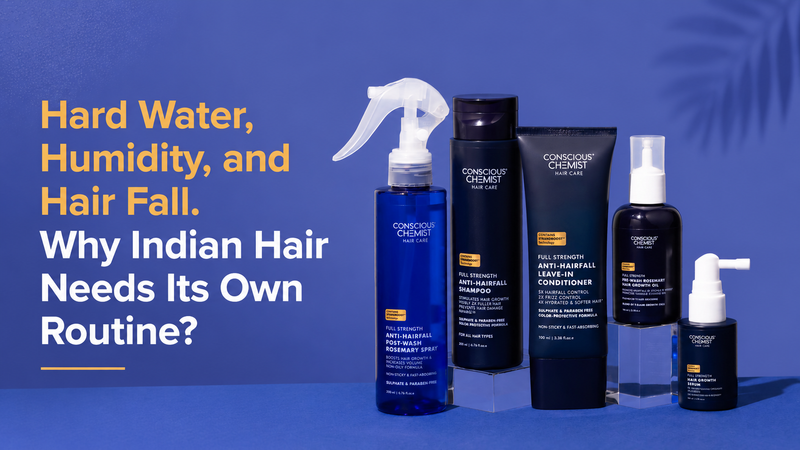
If your water is hard and your hair shows it through a coated feel, frizz, and snapping during detangling, the Conscious Chemist Anti-Hairfall Strength Duo is built for exactly this situation.
The shampoo uses a gentle cleansing system that rinses clean in hard water without stripping, making it safe for frequent use and color-treated hair. The lightweight leave-in conditioner adds slip to mid-lengths and ends, reducing friction that can cause strands to snap during combing. No rinsing needed. Apply, detangle, and style.
The StrandBoost Complex inside combines yeast extract for scalp barrier support and rosemary oil for scalp circulation, addressing both the root environment and the fiber surface in one routine.
This is not a product that promises overnight results. It is designed for consistent, daily use in real Indian conditions, including the hard water most metros use.
Frequently Asked Questions
1. How Do I Know If Hard Water Is Causing Buildup on My Hair?
Your hair feels waxy right after washing, tangles more than usual, looks dull, and stops absorbing products well. Do one chelating wash followed by a conditioner. If hair feels lighter and softer after, the buildup was the cause.
2. Do You Need a Chelating Shampoo for Hard Water Every Time You Wash?
No. A gentle shampoo for daily use plus a chelating wash every one to four weeks works better. Chelating daily dries out the lengths and worsens frizz over time.
3. Why Does Your Shampoo Not Lather in Hard Water?
Hard water minerals reduce foam, and gentler surfactants naturally lather less. Low foam does not mean poor cleansing. Judge by how your scalp feels 24 hours later, not by foam volume.
4. Is a Squeaky Clean Feel After Shampooing a Good Sign?
No. It signals over-stripping. In hard water, a stripped cuticle increases tangling, frizz, and breakage. You want hair that feels smooth and slightly slippery after rinsing, not squeaky.
5. Can a Leave-In Conditioner Make Hair Fall Worse in Hard Water?
No. A lightweight leave-in on mid-lengths and ends reduces friction and breakage. Avoid applying it to the scalp, and add a reset wash occasionally if hair starts to feel heavy.
6. How Often Should You Clarify If You Oil Your Hair Before Washing?
Double cleanse on oil-wash days and clarify every two to three weeks. Follow with a conditioner on the lengths to prevent them from drying out.

Share:
How to Shampoo Every Day Without Causing Dryness or Hair Fall?
Top Tips to Prevent Split Ends 2026: Causes & Best Products