


Hair fall during combing or washing is not always about shedding. Most of the time, it is a breakage, and the fix is simpler than you think. The right hair fall control shampoo paired with a lightweight leave-in can rebuild strand strength without leaving hair stiff, greasy, or weighed down.
Do You Have Weak Hair Strands or Normal Hair Shedding?
Before you choose an anti-hair fall shampoo, identify whether you are dealing with breakage or natural shedding. The solution depends on the root cause. Breakage occurs along the hair strand, often due to damage, while shedding happens at the root as part of the natural hair cycle. The solution depends on the root cause.
What Do Weak Hair Strands Look And Feel Like?

Weak strands tend to show up in specific, recognizable ways. Here is what to check for:
-
Hair snaps easily while combing or tying.
-
Ends appear thinner than roots.
-
Strands feel rough even after applying oil or serum.
-
Frizz shows up immediately after drying.
-
Split ends appear frequently across lengths.
-
Elasticity feels off:
-
Hair stretches too much and breaks.
-
Hair breaks instantly without stretching.
What Is The Difference Between Breakage Vs Shedding?
Look at the strands you are losing. This single check tells you almost everything:
-
Shedding signs:
-
Full-length strand falls out
-
Small white bulb at one end
-
Seen during wash days or brushing
-
Breakage signs:
-
Short pieces on sink, pillow, or clothes
-
No white bulb
-
Uneven strand lengths
-
Wash day can feel worse because:
-
Loose strands that have already shed tend to collect over time and come away together during washing.
Breakage Vs Shedding: Quick Diagnosis Table
Here is a quick table to diagnose your hair health:
|
What you notice |
More likely |
What to do next |
|
Long strands with white bulb |
Shedding |
Focus on scalp health and internal triggers |
|
Short broken pieces everywhere |
Breakage |
Switch to a reduce hair fall shampoo + low-friction routine |
|
Hair fall spikes only on wash day |
Collected shedding |
Improve wash technique and detangling |
|
Ends look thinner than roots |
Breakage |
Add leave-in protection and reduce friction |
What Causes Weak Strands In Indian Conditions?
Several everyday habits and environmental factors damage the hair fiber over time:
-
Hard water leaves mineral buildup, making hair rough
-
Frequent washing with strong cleansers
-
Heat tools like straighteners and curlers
-
Chemical treatments like smoothing or coloring
-
Rubbing hair aggressively with a towel
-
Tight hairstyles that stress strands
-
Detangling dry hair instead of damp hair
-
Humidity leading to frizz and over-brushing
|
Key Insight: |
Why Harsh Cleansing Increases Hair Breakage?
Many people switch to a shampoo that stops hair fall immediately, yet still notice more strands in the drain. The issue often lies in how the shampoo treats the hair surface.
What Is The Stripped Hair Cycle?
This is a common pattern many people fall into without realizing it:
-
Strong cleansers remove natural oils completely
-
Hair surface becomes rough and uneven
-
Strands tangle more easily
-
Detangling leads to snapping
-
Extra oil or serum gets layered to compensate
This cycle continues, especially with damaged or colored hair.

Why Do Hard Water And Treated Hair Need Extra Care?
Two factors amplify this cycle significantly in India:
-
Hard water is high in calcium and magnesium. These minerals coat the hair shaft and make it feel rough, coated, and heavy. That roughness increases friction during detangling and styling.
-
Chemically treated hair (colored, straightened, or permed) already has a lifted cuticle. Even moderately harsh cleansers can strip it further.
Together, these two factors create a situation where the hair needs thorough cleansing to remove buildup but is gentle enough not to worsen surface roughness. A shampoo for hair fall due to hard water must strike that balance.
What Defines A Gentle Yet Effective Shampoo?
Look for a formula that:
-
Removes oil and buildup without over-drying
-
Leaves scalp comfortable, not tight or itchy
-
Keeps lengths smooth enough for easy detangling
-
Works well with frequent washing
-
Supports colored or chemically treated hair
-
Performs well in hard water conditions
|
Key Insight: |
How To Build Strength And Flexibility Without Stiffness?
The most common mistake in a hair strengthening shampoo routine is going too far in one direction. Too much protein or strengthening can leave hair feeling stiff and prone to snapping at the slightest tension. Too much focus on moisture alone can leave fine hair limp, greasy, and lacking resilience. The goal is a balance between the two.
What Does Hair Strength Mean?
Hair is a structural fiber, not living tissue. You cannot repair it the way skin regenerates. What you can do is:
-
Resistance to snapping during combing or styling
-
Ability to handle daily friction
-
Improved strand structure over time
Hair cannot repair itself like skin. You can only reinforce and protect it.
Which Ingredients Improve Strength Without Heaviness?
Here is a breakdown of functional ingredients to look for, in plain terms:
-
Hydrolyzed keratin: Temporarily reinforces weak areas
-
Panthenol: Improves softness and manageability
-
Hyaluronic acid: Enhances hydration and flexibility
-
Conditioning agents: Reduce friction during detangling
-
Ceramides: Support surface protection
Avoid overloading on protein if hair already feels stiff.
What Does Research Say About Improving Damaged Hair?

Several studies on hair fiber science support the approach above:
-
According to a study published on PubMed, Improving the Mechanical Properties of Damaged Hair Using Low-Molecular Weight Hyaluronate, low-molecular weight hyaluronate can meaningfully improve the tensile strength of chemically treated hair without leaving residue.
-
A study published in PMC, On Hair Care Physicochemistry: From Structure and Degradation to Novel Biobased Conditioning Agents, found that conditioning agents coat and fill the fiber surface, reducing roughness and improving manageability.
-
Research published on PubMed, Alternative Protocol for Hair Damage Assessment and Comparison of Hair Care Treatments, confirms that repairing damaged hair mechanically, through ingredient-based reinforcement, is possible without relying on heavy silicones or waxes.
|
Key Insight: |
What Is A Simple 2-Step Routine For Weak Hair?
If your main concern is breakage, simplify your routine. Focus on reducing friction during washing and styling.
Step 1: How To Wash Hair Without Causing Breakage?
How you apply shampoo matters as much as which one you choose:
-
Wet hair completely before applying shampoo
-
Apply shampoo only to the scalp
-
Massage gently using fingertips
-
Let the foam rinse through the lengths naturally
-
Do not pile hair on top of the head
-
Rinse thoroughly
-
Squeeze water out using a towel
-
Avoid rubbing
Use a non-stripping daily shampoo formula so you can wash as often as needed without damaging lengths.
Step 2: Where And How To Apply Leave-In Conditioner?
A leave-in conditioner is not optional in a strength-focused routine. It is the step that keeps friction low between wash days and protects against daily styling stress.
How to apply it correctly:
-
Apply to damp or slightly dry hair
-
Focus on mid-lengths and ends
-
Avoid the scalp if it is oily
-
Use a small quantity:
-
Pea-sized for fine hair
-
Coin-sized for thick hair
-
Spread evenly before styling
This step reduces friction and protects strands from daily stress.
How To Avoid Stiffness Or Greasy Buildup?
Follow these steps to get rid of greasiness from your scalp:
-
Choose a lightweight leave-in instead of heavy masks
-
Avoid layering multiple oils or silicones
-
Apply the product on damp hair for an even spread
-
Start with a small quantity and adjust
-
Use a wide-tooth comb for detangling
-
Clarify occasionally if buildup occurs
Strength Without Stiffness: Routine Builder Table
Here is a quick breakdown of how to adjust your routine based on your specific hair situation, so you get the benefits of a strengthening routine without the stiffness, grease, or buildup that comes from a one-size-fits-all approach.
|
Hair situation |
What to prioritize |
Example adjustment |
|
Fine hair with breakage |
Lightweight hydration |
Use minimal leave-in |
|
Thick, frizzy hair |
Slip and moisture |
Apply slightly more leave-in |
|
Oily scalp, dry ends |
Targeted conditioning |
Avoid scalp application |
|
Hard water exposure |
Gentle cleansing |
Use shampoo for hair fall due to hard water |
|
Chemically treated hair |
Surface protection |
Add leave-in consistently |
Which Is the Best Anti-Hair Fall Shampoo and Leave-In Duo for Weak, Breakage-Prone Hair?
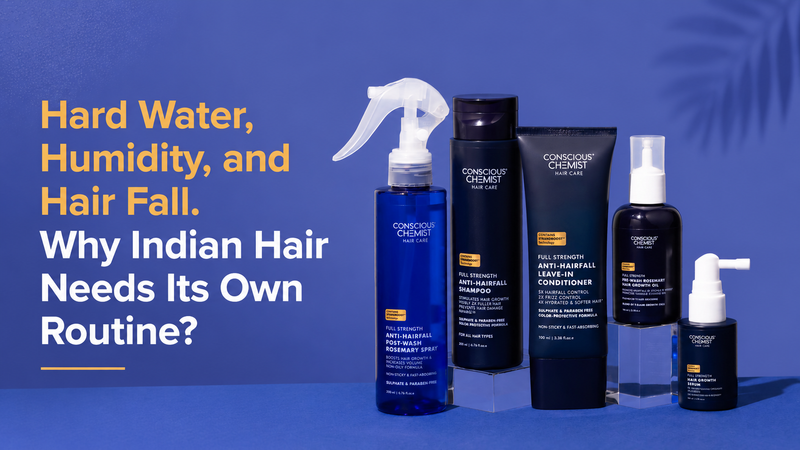
If you are looking for a practical application of these principles, the Conscious Chemist hair care range offers a focused duo. Our customer, Neha, found that her hair felt "mushy" and snapped easily after a coloring session. She switched to this routine to rebuild the hair's integrity.
-
The Shampoo: This non-stripping daily shampoo formula uses yeast extract scalp health shampoo technology to support the follicles while cleaning gently.
-
The Leave-In: Unlike heavy masks, this lightweight formula provides slip without the grease, making it an ideal shampoo for hair fall and frizz control companion.
-
The Timeline: You can expect easier detangling within 2 weeks, while significant improvements in breakage usually appear after 6 to 8 weeks of consistent use.
|
Key Insight: |
Frequently Asked Questions
1. How do I know if my hair is weak or dry and frizzy?
Weak hair breaks into short pieces during combing. Dry hair feels rough and frizzy. Many people experience both. Focus on reducing friction to improve both conditions.
2. Can leave-in conditioner cause hair fall?
A lightweight leave-in reduces breakage by improving slip. Buildup happens only when you overuse heavy products.
3. Where should I apply leave-in if I have an oily scalp?
Apply from mid-lengths to ends. Keep it away from the roots.
4. Will gentle shampoo remove oil properly?
Yes. A well-formulated anti-hair loss shampoo removes oil without leaving hair rough. You may repeat washing if oiling was heavy.
5. How quickly will I see results?
You may notice less breakage within two weeks. Consistent improvement appears in six to eight weeks.
6. Is this routine safe for treated hair?
Yes. Chemically treated hair benefits from a functional ingredient shampoo India approach that focuses on gentle cleansing and surface protection.
Share:
Top Tips to Prevent Split Ends 2026: Causes & Best Products
How Does a Yeast Extract Shampoo Help Reduce Hair Fall?