


A few weeks ago, a friend switched to a leave-in conditioner for hair fall control after seeing it recommended alongside a complete hair care kit for hair fall on a reel.
The first day, her hair felt smoother.
By the third day, her roots felt greasy, and she assumed she was using it wrong. So she started rinsing it off halfway.
The result? Dry ends again.
This back-and-forth is exactly why leave-in conditioner feels confusing. The product is not the problem. The application method is.
What Is a Leave-In Conditioner for Hair and How Is It Different from a Regular Conditioner?
A rinse-off conditioner is designed for short contact.
It coats the hair temporarily during washing and is removed within minutes. Its role is to soften hair for detangling during the wash process.
A leave-in conditioner for hair fall control works differently. It is designed to remain on the hair and create a light protective layer that reduces friction throughout the day.
Research by MDPI on conditioning formulations shows that leave-on conditioners form a thin film over hair fibers, reducing mechanical stress, improving combability, and lowering breakage during daily handling.
This is important because a large portion of visible hair fall is breakage, especially in people using hair growth kits for thinning hair or dealing with damaged lengths.

Why Do People Feel Like Leave-In Conditioner Should Be Rinsed?
The confusion comes from experience, not formulation.
If the product is applied incorrectly, especially on the scalp or in excess, it can cause heaviness and a coating sensation. This makes people believe it should be rinsed.
In reality:
-
The product is doing its job
-
The placement is wrong
Who Needs Leave-In Conditioner the Most?
A leave-in conditioner becomes essential when hair is repeatedly exposed to stress.
It is especially useful for:
-
Dry or frizzy hair
-
Colored or chemically treated hair
-
Hair prone to tangling and breakage
-
People using heat styling frequently
Even if you are following a science-backed hair growth product routine, ignoring strand protection can lead to breakage, which looks like hair fall.
|
Key Takeaway Leave-in conditioner is meant to stay on the hair to reduce friction and breakage. If it feels greasy, the issue is application, not the product itself. |
How Should You Apply Leave-In Conditioner on Hair Lengths Without Making Roots Greasy?
What Is the Correct Rule for Applying Leave-In Conditioner on Hair?
The rule is simple but critical:
Apply leave-in conditioner only on lengths and ends, never on the scalp.
A practical way to follow this is to apply it below the ear level or only on the ponytail section.
Why Should You Not Rinse Leave-In Conditioner After Applying It?
Leave-in conditioner works through continuous contact.
It reduces friction during:
-
Combing
-
Styling
-
Daily movement
Rinsing removes this protective layer, which defeats its purpose.
Studies on leave-on formulations published on tandfonline.com confirm that their benefits result from prolonged contact with the hair fiber, not from brief exposure as with rinse-off products.
Why Does Applying Leave-In Conditioner on the Scalp Cause Greasy Hair?
Your scalp already produces sebum.
When you apply conditioner on top of it, it creates a combined layer of oil and product. This traps sweat, dust, and buildup, making roots look flat and greasy.
This is why scalp care and hair-length care must be treated separately in a performance-driven hair care routine.
What Should You Do If Your Scalp Feels Dry or Itchy?
Do not use leave-in conditioner on your scalp.
Instead:
-
Use a lightweight scalp spray
-
Apply a targeted serum
-
Maintain proper cleansing
Leave-in conditioner should only support the strands, not the scalp.
|
Key Takeaway Leave-in conditioner should stay on the hair lengths, not the scalp, because its role is to protect strands, not manage scalp oil. |
How Much Leave-In Conditioner Should You Use and When Should You Apply It for Best Results?
The amount should match your hair’s needs.
-
Short or fine hair: pea-sized
-
Medium length: coin-sized
-
Long or thick hair: 1 to 2 pumps
Using more does not improve results. It increases buildup and greasiness.
Why Is Towel-Damp Hair the Best Time to Apply Leave-In Conditioner?
Hair condition affects how the product spreads.
-
Very wet hair dilutes the product
-
Fully dry hair causes uneven absorption
-
Towel-damp hair allows even distribution
This reduces product usage and prevents patchy buildup.
What Is the Correct Application Method to Avoid Greasy Hair?
Application technique matters as much as quantity.
A structured method works best:
-
Towel-dry hair
-
Rub the product between your palms
-
Apply using smooth downward motion
-
Comb through for even distribution
This ensures the product spreads evenly across all strands.

What Happens If You Use Too Much Leave-In Conditioner?
Excess product does not get absorbed.
It sits on the surface, creating a coating that makes hair appear greasy and heavy.
If this happens:
-
Blot excess with a towel
-
Lightly dampen and redistribute
-
Avoid reapplying immediately
How Much Leave-In Conditioner Should You Use for Best Results?
The right amount depends on your hair type and density. Using more does not improve results and often leads to buildup.
Before applying, this quick guide helps you estimate the right starting point.
|
Hair Type |
Where to Apply |
When |
Amount |
|
Fine hair |
Ends only |
Damp hair |
Pea-sized |
|
Medium hair |
Mid-length to ends |
Damp hair |
Coin-sized |
|
Thick hair |
Lengths to ends |
Damp hair |
1–2 pumps |
Key TakeawayStart with less product on damp hair and increase gradually only if needed to avoid buildup and greasiness. |
What Mistakes Cause Greasy Hair After Using Leave-In Conditioner and How Can You Fix Them?
-
Applying Leave-In Conditioner on the Scalp
The scalp produces oil naturally.
Adding conditioner on top creates heaviness and traps buildup.
Fix: Keep the application below ear level.
-
Using Too Much Leave-In Conditioner
Hair can only absorb a limited amount.
Excess product sits on the surface, weighing hair down.
Fix: Reduce the quantity and apply in smaller amounts.
-
Applying Leave-In Conditioner on Dry Hair
Dry hair absorbs product unevenly.
This leads to patches of both heaviness and dryness.
Fix: Apply to damp hair.
-
Skipping Detangling After Applying Leave-In Conditioner
Without even distribution, some strands get overloaded while others remain dry.
Fix: Always comb through after applying.
-
Layering Too Many Products
Using oil, leave-in, and serum together without balance creates a heavy coating.
Research on leave-on emulsions on ResearchGate highlights that excessive layering can increase residue buildup and affect hair texture over time.
Fix: Separate wash-day nourishment from daily maintenance.
To simplify troubleshooting, this table connects common issues with quick fixes.
|
What You See |
Cause |
Fix |
Prevent |
|
Flat roots |
Applied on scalp |
Wash roots |
Apply below the ears |
|
Sticky hair |
Too much product |
Blot excess |
Use less |
|
Uneven texture |
Dry application |
Re-dampen |
Apply to damp hair |
|
Heavy buildup |
Too many layers |
Reset wash |
Use a lighter routine |
How Should You Layer Leave-In Conditioner with Spray and Serum in a Routine?
A balanced routine prevents buildup.
-
Leave-in conditioner: lengths
-
Scalp spray: hydration and comfort
-
Serum: targeted scalp application
This separation ensures each product works without interfering with the others.

Why Does a Structured Routine Work Better Than Random Product Use?
Most routines fail due to inconsistency.
Using separate products, such as a peptide hair growth serum or a caffeine shampoo for hair growth, without a structure leads to overlap or gaps.
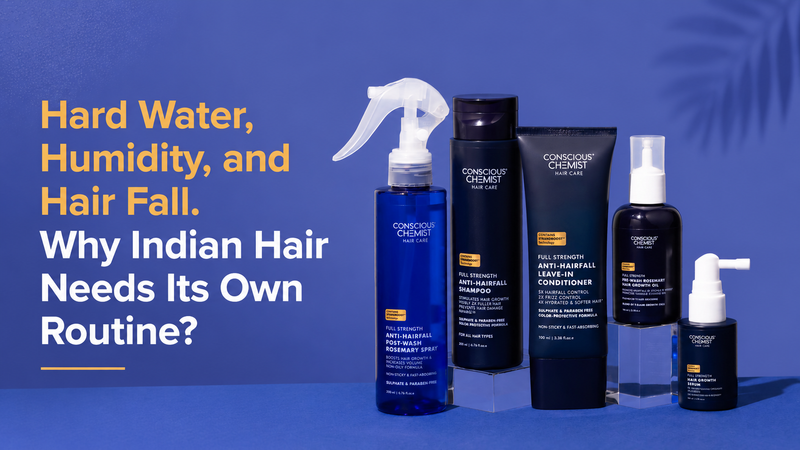
The Conscious Chemist hair growth kit, designed as a premium hair growth system in India, solves this by assigning each product a clear role:
-
Oil for pre-wash nourishment
-
Shampoo for cleansing
-
Leave-in conditioner for lengths
-
Spray for daily scalp support
-
Serum for targeted treatment
This reduces confusion and improves consistency over time.
|
Key Takeaway Greasy hair after leave-in conditioner usually comes from incorrect placement, excess product, or improper layering. |
How Should You Use Leave-In Conditioner for Long-Term Hair Health Without Greasiness?
Leave-in conditioner is effective when used correctly and consistently. It is designed to stay on your hair and reduce friction, helping prevent breakage and improving manageability.
If you are using a hair growth kit for thinning hair or following a science-backed hair growth products routine, proper leave-in application supports better results by protecting hair strands.
The key is to use the right amount, apply it to damp hair, and keep it away from the scalp. Over time, this improves hair texture and reduces breakage without making hair feel heavy.
How Can You Build a Routine That Prevents Greasiness and Supports Hair Growth?
If you want a routine that balances strand protection and scalp care without heaviness, use a structured system.
The Conscious Chemist hair growth kit works as a hair growth combo with oil shampoo and serum for weak roots, designed to support both scalp and lengths without product overlap.
Order now and build a routine that keeps your hair smooth without making it greasy.
Frequently Asked Questions
1. Do you need to rinse leave-in conditioner?
No, leave-in conditioner is designed to stay on your hair. If it feels greasy, reduce the amount and apply it only to the lengths, rather than rinsing it off.
2. Can I use leave-in conditioner every day?
Yes, but use a small amount and apply it only to the ends. Daily use works best when your scalp is not overloaded with product.
3. Why does my hair look oily after leave-in conditioner?
This usually happens when you apply too much or apply it to the scalp. Using a smaller amount on damp hair helps prevent this.
4. Should I apply leave-in conditioner on wet or damp hair?
Damp hair is ideal because it helps distribute the product evenly. Wet hair dilutes it, while dry hair causes uneven buildup.
5. Can I use serum after leave-in conditioner?
Yes, but apply serum separately on the scalp or ends. Avoid layering too much product on the same area.
6. Is leave-in conditioner safe for colored hair?
Yes, it helps reduce breakage and improve smoothness when applied correctly to lengths.
Share:
How Does Copper Tripeptide-1 Fit into a Hair Care Routine?
How Well Does Rosemary Oil Work for Hair Regrowth?