



A friend of yours recommends rosemary oil, you look it up, and suddenly, you see it everywhere.
You start seeing reels, routines, and before-and-after claims. It feels like one ingredient might finally fix hair fall. So you consider switching to a rosemary hair regrowth kit or building a natural hair regrowth kit with actives.
But after a few weeks, the results feel unclear.
Some days your hair feels better. Some days it does not. That is when the real question comes up.
Is rosemary oil for hair regrowth working, or is something missing in the routine?
How Does Rosemary Oil for Hair Regrowth Support the Scalp?
Role of the Scalp in Hair Regrowth
Hair regrowth does not start at the ends. It starts at the scalp.
If the scalp feels irritated, clogged, or imbalanced, it can affect how hair grows and how strong it remains. This is where rosemary oil is commonly used. It helps support the scalp environment instead of directly forcing hair regrowth.
That distinction is important because it sets realistic expectations.

What Does Research Say About Rosemary Oil for Hair Regrowth?
Research on rosemary oil shows promising but limited results.
One clinical study by Healthline.com compared rosemary oil with minoxidil over six months and found similar improvements in hair regrowth, with less scalp irritation in the rosemary group.
However, the study size was small, and results varied between individuals. This means rosemary oil can help, but it is not guaranteed to work for every type of hair fall.
Why Does Rosemary Oil for Hair Regrowth Give Inconsistent Results?
Because rosemary oil does not address everything.
It may improve scalp comfort, but it does not address dryness, breakage, or poor hair-handling habits. If your hair is breaking due to friction or damage, focusing only on scalp actives will not solve the issue.
This is why, even with science-backed hair regrowth products, results may feel incomplete without a balanced routine.
|
Key Takeaway Rosemary oil supports the scalp environment, but it does not replace a comprehensive hair regrowth and breakage-control routine. |
How Much Can Rosemary Oil Actually Help Hair Fall?
Hair fall is not always caused by the scalp alone.
Internal factors such as nutrition, stress, hormonal changes, and medical conditions can affect hair regrowth. Rosemary oil does not address these causes.
This is why relying only on a rosemary and biotin hair regrowth routine may not deliver visible changes for everyone.
Are Your Daily Habits Damaging Your Hair Without You Realizing?
Daily habits play a major role in hair health.
Frequent heat styling, rough towel drying, aggressive detangling, and overwashing can increase breakage. If these habits continue, hair may continue to break even if the scalp improves.
This creates a situation in which the product appears ineffective, even though the routine is incomplete.
Why Does Breakage Make Hair Look Thinner?
When hair breaks along its length, it reduces volume at the ends.
This creates the appearance of thinning, even if the roots are healthy. Managing breakage is just as important as supporting regrowth.
Before changing products, this quick breakdown helps clarify what rosemary oil can and cannot do.
|
Concern |
Can rosemary help? |
What else is needed |
|
Mild scalp imbalance |
Yes |
Consistency |
|
Breakage |
No |
Conditioning with a slip |
|
Hormonal hair loss |
Limited |
Medical treatment |
|
Frizz and tangling |
No |
Leave-in care |
|
Key Takeaway If your routine does not reduce breakage and friction, rosemary oil alone will not improve visible hair density. |
Which Type of Rosemary Product Should You Choose for Your Routine?
Should You Use Rosemary Essential Oil or a Ready-Made Product?
Rosemary essential oil is highly concentrated.
It needs to be diluted before use and is best suited for pre-wash oiling. While it can support scalp health, incorrect use can lead to irritation.
Are Rosemary Sprays or Extracts Better for Daily Use?
Water-based formats like sprays or serums are easier to use regularly.
They are lightweight, do not feel greasy, and fit better into a daily routine, especially in humid conditions. This makes them more practical for consistency.
Does Rosemary in Shampoo or Conditioner Make a Difference?
Rosemary in rinse-off products plays a supportive role.
Since shampoo does not stay on the scalp for long, its direct impact on regrowth is limited. However, it helps maintain scalp balance and reduce breakage during washing.
How Should You Choose Based on Your Hair Type?
Instead of choosing the strongest option, choose what you can use consistently.
This table simplifies how different formats fit into a routine.
|
Format |
Best use case |
Why it works |
What to watch |
|
Essential oil |
Pre-wash |
Scalp support |
Needs dilution |
|
Spray/serum |
Daily care |
Easy consistency |
Avoid overuse |
|
Shampoo |
Wash support |
Maintains balance |
Limited contact time |
|
Key Takeaway The best rosemary product is the one you can use consistently without irritation or buildup. |

How Should You Use Rosemary Oil Safely Without Increasing Hair Fall?
Why Is Dilution Important for Rosemary Oil?
Applying essential oil directly can irritate the scalp.
Mixing a few drops with a carrier oil reduces this risk while maintaining effectiveness. This step is essential for safe use.
Why Should You Always Do a Patch Test?
Scalp sensitivity varies.
Testing a small amount on your skin helps identify reactions before full application. This reduces the risk of irritation that could worsen hair fall.
How Often Should You Use Rosemary Oil?
Frequency depends on your routine.
Using it 1 to 2 times per week as a pre-wash treatment works for most people. For daily care, lighter formats are more practical.
What Mistakes Can Make Hair Fall Worse?
Incorrect usage can lead to poor results.
Using too much oil, applying undiluted essential oil, or skipping conditioning can increase dryness and breakage. These mistakes often lead people to believe that rosemary oil is not working.
Is Tingling a Good Sign?
Not always.
A mild warming sensation can occur, but burning or itching indicates irritation. In such cases, you should stop using and reassess your routine.
|
Key Takeaway Safe and consistent use matters more than using higher quantities or stronger concentrations. |
How Long Does Rosemary Oil Take to Show Results?
What Should You Expect in the First Few Weeks?
In the early stages, changes are subtle.
You may notice improved scalp comfort or slightly better manageability. Breakage may reduce if your overall routine improves.
When Do Visible Results Usually Appear?
Hair regrowth takes time.
Studies and dermatological insights from goodrx.com suggest that most routines require 8 to 12 weeks of consistent use to show visible improvements in density.
This timeline helps set realistic expectations.
Why Do Many People Quit Too Early?
Because results are gradual.
Without tracking progress, it is easy to assume nothing is changing. Consistency over a few months is necessary to evaluate effectiveness.
Before starting, this tracker helps you stay consistent.
|
Timeframe |
What to focus on |
What you may notice |
|
Weeks 1–2 |
Start routine |
Scalp comfort |
|
Weeks 3–6 |
Continue consistently |
Reduced breakage |
|
Weeks 8–12 |
Maintain routine |
Density changes |
How Can You Build a Complete Routine That Works Better Than Rosemary Alone?
Why Do Single-Ingredient Routines Fall Short?
Hair concerns usually involve multiple factors.
Focusing only on one ingredient does not address cleansing, conditioning, and daily friction. This is why routines built around a single step often feel incomplete.
What Does a Balanced Routine Look Like in Practice?
A structured routine supports hair at every stage:
-
Before washing: scalp support
-
During washing: gentle cleansing
-
After washing: breakage protection
-
Between washes: lightweight scalp care
This creates consistency across the week.
How Does a Complete Routine Improve Results Over Time?
When all steps work together, results become more predictable.
Instead of temporary improvements, you start seeing:
-
Reduced breakage
-
Better manageability
-
Improved appearance of density

How Does a Structured System Fit Into This Approach?
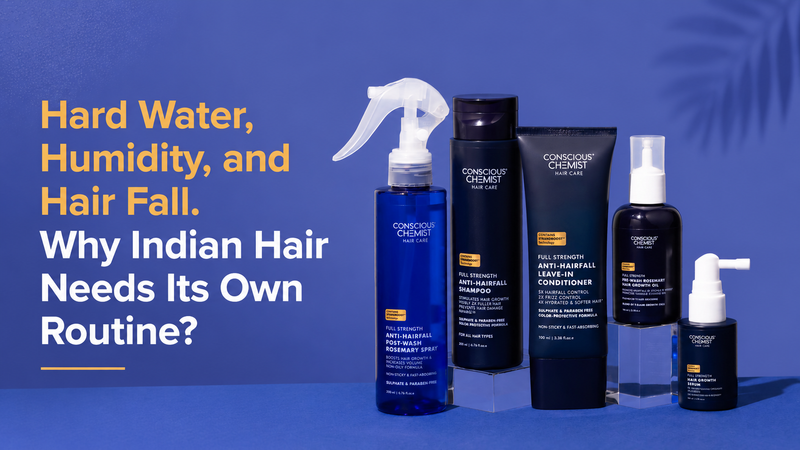
The Conscious Chemist hair regrowth kit offers a results-driven solution. It combines:
-
Pre-wash oil with rosemary-based support
-
Gentle shampoo for scalp balance
-
Leave-in conditioner for breakage control
-
Spray and serum for daily scalp care
As a complete hair regrowth routine, it supports both scalp and hair length. It combines cleansing, nourishment, and breakage control. This leads to more consistent and visible results.
|
Key Takeaway Hair regrowth improves when your routine supports the scalp and hair consistently, not just through one ingredient. |
How Should You Approach Rosemary Oil for Long-Term Hair Regrowth?
Rosemary oil can support hair regrowth, but it is not a standalone solution. Its effectiveness depends on how consistently it is used and how well your routine supports overall hair health.
If you are using a hair regrowth kit for thinning hair or exploring science-backed hair regrowth products, combining scalp care with breakage control improves results.
Focusing on gentle cleansing, reducing friction, and maintaining scalp balance helps improve hair strength and density over time.
How Can You Improve Hair Regrowth Without Relying on One Ingredient?
If your current routine feels inconsistent, the focus should shift from single ingredients to structured care.
The Conscious Chemist hair regrowth kit is a complete hair care kit for hair fall, supporting the scalp, reducing breakage, and improving consistency across your routine.
Order now and follow a consistent routine to track visible improvements over time.
Frequently Asked Questions
1. Can rosemary oil regrow hair, or is it just a trend?
Rosemary oil is not just a trend; it is not a guaranteed solution. It may support hair regrowth in mild cases, but results depend on the underlying cause.
2. How should I dilute rosemary oil for my scalp?
Mix a few drops with a carrier oil, such as coconut or jojoba. Always perform a patch test before applying it fully to your scalp.
3. How often should I use rosemary oil?
Using it 1 to 2 times per week as a pre-wash treatment works for most people. Lightweight formats can be used more frequently.
4. Why does my scalp tingle after using rosemary oil?
Mild warmth is normal, but burning or irritation is not. If irritation occurs, stop using it and reassess your routine.
5. How long does rosemary oil take to show results?
Initial changes may appear in a few weeks, but visible density improvements usually take 8 to 12 weeks of consistent use.
6. Who should avoid rosemary oil?
People with sensitive or inflamed scalps should avoid it unless advised by a dermatologist. Sudden or severe hair loss requires medical evaluation.


Share:
Why Does Leave-In Conditioner Make Hair Greasy?
How To Reduce Hair Fall in Colored Hair Without Fading Your Hair Color?