


Your 20s are a busy time. You likely balance long office hours, college lectures, and social hangouts. Around this time, your skin still feels resilient. Breakouts heal quickly, and it is easy to rely on makeup without much thought about cleansing or protection.
However, daily sun exposure is already adding up. Short commutes, time near windows, and quick outdoor breaks all contribute to uneven tone, dullness, and early dark spots. These changes do not appear overnight, but they build steadily.

While you might focus on flashy serums or trendy treatments, one simple habit does more work than the rest. Using the best lightweight sunscreen for daily use helps protect your skin. It not only keeps your skin healthy today, but also makes it radiant even after 5 years.
In this guide, you will learn how to choose the right SPF 50, how to use it correctly, and how to make it a simple part of your daily routine.
Why You Should Use Daily SPF 50 in Your 20’s?
Most people don’t realise that daily sun protection is the most effective way to maintain a bright, healthy complexion. Sun protection isn’t only for beach days or vacations. Instead, the majority of the skin damage occurs during regular activities. Whether you are indoors or outdoors, these small moments add up, damage your skin barrier, and cause visible changes to your skin tone over time.
Prevention is better than cure. Thus, it is better to use a non-greasy SPF 50 in your 20’s to protect your skin cells from the cumulative impact of sunlight exposure.
How Does Everyday Sun Exposure Affect Your Skin?
You do not need a painful sunburn to experience skin damage. Activities like walking to your car or sitting near a window lead to cumulative sun exposure and damage your skin cells.
Did you know that UVA rays are present even on cloudy days and can pass through glass windows? These daily doses of radiation contribute to a dull appearance and an uneven skin tone.
What Specific Skin Issues Does SPF Prevent?
Sun exposure triggers inflammation and melanin production in the skin. In your 20s, this often results in:
-
Prevention of Tanning: It stops the skin from darkening in irregular patches.
-
Reduction of Dullness: It prevents the tired look caused by light-triggered inflammation.
-
Protection of Acne Marks: It keeps post-acne marks from turning into permanent brown spots.
-
Refined Skin Texture: It keeps the skin surface smooth for better makeup application.
What Do Clinical Studies Tell About Sunscreen?
Research proves that daily users see a major difference in skin quality compared to occasional users:
-
A study showed 52% improvement in sun spots, 40% improvement in texture, and 41% improvement in clarity after 1 year of daily sunscreen use, according to a PubMed study.
-
Another study found 24% less skin aging with daily sunscreen use over several years.
How to Choose the Best Sunscreen for City Life?
A city sunscreen, or urban sunscreen, is a daily-use sun protection formula designed specifically for urban lifestyles, where skin faces more than just UV exposure. It shields against a combination of environmental stressors like UV rays, pollution, dust, and oxidative damage.
Such sunscreens are typically:
-
Formulated with an SPF 50 PA ++++
-
Lightweight, non-greasy, and leaves zero white cast
-
Water-resistant and gel-based, so it blends into the skin without clogging pores or adding heaviness
-
Enriched with antioxidants to neutralize free radicals and strengthen the skin barrier
-
Regulate excess oil and prevent sebum buildup
So, how should you choose your daily use SPF? Your daily sunscreen should match the above features and should be easy to apply. The following are a few parameters that will make your SPF process easier.
Should You Choose SPF 30 or SPF 50?
SPF 50 is the better choice for daily life because it provides a larger safety margin. On the other hand, SPF 30 simply provides basic protection.
Most people do not apply enough product to reach the full rating on the bottle. Using a higher SPF helps ensure you still receive high protection even with a thin layer.
What Is a PA Rating and Why Does It Matter?
The PA rating measures protection against UVA rays. These specific rays are the primary cause of tanning and long-term dark spots:
-
PA+++ indicates high protection.
-
PA++++ indicates very high protection.
You should always choose the highest rating to keep your skin bright.
Mineral vs. Chemical vs. Hybrid: Which SPF Filter Is Right for You?
Choosing the right filter type depends on your skin tone and preference:
-
Mineral Filters: These use zinc oxide or titanium dioxide. They are gentle but may leave a white cast on deeper skin tones.
-
Chemical Filters: These absorb UV rays. They often feel lighter and leave no visible residue.
-
Hybrid Filters: These combine both types to offer high protection with a skin-like finish.
How Visible Light Affects Dark Spots and Uneven Skin Tone?
Sun protection is not limited to UV rays. Visible light, especially from sunlight, can also influence pigmentation. This matters more if you are dealing with dark spots or uneven skin tone.
Research shows that visible light can trigger and worsen hyperpigmentation, particularly in deeper skin tones.
Here is what you should do:
-
Use a broad-spectrum sunscreen every day
-
Choose high UVA protection like PA++++
-
Add simple protection, like a cap or staying in shade during peak hours
Sunscreen builds your base. Small protective habits help reduce extra exposure when you spend more time outdoors.
How to Choose Sunscreen Based on Your Skin Type
Here’s a quick checklist for sunscreen texture based on your skin type:

Which Sunscreen is Best as per Your Lifestyle?
Still confused about how to choose a sunscreen for daily use? Here’s a breakdown of different scenarios and what the recommended texture is:
|
Your Day Looks Like |
Priorities to Look For |
Recommended Texture |
|
Long Office Hours |
Blue light protection + Hydration |
Dewy gel-cream |
|
Outdoor Commutes |
Sweat resistance + SPF 50 |
Lightweight fluid |
|
Active or Gym Mornings |
Water resistance + No sting |
Matte or hybrid gel |
|
Minimalist or On-the-Go |
Quick absorption + No cast |
Ultra-lightweight gel |
P.S.: Apart from lifestyle, pick a sunscreen based on your skin type.
Oily or acne-prone skin works better with matte or lightweight gels. Dry skin needs more hydrating, dewy textures. Combination skin can go either way depending on the day.
What Is the Best Way to Apply Sunscreen Daily?
You do not need a long routine to protect your skin. A quick and efficient habit every morning is all you need for great results.
How Do You Fit SPF into a Morning Routine?
Sunscreen should always be the final step in your skincare routine. Use one of these simple templates:
-
Cleanse and Protect: Wash your face and apply sunscreen immediately.
-
Hydrate and Protect: Use a serum after cleansing and finish with sunscreen.
-
Moisturize and Protect: Apply moisturizer and then a layer of sunscreen.
How Much Sunscreen Should You Apply?
To get the best protection, follow the two-finger rule.
-
Squeeze two strips of sunscreen onto your index and middle fingers.
-
This amount is enough to cover your entire face and neck.
-
Apply this layer 15 minutes before you go outside.
How to Use Sunscreen With Makeup?
-
Apply sunscreen first
-
Let it settle
-
Then apply makeup
-
For reapplication, apply gently without disturbing your base.
When and How Should You Reapply Sunscreen?
Sunscreen wears off as you go about your day. Hence, you must reapply:
-
Every 2 hours when outdoors
-
After sweating
-
After long sun exposure
Sunscreen Reapplication Cheatsheet
A clinical study in the United States suggests that long-term use improves skin tone and reduces pigmentation.
Hence, here’s a cheatsheet to make sunscreen reapplication easy and a daily habit for you:
|
Situation |
Reapplication Need |
Preferred Method |
|
Indoors all day |
Before the evening commute |
Pat a thin layer on cheeks and nose |
|
Outdoor lunch |
Yes |
Apply a full layer to the face and neck |
|
Gym or sweating |
Yes |
Wipe the skin and apply a fresh layer |
|
Over makeup |
Yes |
Pat the product on with a sponge |
Common SPF Application Mistakes and How to Fix Them
Many people feel that sunscreen does not work for them. This is usually due to a simple error in application or product choice.

5 Mistakes That Ruin Your Protection
-
Using It Only on Sunny Days: UV rays are active even on grey or rainy days. Make sunscreen a daily hygiene habit.
-
Applying Too Little Product: Using a small drop significantly reduces your protection. Always use the two-finger rule.
-
Neglecting Your Neck and Ears: People often forget the ears, the back of the neck, and the hairline.
-
Forgetting to Reapply: Protection fades after two hours of direct sun. Keep a tube in your bag for the commute home.
-
Quitting Due to Greasiness: If a cream feels heavy, switch to a lightweight gel-hybrid formula.
Your Final Checklist for Brighter Skin
If your goal is fewer dark spots, follow a simple checklist. Look for SPF 50 and a PA++++ rating. Ensure the finish is comfortable and leaves no white cast. If you have oily skin, verify the product is non-comedogenic.
Why Is Berry Bright Sunscreen Perfect for Daily Use?
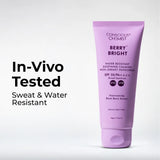
The Berry Bright Sunscreen is a practical solution for city life. It uses a double-gel network to deliver a dewy, non-greasy feel.
-
Broad Spectrum Protection: It offers SPF 50 and PA++++.
-
Invisible Finish: The hybrid formula works on all skin tones without a white cast.
-
Skin-Enhancing Ingredients: It contains 1% niacinamide to support the skin barrier and improve tone.
-
Oily Skin Friendly: It is non-comedogenic and water-resistant.
How to Use Berry Bright Sunscreen for Best Results?
Apply the Berry Bright Sunscreen as the final step of your morning routine. Dot the product across your face and blend it evenly. If you are outdoors, remember to reapply every two hours. This single habit is the best way to prevent future skin concerns.
Frequently Asked Questions
-
Is sunscreen necessary if I stay indoors?
Yes. UVA rays pass through window glass. Small daily exposures cause uneven tone over time.
-
Is SPF 50 excessive for daily use?
No. Most people apply less than the required amount. SPF 50 ensures you still get high protection even with a thin layer.
-
What is the meaning of PA++++?
This is a rating for UVA protection. Four plus signs indicate very high protection against the rays that cause tanning.
-
How do I reapply over a makeup base?
Gently pat the sunscreen over your base using a beauty sponge. Do not rub the skin, as this will smudge the makeup.
-
Does sunscreen help with existing dark spots?
Sunscreen is the foundation of any brightening routine. It prevents existing spots from darkening and allows the skin to heal.
Share:
How to Choose a Lightweight Dewy Sunscreen for a Glow Without Grease?
Sunscreen with Niacinamide: Guide on Benefits, Suitability, Results, and Routine Tips